PubChem CID · CC0
phenylalanine
Foods containing this compound


The parsnip is a root vegetable closely related to the carrot. It is a biennial plant usually grown as an annual. Its long tuberous root has cream-colored skin and flesh and can be left in the ground when mature as it becomes sweeter in flavour after winter frosts. In its first growing season, the plant has a rosette of pinnate, mid-green leaves. If unharvested, it produces its flowering stem, topped by an umbel of small yellow flowers, in its second growing season. By this time the stem is woody and the tuber inedible. The seeds are pale brown, flat and winged.

Dill (Anethum graveolens), also known as Lao coriander, depending on where it is grown, is either a perennial or annual herb. It is the sole species of the genus Anethum. Dill is widely grown in Eurasia where its leaves and seeds are used as a herb or spice for flavouring food. Like caraway, the fern-like leaves of dill are aromatic and are used to flavor many foods such as gravlax (cured salmon) and other fish dishes, borscht and other soups, as well as pickles (where the dill flower is sometimes used). Dill is best when used fresh as it loses its flavor rapidly if dried; however, freeze-dried dill leaves retain their flavor relatively well for a few months [Wikipedia].
The common oat (Avena sativa) is a species of cereal grain grown for its seed, which is known by the same name (usually in the plural, unlike other grains). While oats are suitable for human consumption as oatmeal and rolled oats, one of the most common uses is as livestock feed.

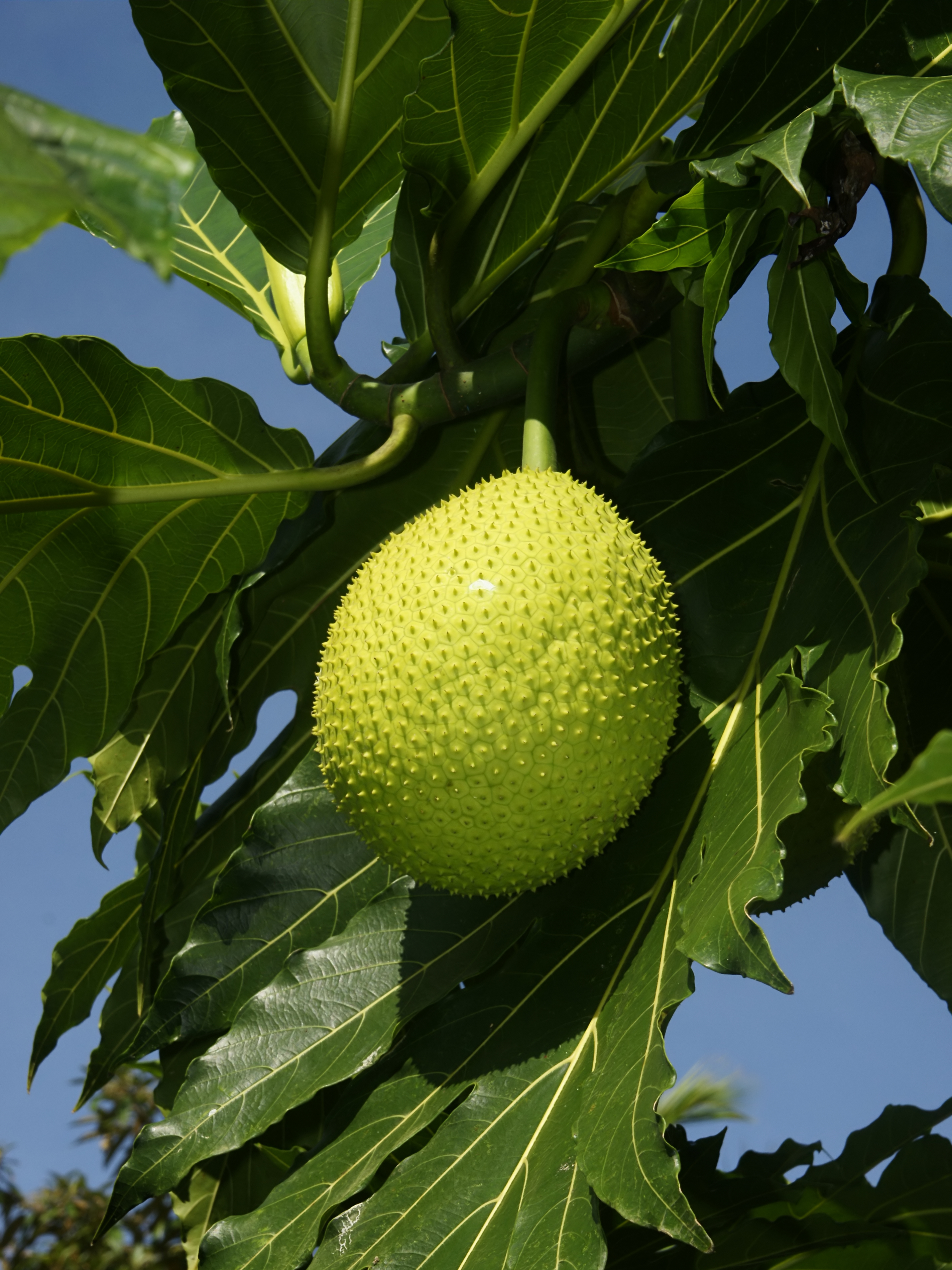
Breadfruit (Artocarpus altilis) is a species of flowering tree in the mulberry family, Moraceae, growing throughout Southeast Asia and most Pacific Ocean islands. Its name is derived from the texture of the cooked fruit, which has a potato-like flavor, similar to fresh-baked bread. Ancestors of the Polynesians found the trees growing in the northwest New Guinea area around 3,500 years ago. They gave up the rice cultivation they had brought with them from Taiwan, and raised breadfruit wherever they went in the Pacific (except Easter Island and New Zealand, which are too cold). Their ancient eastern Indonesian cousins spread the plant west and north through insular and coastal Southeast Asia. It has, in historical times, also been widely planted in tropical regions elsewhere.

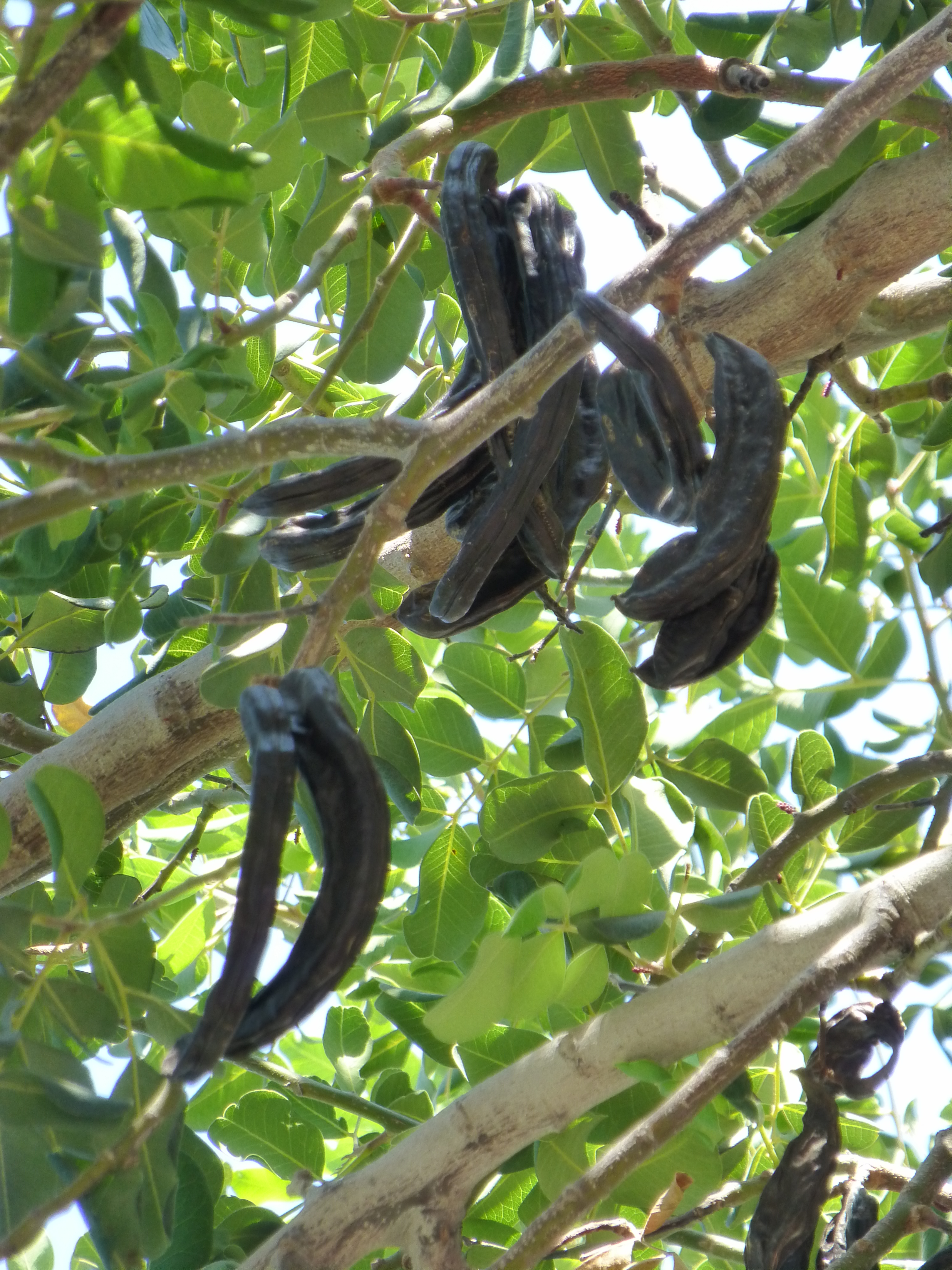
Ceratonia siliqua, commonly known as the carob tree and St John's-bread, is a species of flowering evergreen shrub or tree in the pea family, Fabaceae. It is widely cultivated for its edible pods, and as an ornamental tree in gardens. The ripe, dried pod is often ground to carob powder which is used as a substitute for cocoa powder.
Castanea mollissima (Chinese chestnut) is a member of the family Fagaceae, and a species of chestnut native to China, Taiwan, and Korea.

Broccoli is an edible green plant in the cabbage family, whose large flowering head is used as a vegetable. The word broccoli comes from the Italian plural of broccolo, which means "the flowering top of a cabbage", and is the diminutive form of brocco, meaning "small nail" or "sprout". Broccoli is often boiled or steamed but may be eaten raw.

Chinese cabbage (Brassica rapa, subspecies pekinensis and chinensis) can refer to two distinct varieties of Chinese leaf vegetables often used in Chinese cuisine: Pekinensis (napa cabbage) and Chinensis (bok choi).

The turnip or white turnip (Brassica rapa subsp. rapa) is a root vegetable commonly grown in temperate climates worldwide for its white, bulbous taproot. Small, tender varieties are grown for human consumption, while larger varieties are grown as feed for livestock.

Castanea sativa is a species of deciduous tree with an edible seed. It is commonly called sweet chestnut and marron. Originally native to southeastern Europe and Asia Minor, it is now widely dispersed throughout Europe and in some localities in temperate Asia. The tree is hardy, long-lived and well known for its chestnuts, which are used as an ingredient in cooking.
The Jerusalem artichoke (Helianthus tuberosus), also called sunroot, sunchoke, earth apple or topinambour, is a species of sunflower native to eastern North America, and found from eastern Canada and Maine west to North Dakota, and south to northern Florida and Texas. It is also cultivated widely across the temperate zone for its tuber, which is used as a root vegetable.
Dioscorea pentaphylla is a species of flowering plant in the yam family known by the common name fiveleaf yam. It is native to tropical Asia or eastern Polynesia, and it is present elsewhere as an introduced species. This species is a prickly vine that twines counterclockwise around objects and other plants. It may reach 10 meters in length. The alternately arranged leaves are compound, divided into 3 to 5 leaflets each up to 10 centimeters long. The plant produces horseshoe-shaped bulbils about a centimeter long. New plants can sprout from the bulbils. Flowers are borne in spikes. The vine grows from a tuber. Specimens may be 3 pounds in weight and may be located over a meter underground. The tubers of the vine can be cooked and eaten.
Watermelon (Citrullus lanatus, family Cucurbitaceae) is a vine-like (scrambler and trailer) flowering plant originally from southern Africa. Its fruit, which is also called watermelon, is a special kind referred to by botanists as a pepo, a berry which has a thick rind and fleshy center (mesocarp and endocarp). Pepos are derived from an inferior ovary, and are characteristic of the Cucurbitaceae. The watermelon fruit, loosely considered a type of melon – although not in the genus Cucumis – has a smooth exterior rind (green, yellow and sometimes white) and a juicy, sweet interior flesh (usually deep red to pink, but sometimes orange, yellow and even green if not ripe).
Wheat (Triticum spp. ) is a cereal grain, originally from the Levant region of the Near East and Ethiopian Highlands, but now cultivated worldwide. In 2010, world production of wheat was 651 million tons, making it the third most-produced cereal after maize (844 million tons) and rice (672 million tons). Wheat was the second most-produced cereal in 2009; world production in that year was 682 million tons, after maize (817 million tons), and with rice as a close third (679 million tons). This grain is grown on more land area than any other commercial food. World trade in wheat is greater than for all other crops combined. Globally, wheat is the leading source of vegetable protein in human food, having a higher protein content than soybeans or the other major cereals, maize (corn) or rice. In terms of total production tonnages used for food, it is currently second to rice as the main human food crop and ahead of maize, after allowing for maize's more extensive use in animal feeds. Wheat was a key factor enabling the emergence of city-based societies at the start of civilization because it was one of the first crops that could be easily cultivated on a large scale, and had the additional advantage of yielding a harvest that provides long-term storage of food. Wheat contributed to the emergence of city-states in the Fertile Crescent, including the Babylonian and Assyrian empires. Wheat grain is a staple food used to make flour for leavened, flat and steamed breads, biscuits, cookies, cakes, breakfast cereal, pasta, noodles, couscous and for fermentation to make beer, other alcoholic beverages, or biofuel. Wheat is planted to a limited extent as a forage crop for livestock, and its straw can be used as a construction material for roofing thatch. The whole grain can be milled to leave just the endosperm for white flour. The by-products of this are bran and germ. The whole grain is a concentrated source of vitamins, minerals, and protein, while the refined grain is mostly starch.
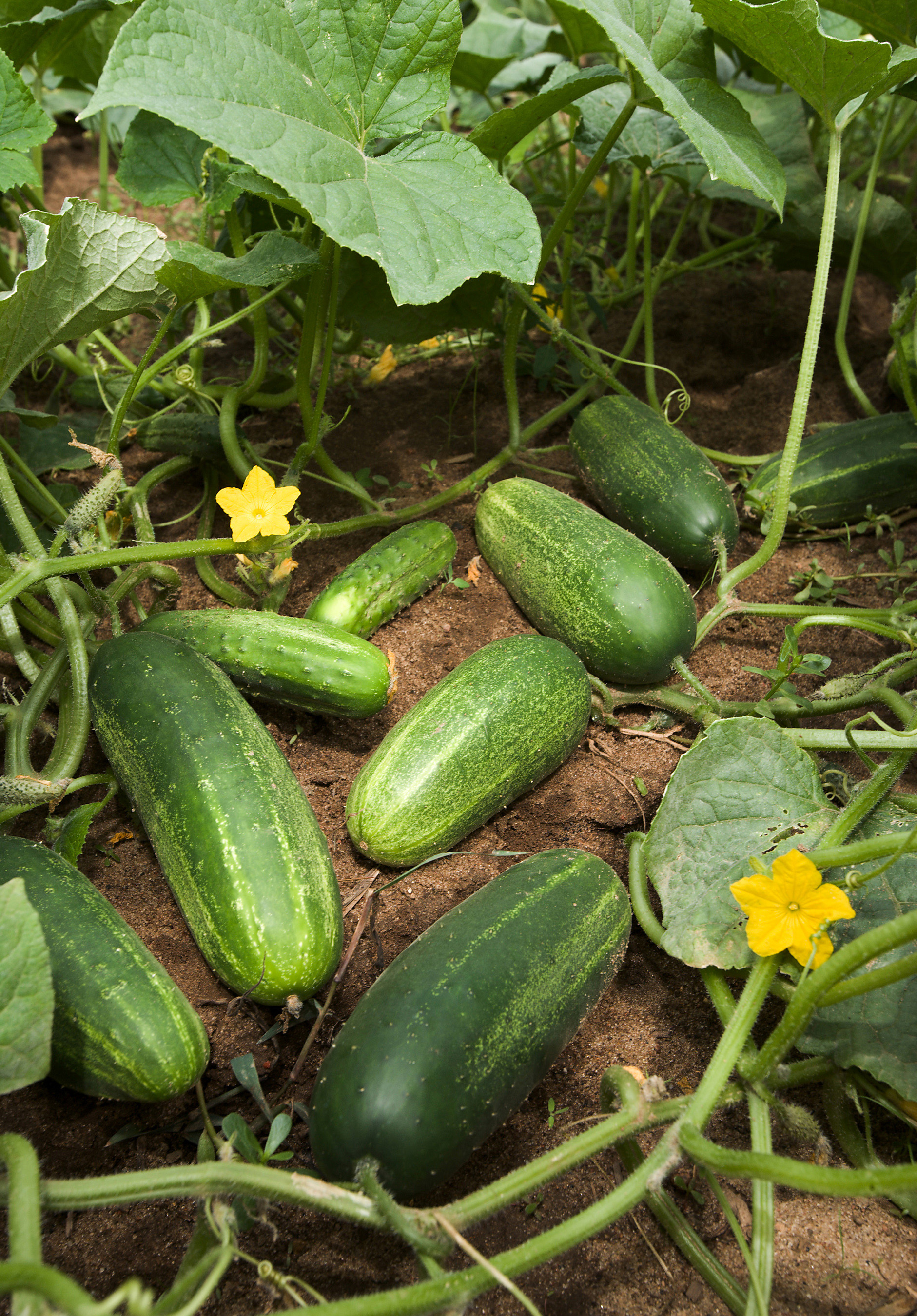
Cucumber (Cucumis sativus) is a widely cultivated plant in the gourd family Cucurbitaceae. It is a creeping vine that bears cylindrical fruits that are used as culinary vegetables. There are three main varieties of cucumber: slicing, pickling, and burpless. Within these varieties, several different cultivars have emerged. The cucumber is originally from Southern Asia, but now grows on most continents. Many different varieties are traded on the global market.
Sunflower (Helianthus annuus) is an annual plant native to the Americas. It possesses a large inflorescence (flowering head), and its name is derived from the flower's shape and image, which is often used to depict the sun. The plant has a rough, hairy stem, broad, coarsely toothed, rough leaves and circular heads of flowers. The heads consist of many individual flowers which mature into seeds, often in the hundreds, on a receptacle base. From the Americas, sunflower seeds were brought to Europe in the 16th century, where, along with sunflower oil, they became a widespread cooking ingredient. Leaves of the sunflower can be used as cattle feed, while the stems contain a fibre which may be used in paper production.
Barley (Hordeum vulgare L. ), a member of the grass family, is a major cereal grain. Important uses include use as animal fodder, as a source of fermentable material for beer and certain distilled beverages, and as a component of various health foods. It is used in soups and stews, and in barley bread of various cultures. Barley grains are commonly made into malt in a traditional and ancient method of preparation. In a 2007 ranking of cereal crops in the world, barley was fourth both in terms of quantity produced (136 million tons) and in area of cultivation (566,000 km²).
Ipomoea aquatica is a semiaquatic, tropical plant grown as a vegetable for its tender shoots and leaves. It is found throughout the tropical and subtropical regions of the world, although it is not known where it originated. This plant is known in English as water spinach, river spinach, water morning glory, water convolvulus, or by the more ambiguous names Chinese spinach, Chinese convolvulus, swamp cabbage or kangkong in Southeast Asia. Occasionally, it has also been mistakenly called "kale" in English, although kale is a strain of mustard belonging to the species Brassica oleracea and is completely unrelated to water spinach, which is a species of morning glory. It is known as phak bung in Thai, rau mu?ng in Vietnamese, trokuon in Khmer, kalmi shak in Bengali, kangkung in Malay and Indonesian and hayoyo in Ghana.
The sweet potato (<i>Ipomoea batatas</i>) is a dicotyledonous plant that belongs to the family Convolvulaceae. Its large, starchy, sweet-tasting, tuberous roots are a root vegetable. The young leaves and shoots are sometimes eaten as greens. The sweet potato is only distantly related to the potato (<i>Solanum tuberosum</i>) and does not belong to the nightshade family, Solanaceae, but both families belong to the same taxonomic order, the Solanales. (Wikipedia)


Okpa is a delicious delicacy popular in the Eastern part of Nigeria, especially in Enugu state. Okpa has equally won the hearts of people in different parts of Nigeria and is now classified as a traditional Nigerian delicacy.
female flowers of Humulus lupulus

fruit from Asimina triloba
rose cultivar (1951)
Species of chestnut tree

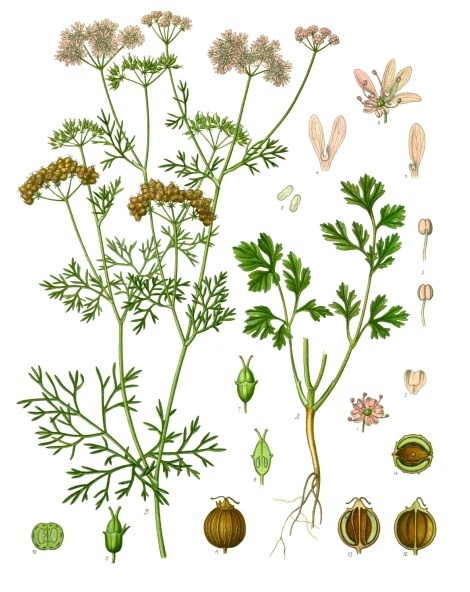
Flowering plant species in the carrot family

Species of edible plant

Flowering plant in the daisy family
Source
Compound data linked to PubChem CID 994, public domain via NCBI. Culinary context + ingredient mappings are maintained by Foodgeist's enrichment fleet and continuously re-matched by the pairings engine. PubChem CID 994