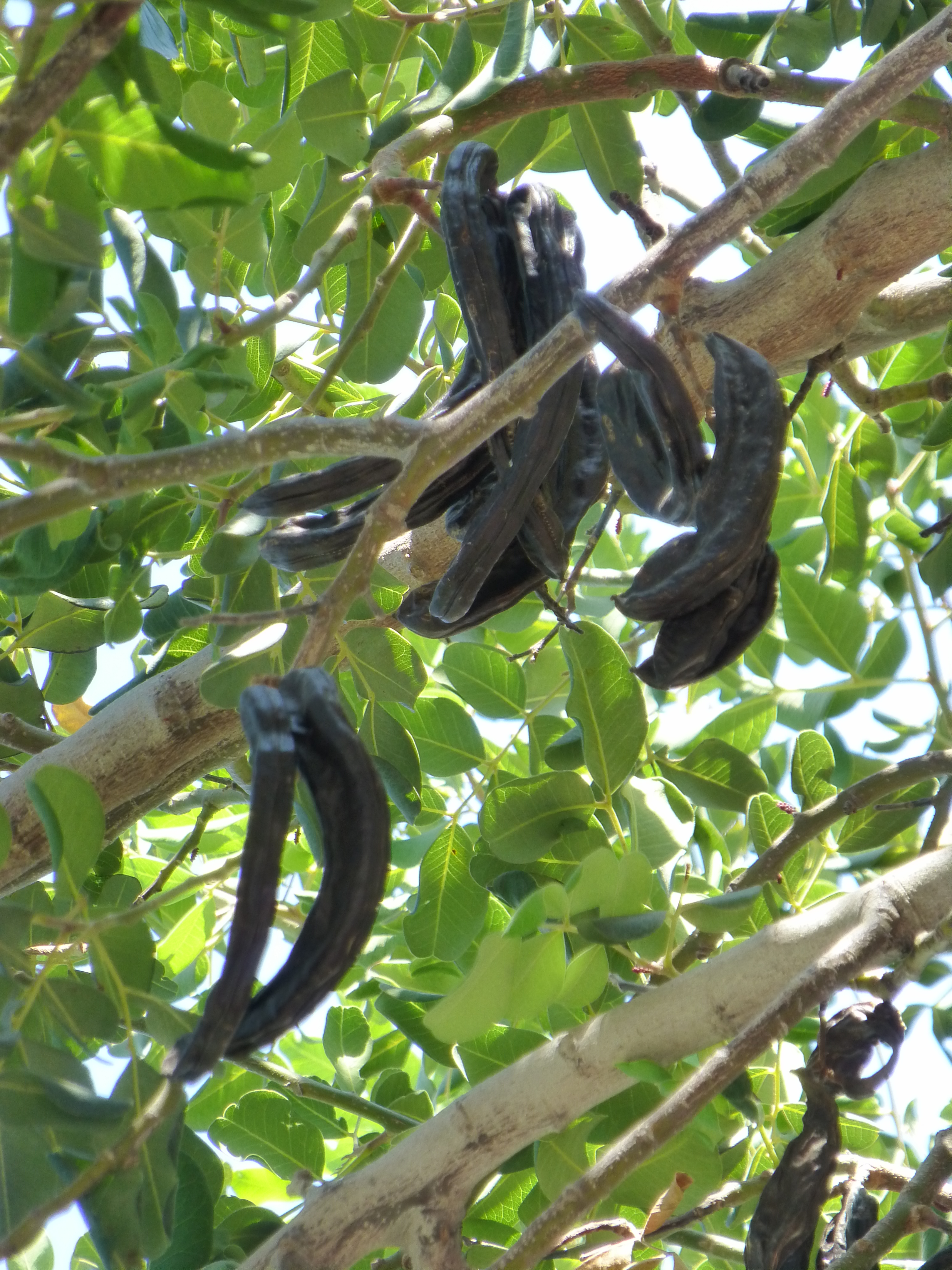
About
Ceratonia siliqua, commonly known as the carob tree and St John's-bread, is a species of flowering evergreen shrub or tree in the pea family, Fabaceae. It is widely cultivated for its edible pods, and as an ornamental tree in gardens. The ripe, dried pod is often ground to carob powder which is used as a substitute for cocoa powder.
Aroma profile
Derived from this ingredient’s flavor compounds
pungent×5
ethereal×4
sickening×4
fresh×6
aromatic×6
rancid×2
foul×2
sharp×2
Taste profile
Derived from this ingredient's compounds · measured taste classes
bittersweet
Composition
60 compounds identified — cross-referenced scientific databases
2-methylpropanoic acid(-)-epicatechin(-)-jasmonoyl-l-isoleucine(-)-menthone(-)-phaseollidin(-)-sativan(-)-vestitol(+)-1(10),4-cadinadiene(+)-7-iso-jasmonate(+)-catechin(+)-cis-abscisic aldehyde(+)-marmesin(+)-neomenthol(+)-pulegone(+)-taxifolin(±)-menthone(2-trans-6-trans)-farnesoate(2e,6e)-farnesol
Molecular affinity
Pairs well with — ingredients that share aroma compounds
Red Raspberry
8 shared
European Chestnut
4 shared
Coffee
7 shared
fenugreek seed (dried)
4 shared
White Mustard
4 shared
Garden Cress
3 shared
Based on shared flavor compounds · click to explore
Research Evidence
Multi-source verifiedVerification: Independently verified
The Geist can be wrong. Some flavor, taste, and pairing values are model-predicted, not lab-measured.