PubChem CID · CC0
<small>L</small>-lysine zwitterion
Foods containing this compound
The Greenland halibut or Greenland turbot (Reinhardtius hippoglossoides) belongs to the Pleuronectidae family (the right eye flounders), and is the only species of the genus Reinhardtius. It is a deepwater fish distributed from 200 to 1600 m but has been caught at depths more than 2,200 m . It is mainly found in waters with temperatures from 1-4 °C, but has also observed at sub-zero temperatures down to -2.1 °C. It has a circumpolar distribution and is found in both the Atlantic and the Pacific oceans. Its morphology with the left eye positioned on the dorsal ridge of the forehead gives it an appearance of a cyclops when looking straight at it. The central position of the left eye in the Greenland halibut probably gives it a much wider range of peripheral vision in comparison to other flatfish where the eye has migrated completely. The body shape is elongated and compressed dorsal-ventrally and muscles on both sides are equally developed. Both sides are pigmented; however the left blind side is slightly lighter in color than the right side. Its physical appearance suggests it to be a vigorous swimmer that can swim in a vertical position. Vertical swimming has been observed during tagging experiments. However, video analyzing of Greenland halibut behavior in front of a bottom trawl showed no sign of swimming in a vertical position. Even though most Greenland halibut are caught in bottom fishing gears (trawl, longline and gillnet) they have also been caught in surface drift nets which indicates that they can have a pelagic occurrence. Stomach analysis has also shown that the diet consists mostly of pelagic or bathypelagic organisms. Even though the Greenland halibut is a flatfish it does at times behave more like a roundfish.
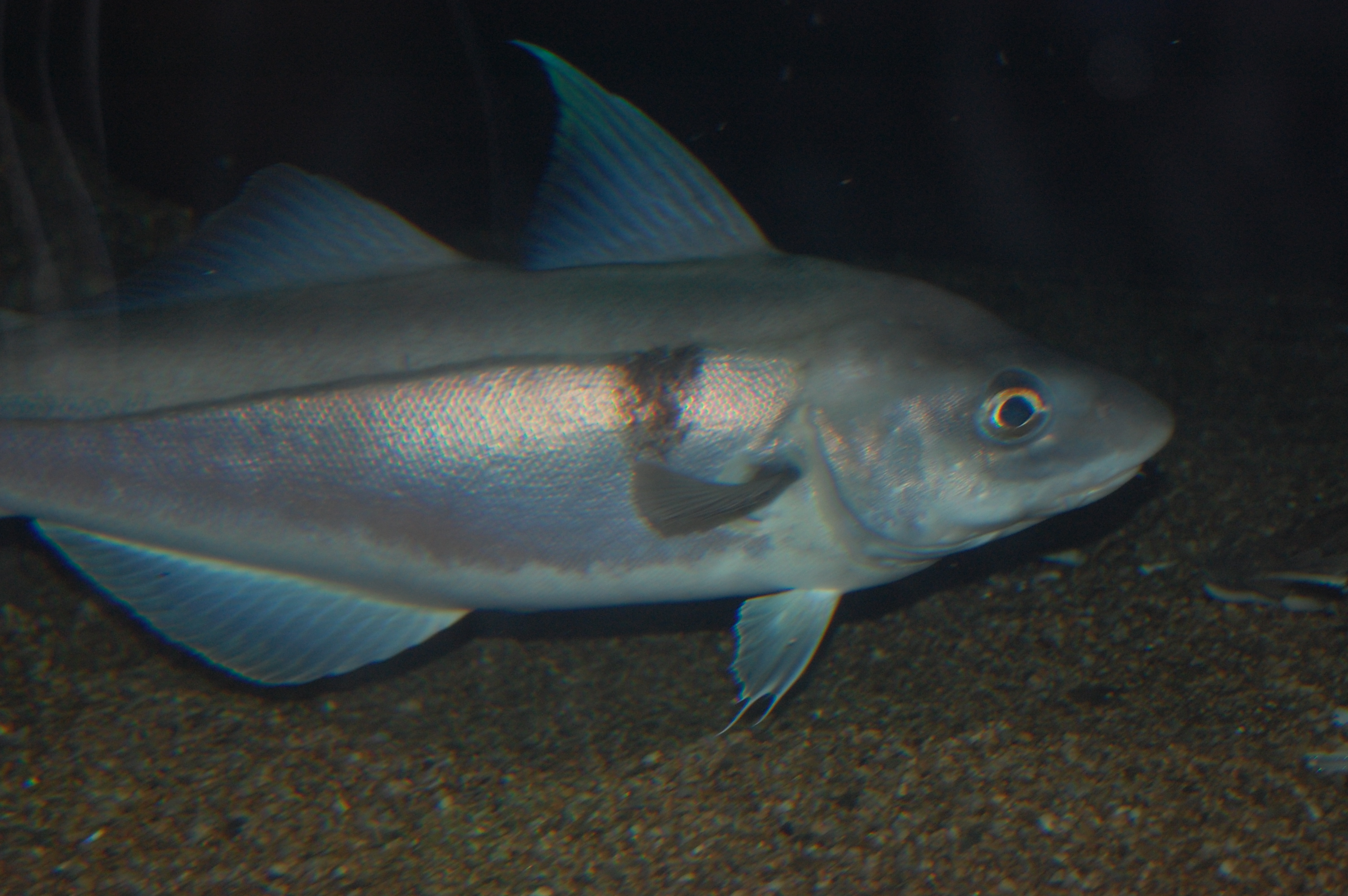
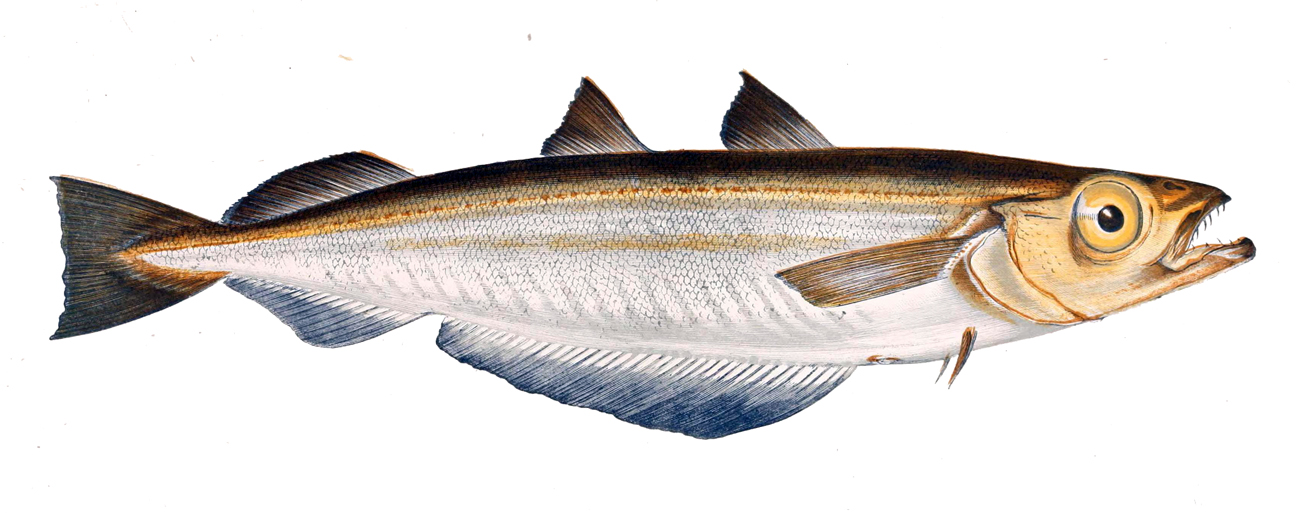
The haddock (Melanogrammus aeglefinus) is a marine fish distributed on both sides of the North Atlantic. Haddock is a popular food fish and is widely fished commercially.

The common ling or simply the ling, Molva molva, is a large member of a family of cod-like fishes. An ocean fish whose habitat is in the Atlantic region and can be found around Iceland, Faroe Islands, British Isles, the Norse coast and occasionally around Newfoundland, the ling has a long slender body that can reach 2 metres in length; in adulthood, it is generally a deep-running fish, spending much of its life at depths of 100 m or more; younger fish are found at shallower depths. The ling is edible; its flesh is prized and can be considered interchangeable with cod in either its fresh, salted or dried forms. The salted roe of the ling is considered a delicacy in Spain and is known as huevas de maruca. The lutefisk – ling that is first dried, then soaked in water and then steeped in a lye of soda and slaked lime – is a traditional dish at the Christmas table in Sweden, Norway and Finland.
Gadus is a genus of demersal fish in the family Gadidae, commonly known as cod, although there are additional cod species in other genera. Until recently, three species in the genus were recognized. Modern taxonomy also includes a fourth one, the Alaska pollock (Gadus chalcogrammus), which is not separate from the Norway pollock. Furthermore, Greenland cod (G. ogac) is no longer considered a distinct species but rather a subspecies of Pacific cod (G. macrocephalus).
The Atlantic halibut, Hippoglossus hippoglossus, is a flatfish of the family Pleuronectidae. They are demersal fish living on or near sand, gravel or clay bottoms at depths of between 50 and 2,000 m (and ft). The halibut is among the largest teleost (bony) fish in the world. Halibut are strong swimmers and are able to migrate long distances. Halibut size is not age-specific, but rather tends to follow a cycle related to halibut (and therefore food) abundance. The native habitat of the Atlantic halibut is the temperate waters of the northern Atlantic, from Labrador and Greenland to Iceland, the Barents Sea and as far south as the Bay of Biscay. It is the largest flatfish in the Atlantic and one of the largest species of flatfish in the world, reaching lengths of up to 4.7 m and weights of 320 kg . Its lifespan can reach 50 years.

Clupeinae is a subfamily of herrings, sardines and sprats belonging to the family Clupeidae.
Crayfish – also called crawfish or crawdads – are freshwater crustaceans resembling small lobsters, to which they are related; taxonomically, they are members of the superfamilies Astacoidea and Parastacoidea. They breathe through feather-like gills and are found in bodies of water that do not freeze to the bottom. They are mostly found in brooks and streams where there is fresh water running, and which have shelter against predators. Most crayfish cannot tolerate polluted water, although some species such as the invasive Procambarus clarkii are more hardy. Crayfish feed on living and dead animals and plants. In Australia, New Zealand and South Africa, the term crayfish or cray generally refers to a saltwater spiny lobster, of the genus Jasus that is indigenous to much of southern Oceania, while the freshwater species are usually called yabby, from the indigenous Australian and Maori names for the animal respectively, or by other names specific to each species. An exception is the freshwater Murray crayfish, which belongs to the family Parastacidae and is found on Australia's Murray River.

A flatfish is a member of the order (Pleuronectiformes) of ray-finned demersal fishes, also called the Heterosomata, sometimes classified as a suborder of Perciformes. In many species, both eyes lie on one side of the head, one or the other migrating through and around the head during development. Some species face their left side upward, some face their right side upward, and others face either side upward. Many important food fish are in this order, including the flounders, soles, turbot, plaice, and halibut. There are more than 400 species of this order. Some flatfish can camouflage themselves on the ocean floor.
Coffee is a brewed beverage prepared from the roasted or baked seeds of several species of an evergreen shrub of the genus Coffea. The two most common sources of coffee beans are the highly regarded Coffea arabica, and the "robusta" form of the hardier Coffea canephora. The latter is resistant to the coffee leaf rust (Hemileia vastatrix), but has a more bitter taste. Coffee plants are cultivated in more than 70 countries, primarily in equatorial Latin America, Southeast Asia, and Africa. Once ripe, coffee "berries" are picked, processed and dried to yield the seeds inside. The seeds are then roasted to varying degrees, depending on the desired flavor, before being ground and brewed to create coffee.
Anchovies are a family (Engraulidae) of small, common salt-water forage fish. There are 144 species in 17 genera, found in the Atlantic, Indian, and Pacific Oceans. Anchovies are usually classified as an oily fish.
The blue whiting, Micromesistius poutassou, one of the two species in the genus Micromesistius in the cod family, is common in the northeast Atlantic Ocean from Morocco to Iceland and Spitsbergen. It also occurs in the northern parts of the Mediterranean, where it may be locally abundant. Blue whiting also occur in the northwest Atlantic Ocean between Canada and Greenland, but is considered rare. It has a long, narrow body and a silvery underbody. The fish can attain a length of more than 40 cm. The average length of blue whiting caught off the west shores of the UK is 31 cm. A related species, southern blue whiting, Micromesistius australis, occurs in the Southern Hemisphere.

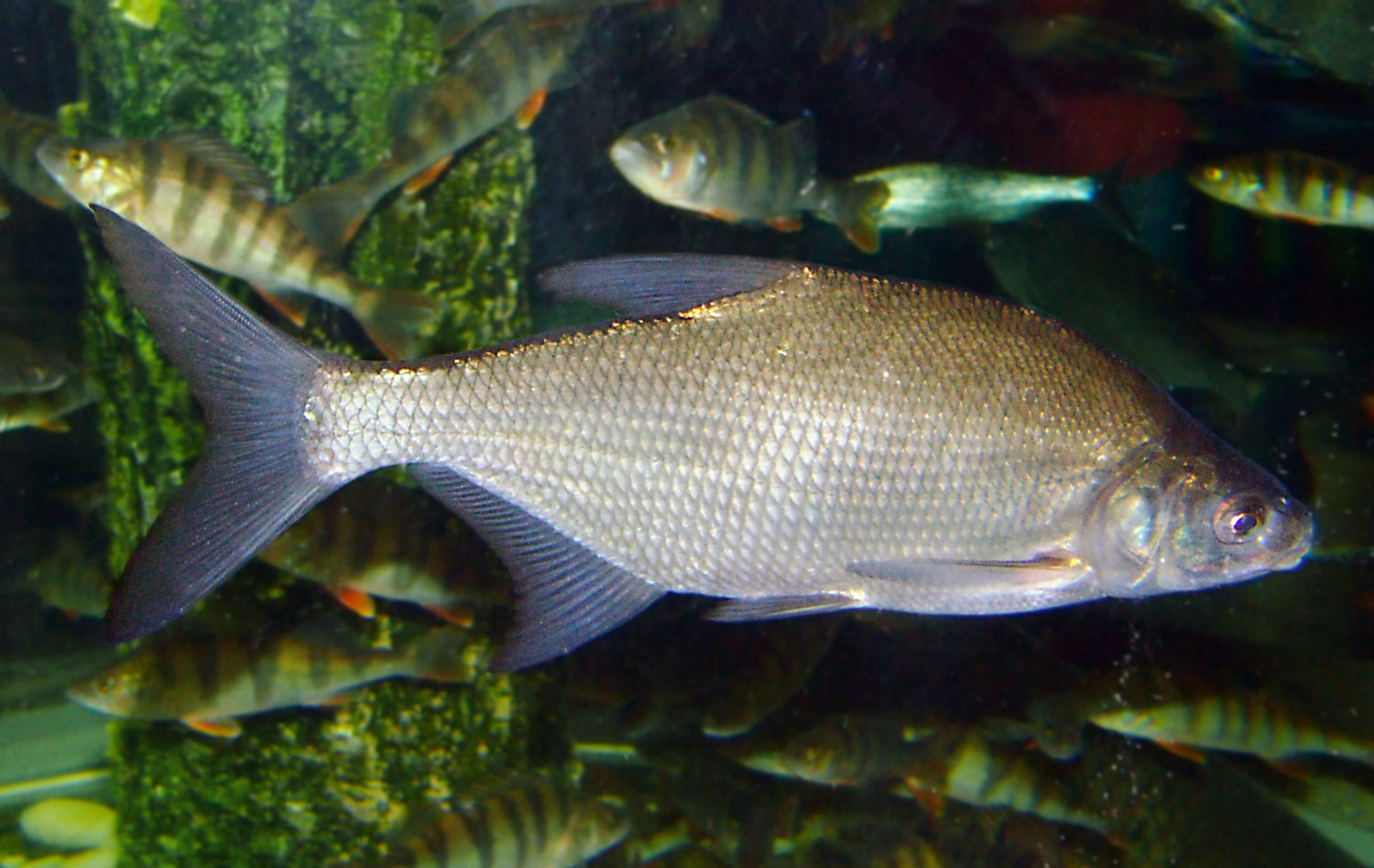
The common bream, freshwater bream, bream, bronze bream or carp bream, Abramis brama, is a European species of freshwater fish in the family Cyprinidae. It is now considered to be the only species in the genus Abramis.

Frozen dessert is the generic name for desserts made by freezing liquids, semi-solids, and sometimes even solids. They may be based on flavored water (shave ice, sorbet, snow cones, etc.), on fruit purées (such as sorbet), on milk and cream (most ice creams), on custard (frozen custard and some ice creams), on mousse (semifreddo), and others.

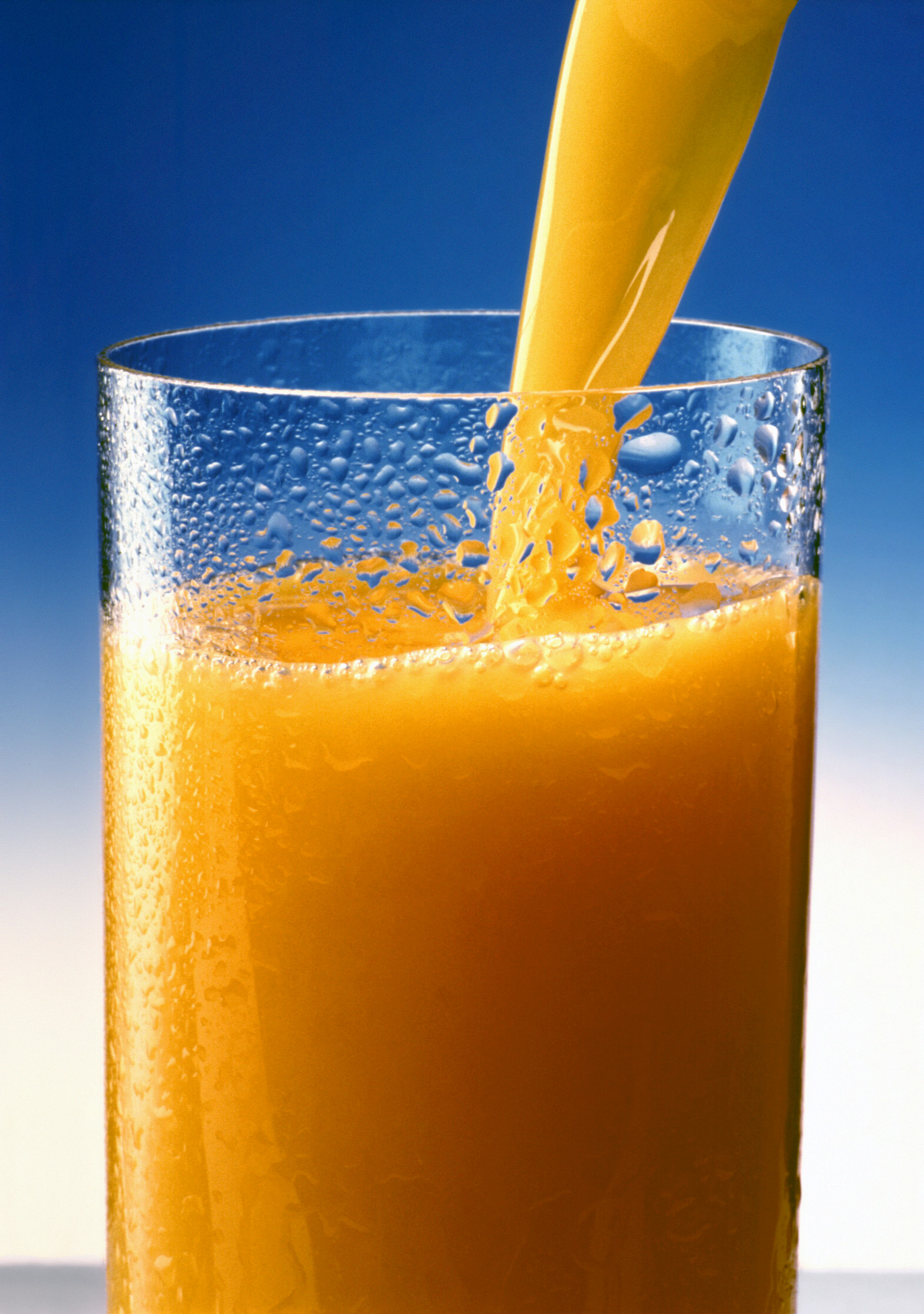
Juice is the liquid that is naturally contained in fruit or vegetable tissue. Juice is prepared by mechanically squeezing or macerating fruit or vegetable flesh without the application of heat or solvents. Many commercial juices are filtered to remove fiber or pulp, but high-pulp fresh orange juice is a popular beverage. Common methods for preservation and processing of fruit juices include canning, pasteurization, freezing, evaporation and spray drying. [Wikipedia]
A cracker is a baked good typically made from grain flour dough and usually manufactured in large quantities. Crackers (equivalent to savory biscuits in the UK) are usually flat, crisp, small in size and are made in various shapes, though are commonly round or square. Flavorings or seasonings, such as salt, herbs, seeds, and/or cheese, may be added to the dough or sprinkled on top before baking. Crackers are eaten on their own, or can accompany other food items, such as cheese or meat slices, or dips. [Wikipedia]

Vegetable juice is a drink made primarily of blended vegetables. Vegetable juice is often mixed with fruits such as tomatoes or grapes to improve flavor. It is often touted as a low-sugar alternative to fruit juice, although some commercial brands of vegetable juices use fruit juices as sweeteners, and may contain large amounts of sodium.
A soft drink (also called a soda, pop, coke, soda pop, fizzy drink, tonic, or carbonated beverage) is a non-alcoholic beverage that typically contains water (often, but not always carbonated water), a sweetener, and a flavoring agent. The sweetener may be sugar, high-fructose corn syrup, or a sugar substitute (in the case of diet drinks). A soft drink may also contain caffeine, fruit juice, or both. Widely sold soft drink flavors are cola, lemon-lime, root beer, orange, grape, vanilla, ginger ale, fruit punch, and sparkling lemonade. Soft drinks may be served chilled or at room temperature. They are rarely heated. [Wikipedia]
Margarine can indicate any of a wide range of butter or butter substitutes, typically composed of vegetable oils. Specifically the principle difference between butter and margarine is that butter is derived from animal fats (typically milk fats) while margarine is derived from plant fats (oils) and skim milk. [Wikipedia]
Source
Compound data linked to PubChem CID 5962, public domain via NCBI. Culinary context + ingredient mappings are maintained by Foodgeist's enrichment fleet and continuously re-matched by the pairings engine. PubChem CID 5962