lactose
Molecular structure
Mass spectrum
A real measured fragmentation pattern · 1 of 9 experimental spectra
Biochemical reactions
Metabolic reactions from curated biochemical databases · peer-reviewed
lactose + H2O = beta-D-galactose + D-glucose
D-glucose + UDP-alpha-D-galactose = lactose + UDP + H(+)
beta-D-Gal-(1->3)-beta-D-GlcNAc-(1->3)-beta-D-Gal-(1->4)-D-Glc + H2O = beta-D-galactosyl-(1->3)-N-acetyl-D-glucosamine + lactose
lactose(in) + H(+)(out) = lactose(out) + H(+)(in)
lactose(in) + H(+)(in) = lactose(out) + H(+)(out)
Research papers
591 peer-reviewed papers reference this compound · top-cited shown
Foods containing this compound

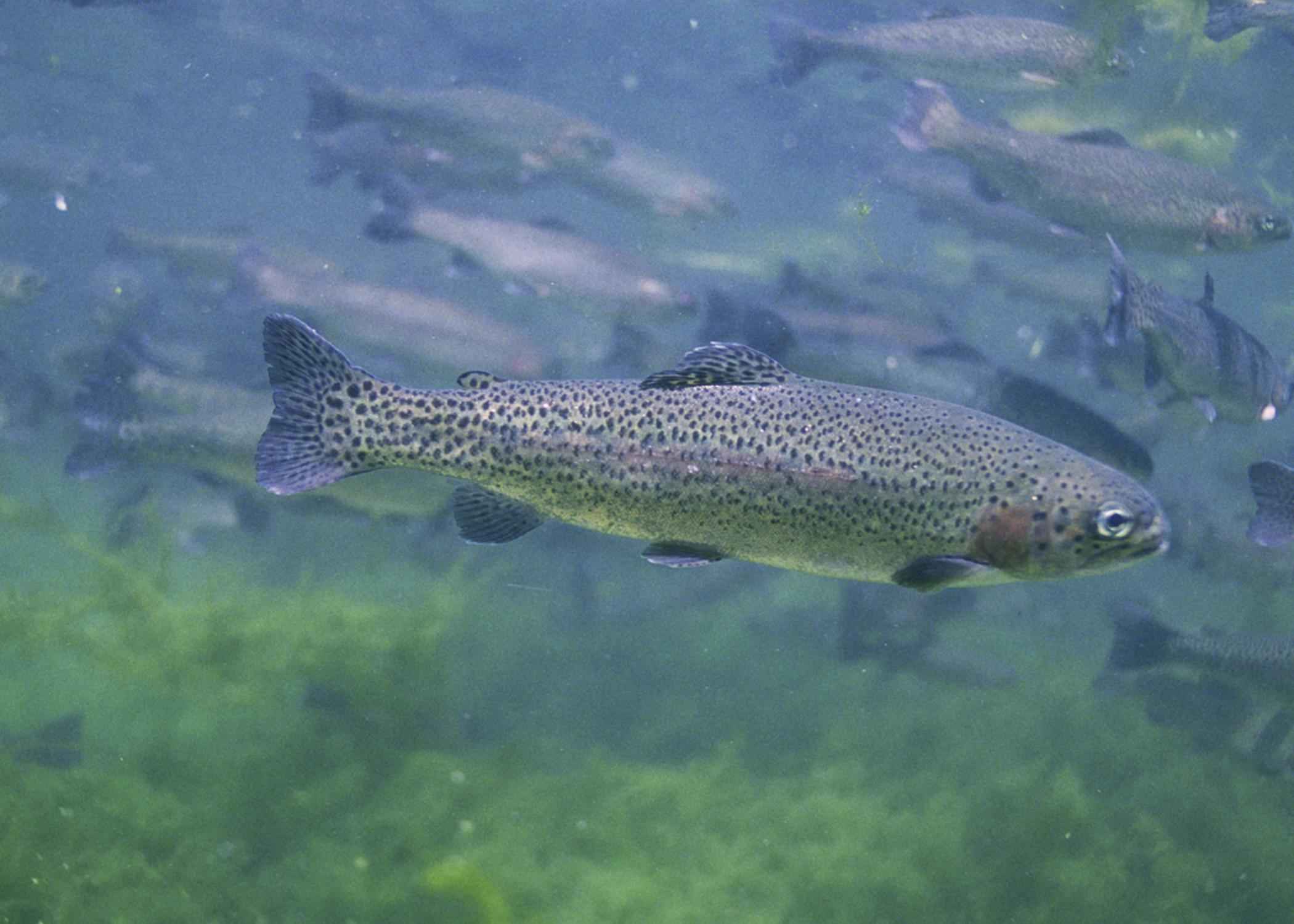
The rainbow trout (Oncorhynchus mykiss) is a species of salmonid native to tributaries of the Pacific Ocean in Asia and North America. The steelhead is a sea-run rainbow trout usually returning to freshwater to spawn after two to three years at sea; rainbow trout and steelhead trout are the same species. The fish are often called salmon trout. Several other fish in the salmonid family are called trout; some are anadromous like salmon, whereas others are resident in freshwater only. The species has been introduced for food or sport to at least 45 countries, and every continent except Antarctica. In some locations, such as Southern Europe, Australia and South America, they have negatively impacted upland native fish species, either by eating them, outcompeting them, transmitting contagious diseases, or hybridization with closely related species and subspecies that are native to western North America.
Verified Data
Compound identity and culinary context are continuously cross-referenced across open scientific databases and maintained by Foodgeist's enrichment pipeline.
The Geist can be wrong. Some flavor, taste, and pairing values are model-predicted, not lab-measured.