PubChem CID · CC0
(2E,4Z)-deca-2,4-dienal
Foods containing this compound

Mentha citrata (Ehrh.) (syn. Mentha × piperita L. var. citrata (Ehrh.) Briq.; syn. Mentha aquatica var. citrata (Ehrh.) Benth.; syn. Mentha odorata Sole, Mentha adspersa Moench) is an herb. It is also known as Bergamot mint, Eau-de-cologne Mint, Horsemint, Lemon Mint, Lime Mint, Orange Mint, Pineapple Mint, Su Nanesi, Water Mint, Wild Water Mint, and in Central America Yerba Buena.
Asparagus officinalis is a spring vegetable, a flowering perennial plant species in the genus Asparagus. It was once classified in the lily family, like its Allium cousins, onions and garlic, but the Liliaceae have been split and the onion-like plants are now in the family Amaryllidaceae and asparagus in the Asparagaceae. Asparagus officinalis is native to most of Europe, northern Africa and western Asia, and is widely cultivated as a vegetable crop.
Cauliflower is one of several vegetables in the species Brassica oleracea, in the family Brassicaceae. It is an annual plant that reproduces by seed. Typically, only the head (the white curd) is eaten. The cauliflower head is composed of a white inflorescence meristem. Cauliflower heads resemble those in broccoli, which differs in having flower buds.

Broccoli is an edible green plant in the cabbage family, whose large flowering head is used as a vegetable. The word broccoli comes from the Italian plural of broccolo, which means "the flowering top of a cabbage", and is the diminutive form of brocco, meaning "small nail" or "sprout". Broccoli is often boiled or steamed but may be eaten raw.

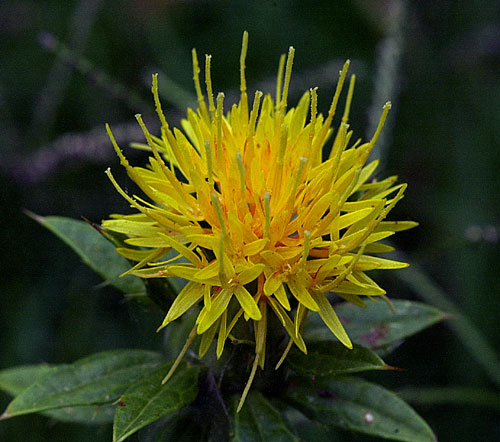
Safflower is a highly branched, herbaceous, thistle-like annual. It is commercially cultivated for vegetable oil extracted from the seeds. Plants are 30 to 150 cm (to in) tall with globular flower heads having yellow, orange, or red flowers. Each branch will usually have from one to five flower heads containing 15 to 20 seeds per head. Safflower is native to arid environments having seasonal rain. It grows a deep taproot which enables it to thrive in such environments.
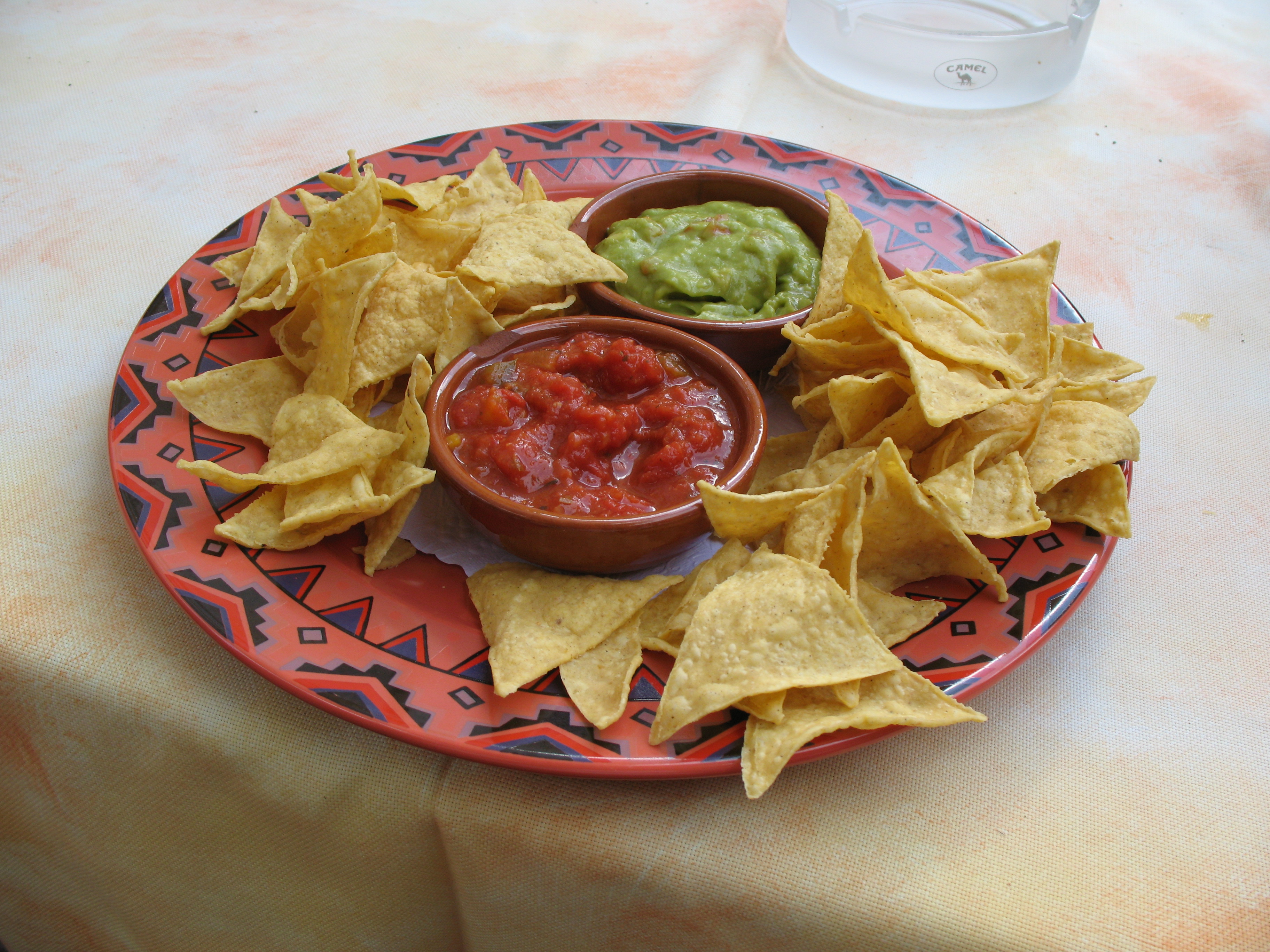
A tortilla chip is a snack food made from corn tortillas, which are cut into wedges and then fried (alternatively they may be discs pressed out of corn masa then fried or baked). Corn tortillas are made of corn, vegetable oil, salt and water. Though usually made of yellow corn, they can also be made of white, blue, or red corn. Some manufacturers include many other ingredients including wheat and sugar and MSG (monosodium glutamate, a common food additive). [Wikipedia]
Cabbage (Brassica oleracea or variants) is a leafy green biennial, grown as an annual vegetable for its dense-leaved heads. Closely related to other cole crops, such as broccoli, cauliflower and brussels sprouts, it descends from B. oleracea var. oleracea, a wild field cabbage. Cabbage heads generally range from 1 to 8 pounds (to kg), and can be green, purple and white. Smooth-leafed firm-headed green cabbages are the most common, with smooth-leafed red and crinkle-leafed savoy cabbages of both colors seen more rarely. It is difficult to trace the exact history of cabbage, but it was most likely domesticated somewhere in Europe before 1000 BC. By the Middle Ages it was a prominent part of European cuisine, although savoys were not developed until the 16th century. Cabbage heads are generally picked during the first year of the plants' life cycles, but those intended for seed are allowed to grow a second year, and must be kept separated from other cole crops to prevent cross pollination. Cabbage is prone to several nutrient deficiencies, as well as multiple pests, bacteria and fungal diseases. The Food and Agriculture Organization of the United Nations (FAO) reports that world production of cabbage and other brassicas (these plants are combined by the FAO for reporting purposes) for calendar year 2010 was almost 58,000,000 metric tons . Almost half were grown in China. Cabbages are prepared in many different ways for eating, although pickling, in dishes such as sauerkraut, is the most popular. Cabbage is a good source of beta-carotene, vitamin C and fiber. Cabbage when contaminated is sometimes a source of food-borne illness in humans.
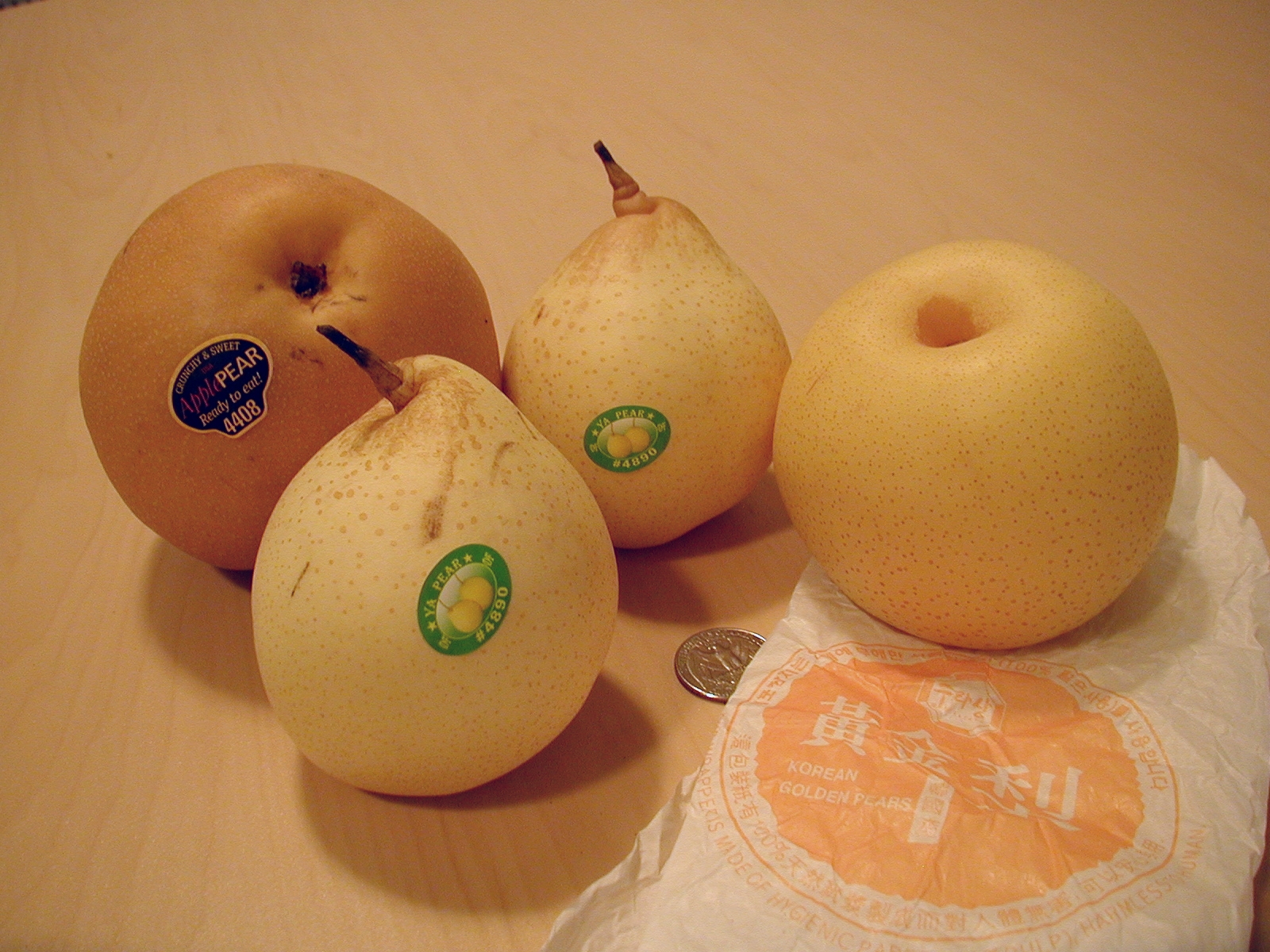
In botany, a pome (after the Latin word for fruit: p?mum) is a type of fruit produced by flowering plants in the subtribe Malinae of the family Rosaceae.


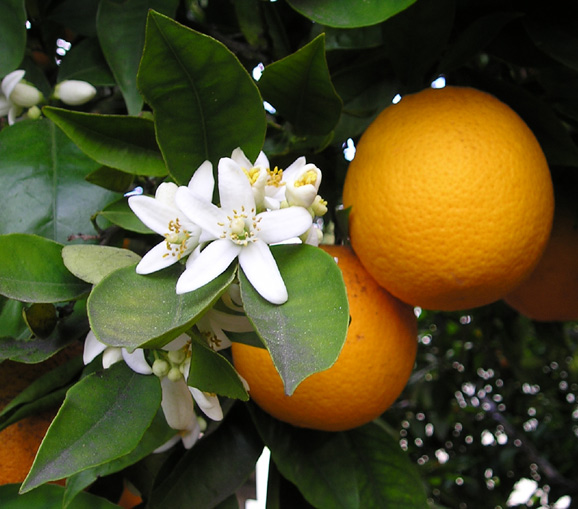
Citrus is a common term and genus (Citrus) of flowering plants in the rue family, Rutaceae. The most recent research indicates an origin in Australia, New Caledonia and New Guinea. Some researchers believe that the origin is in the part of Southeast Asia bordered by Northeast India, Burma (Myanmar) and the Yunnan province of China, and it is in this region that some commercial species such as oranges, mandarins, and lemons originally came. Citrus fruit has been cultivated in an ever-widening area since ancient times; the best-known examples are the oranges, lemons, grapefruit, and limes.


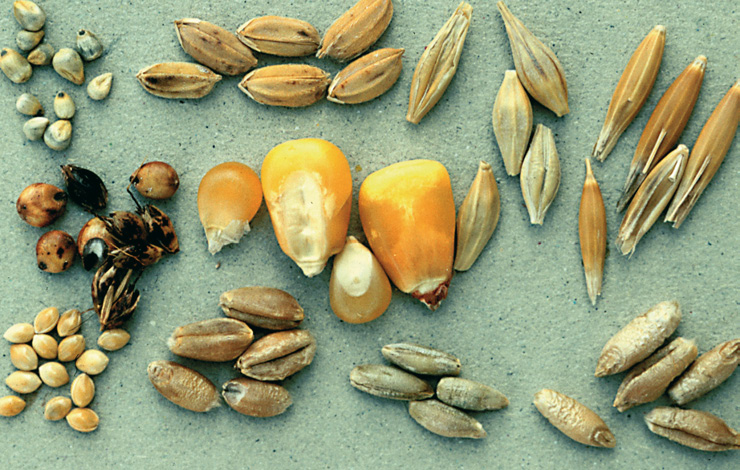
A pulse (Latin "puls", from Ancient Greek πόλτος póltos, “porridge”), sometimes called a "grain legume", is an annual leguminous crop yielding from one to twelve seeds of variable size, shape, and color within a pod. Pulses are used for food for humans and other animals. Included in the pulses are: dry beans like pinto beans, kidney beans and navy beans; dry peas; lentils; and others.

In botany, a fruit is a part of a flowering plant that derives from specific tissues of the flower, one or more ovaries, and in some cases accessory tissues. Fruits are the means by which these plants disseminate seeds. Many of them that bear edible fruits, in particular, have propagated with the movements of humans and animals in a symbiotic relationship as a means for seed dispersal and nutrition, respectively; in fact, humans and many animals have become dependent on fruits as a source of food. Fruits account for a substantial fraction of the world's agricultural output, and some (such as the apple and the pomegranate) have acquired extensive cultural and symbolic meanings.

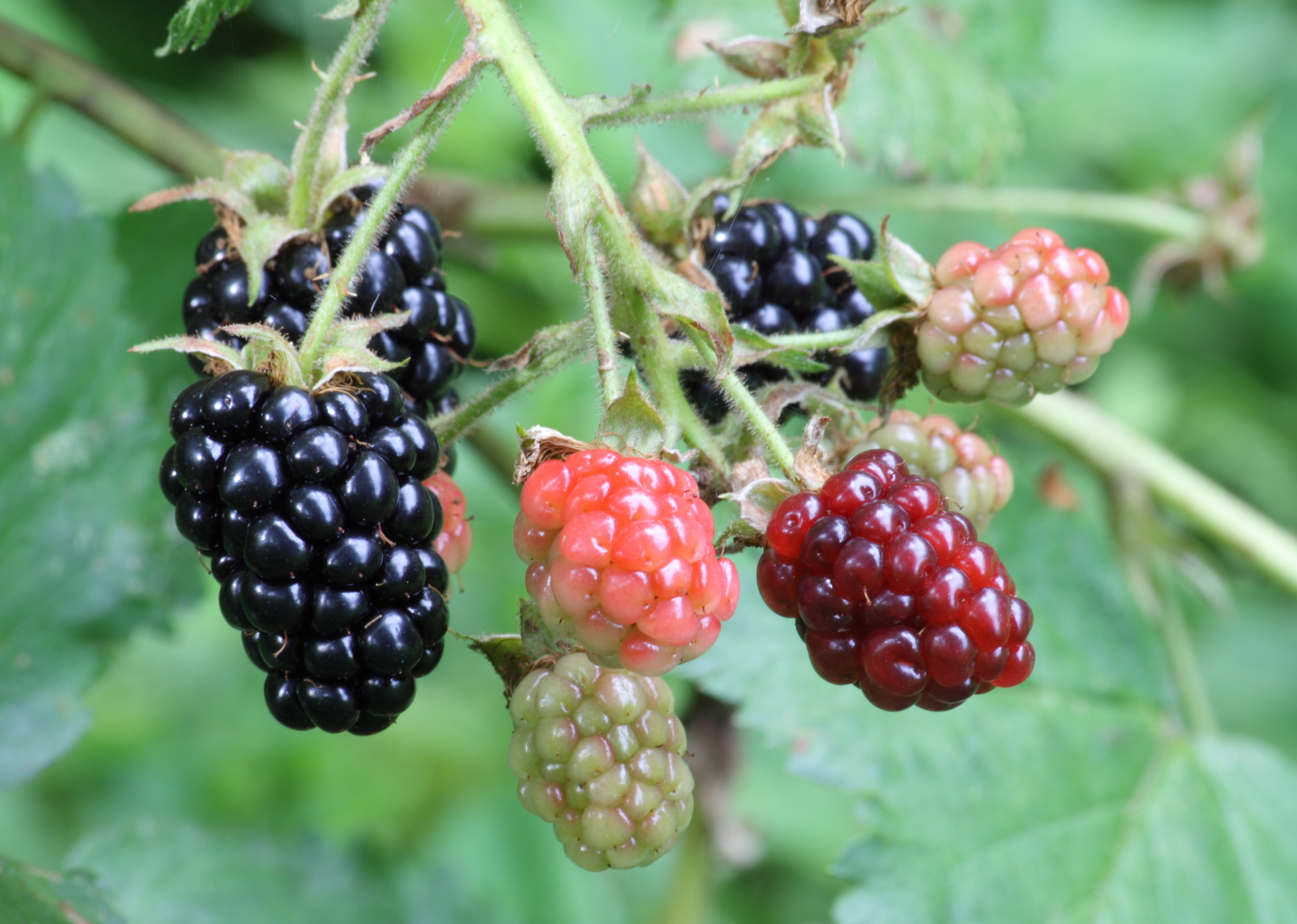
Rubus laciniatus, commonly called evergreen blackberry or cutleaf blackberry, is a species of blackberry that is native to Eurasia. It has been introduced to Australia and North America, and become a weed and highly invasive species in forested habitats in the United States and Canada, it is very difficult to control. Evergreen blackberry is a deciduous shrub that grows up to 3 meters tall with prickly shoots. The flowers are in clusters, the petals are pink or white. The fruits are shiny and black, similar to the common blackberry, with a unique and fruitier taste. The fruits are not true berries in the botanical sense. [Wikipedia]

The blackberry is an edible fruit produced by many species in the genus Rubus in the family Rosaceae. Blackberry is a perennial plant that grows to 3-6 meter tall. The pale pink flowers are produced in late spring and early summer. The fruits are rich in vitamin C, anthocyanins, flavonols and ellagitannins (PMID: 22082199), they have shown the beneficial effects to human health (PMID: 22082199)


Round unleavened flatbread made of either nixtamlized corn or wheat
Mexican filled tortilla dish
Source
Compound data linked to PubChem CID 6427087, public domain via NCBI. Culinary context + ingredient mappings are maintained by Foodgeist's enrichment fleet and continuously re-matched by the pairings engine. PubChem CID 6427087