PubChem CID · CC0
Secoisolariciresinol
Foods containing this compound


Flax (also known as common flax or linseed) is a member of the genus Linum in the family Linaceae. It is a food and fibre crop that is grown in cooler regions of the world. Flax fibres are taken from the stem of the plant and are two to three times as strong as those of cotton. As well, flax fibres are naturally smooth and straight. Europe and North America depended on flax for cloth until the nineteenth century, when cotton overtook flax as the most common plant used for making linen paper. Flax is grown on the Canadian Praires for linseed oil, which is used as a drying oil in paints and varnish and in products such as linoleum and printing inks. It is native to the region extending from the eastern Mediterranean to India and was probably first domesticated in the Fertile Crescent. Flax was extensively cultivated in ancient Ethiopia and ancient Egypt. A discovery reported in 2009 of spun, dyed, and knotted wild flax fibers in a prehistoric cave in the Republic of Georgia shows that the plant was already in use by humans at the surprisingly early date of 30,000 B.C. New Zealand flax is not related to flax but was named after it, as both plants are used to produce fibers.

Soy yogurt, also referred to as Soya yogurt, Soygurt or Yofu (a portmanteau of yogurt and tofu), is a yogurt prepared with soy milk. Soy yogurt is made using soy milk, adding yogurt bacteria (Lactobacillus delbrueckii subsp. bulgaricus and Streptococcus salivarius subsp. thermophilus), sometimes adding sweeteners such as fructose, glucose, or sugar. [Wikipedia]


Species of plant

fruit of plants from the genus Capsicum, members of the nightshade family, Solanaceae

mixture of many substances remaining after cocoa butter is extracted from cacao beans

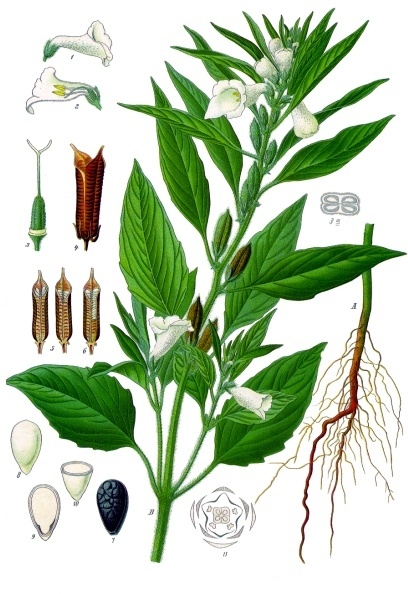
seed of Sesamum indicum

Food produced by bacterial fermentation of milk

Defatted powder extracted from cocoa beans


Source
Compound data linked to PubChem CID 586372, public domain via NCBI. Culinary context + ingredient mappings are maintained by Foodgeist's enrichment fleet and continuously re-matched by the pairings engine. PubChem CID 586372