Molecular structure
24-hydroxy-3-oxocholest-4-en-26-oyl-CoA
Foods containing this compound


Spearmint or spear mint (Mentha spicata) is a species of mint native to much of Europe and southwest Asia, though its exact natural range is uncertain due to extensive early cultivation.
The nutmeg tree is any of several species of trees in genus Myristica. The most important commercial species is Myristica fragrans, an evergreen tree indigenous to the Banda Islands in the Moluccas (or Spice Islands) of Indonesia.

Dill (Anethum graveolens), also known as Lao coriander, depending on where it is grown, is either a perennial or annual herb. It is the sole species of the genus Anethum. Dill is widely grown in Eurasia where its leaves and seeds are used as a herb or spice for flavouring food. Like caraway, the fern-like leaves of dill are aromatic and are used to flavor many foods such as gravlax (cured salmon) and other fish dishes, borscht and other soups, as well as pickles (where the dill flower is sometimes used). Dill is best when used fresh as it loses its flavor rapidly if dried; however, freeze-dried dill leaves retain their flavor relatively well for a few months [Wikipedia].

Phaseolus vulgaris, the common bean, string bean, field bean, flageolet bean, French bean, garden bean, haricot bean, pop bean, or snap bean, is a herbaceous annual plant grown worldwide for its edible fruit, either the dry seed or the unripe fruit, both of which are referred to as beans. The leaf is also occasionally used as a vegetable, and the straw can be used for fodder. Along with other species of the bean genus (Phaseolus), it is classified botanically into the legume family (Fabaceae), most of whose members acquire nitrogen through an association with rhizobia, a species of nitrogen-fixing bacteria.

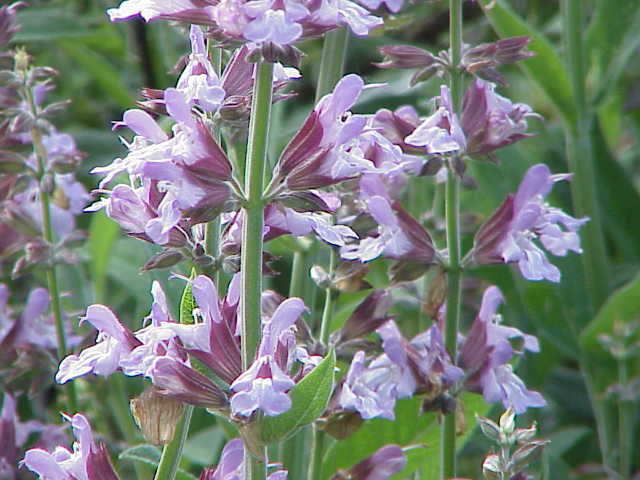

Horseradish (Armoracia rusticana, syn. Cochlearia armoracia) is a perennial plant of the Brassicaceae family (which also includes mustard, wasabi, broccoli, and cabbage). The plant is probably native to southeastern Europe and western Asia. It is now popular around the world. It grows up to 1.5 metres (5 feet) tall, and is cultivated primarily for its large, white, tapered root. The intact horseradish root has hardly any aroma. When cut or grated, however, enzymes from the now-broken plant cells break down sinigrin to produce allyl isothiocyanate, which irritates the mucous membranes of the sinuses and eyes. Once exposed to air (via grating) or heat, if not used immediately or mixed in vinegar, the grated mash darkens, loses its pungency, and becomes unpleasantly bitter-tasting.

Savoy cabbage (Brassica oleracea convar. capitata var. sabauda L. ) is a variety of the cabbage, a cultivar of the plant species Brassica oleracea. Savoy cabbage is a winter vegetable. A variety of the savoy cabbage is the January King Cabbage. Savoy cabbage can be used in a variety of recipes. It pairs well with red wine, apples, spices, horseradish and meat. It can be used for roulades, in stews and soups, as well as roasted plain and drizzled with olive oil. Cabbage that is heavy for its size with leaves that are unblemished and have a bright, fresh look are signs of desirable quality. Whole cabbages are preferred whenever possible as pre-cut or preshredded cabbage has a greatly diminished vitamin content. Peak season for most cabbages runs from November through April. Fresh whole cabbage will keep in the refrigerator for one to six weeks depending on type and variety. Hard green, white or red cabbages will keep the longest while the looser Savoy and Chinese varieties need to be consumed more quickly. It is necessary to keep the outer leaves intact without washing when storing since moisture hastens decay. Cabbage provides fiber, vitamins A, C, K and B6, folate, potassium, manganese, thiamin, calcium, iron and magnesium.

The common oat (Avena sativa) is a species of cereal grain grown for its seed, which is known by the same name (usually in the plural, unlike other grains). While oats are suitable for human consumption as oatmeal and rolled oats, one of the most common uses is as livestock feed.
The swede (from Swedish turnip), rutabaga, turnip, yellow turnip, or neep (Brassica napobrassica, or Brassica napus var. napobrassica, or Brassica napus subsp. rapifera) is a root vegetable that originated as a cross between the cabbage and the turnip. The roots are prepared for human food in a variety of ways, and the leaves can be eaten as a leaf vegetable. The roots and tops are also used as winter feed for livestock, when they may be fed directly, or by allowing the animals to forage the plants in the field.


Cauliflower is one of several vegetables in the species Brassica oleracea, in the family Brassicaceae. It is an annual plant that reproduces by seed. Typically, only the head (the white curd) is eaten. The cauliflower head is composed of a white inflorescence meristem. Cauliflower heads resemble those in broccoli, which differs in having flower buds.
The cherimoya, also spelled chirimoya, is the fruit of the species Annona cherimola, which generally is thought to be native to the Andes, although an alternative hypothesis proposes Central America as the origin of cherimoya because many of its wild relatives occur in this area. Today cherimoya is grown throughout South Asia, Central America, South America, Southern California and southern Andalucia [La Axarquia].
A grape is a fruiting berry of the deciduous woody vines of the botanical genus Vitis. Grapes can be eaten raw or they can be used for making wine, jam, juice, jelly, grape seed extract, raisins, vinegar, and grape seed oil. Grapes are a non-climacteric type of fruit, generally occurring in clusters.
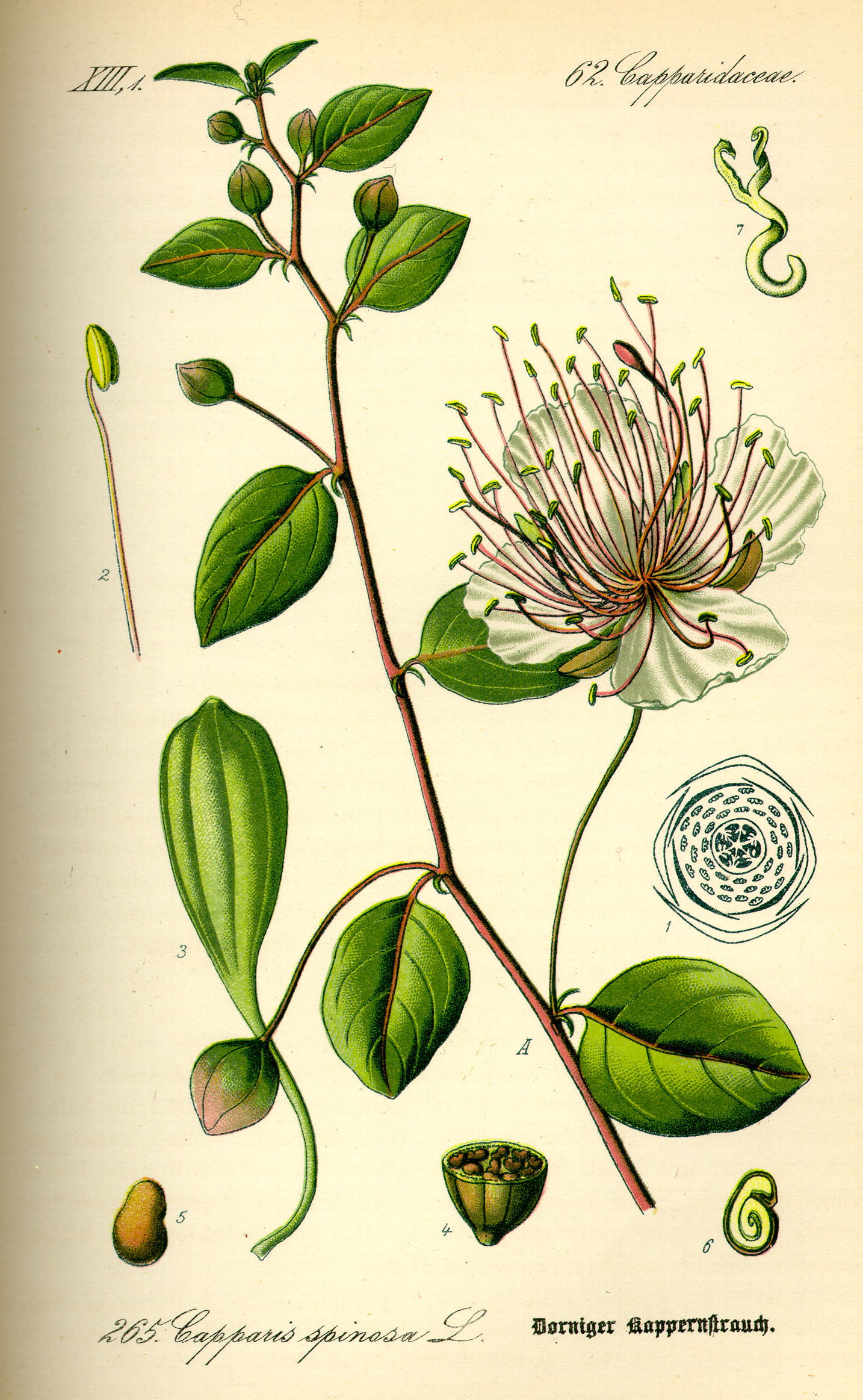
Capparis spinosa, the caper bush, also called Flinders rose, is a perennial winter-deciduous plant that bears rounded, fleshy leaves and large white to pinkish-white flowers. The plant is best known for the edible flower buds (capers), often used as a seasoning, and the fruit (caper berry), both of which are usually consumed pickled. Other species of Capparis are also picked along with C. spinosa for their buds or fruits. Other parts of Capparis plants are used in the manufacture of medicines and cosmetics.

Syzygium cumini, jambul, jambolan, jamblang, or jamun, is an evergreen tropical tree in the flowering plant family Myrtaceae. Syzygium cumini is native to Bangladesh, India, Nepal, Pakistan, Sri Lanka, Malaysia, the Philippines, and Indonesia. The name of the fruit is sometimes mistranslated as blackberry, which is a different fruit in an unrelated family.
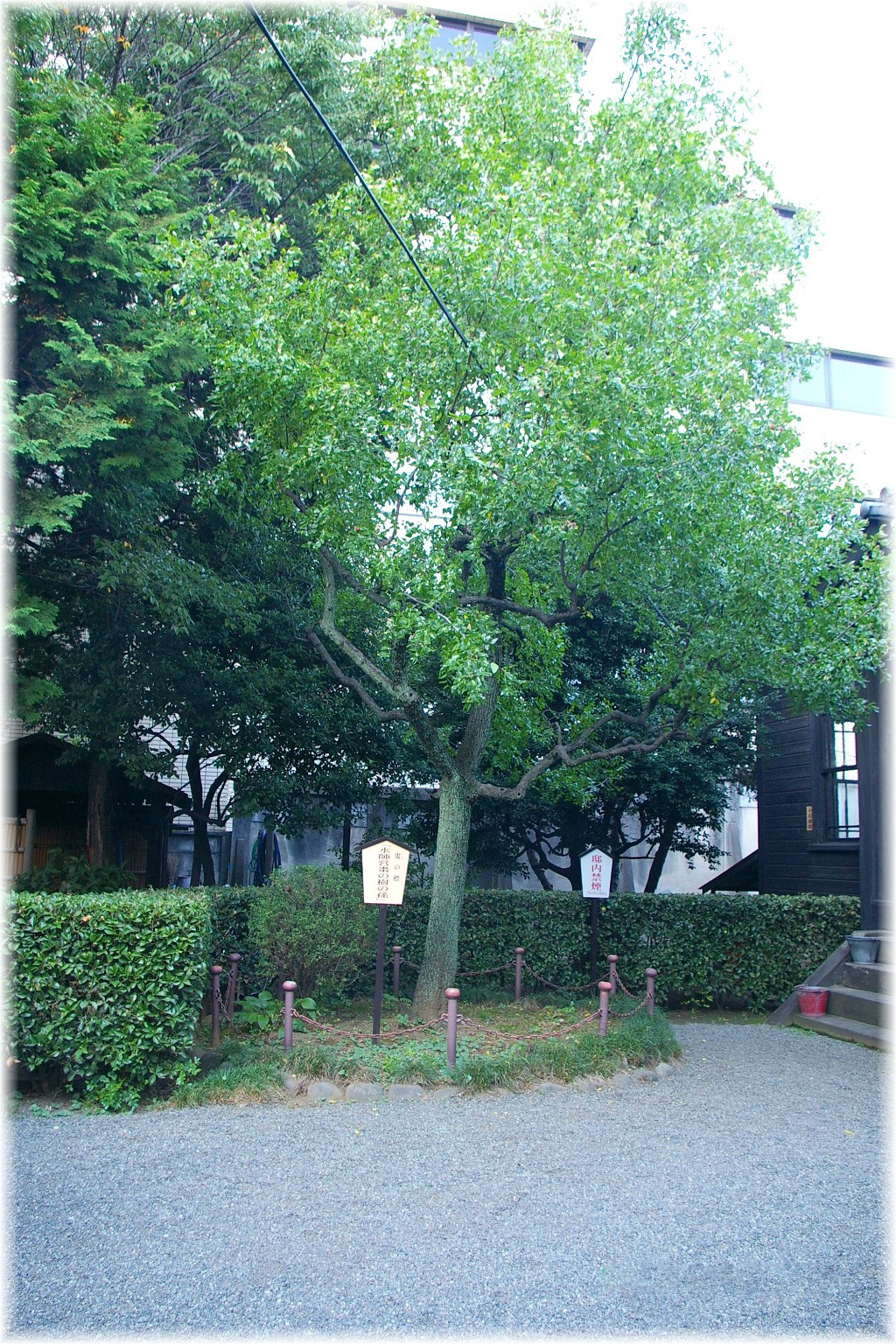
Ziziphus jujuba (from Greek ζίζυφον, zízyphon), commonly called jujube (sometimes jujuba), red date, Chinese date, Korean date, or Indian date is a species of Ziziphus in the buckthorn family (Rhamnaceae), used primarily as a shade tree that also bears fruit.
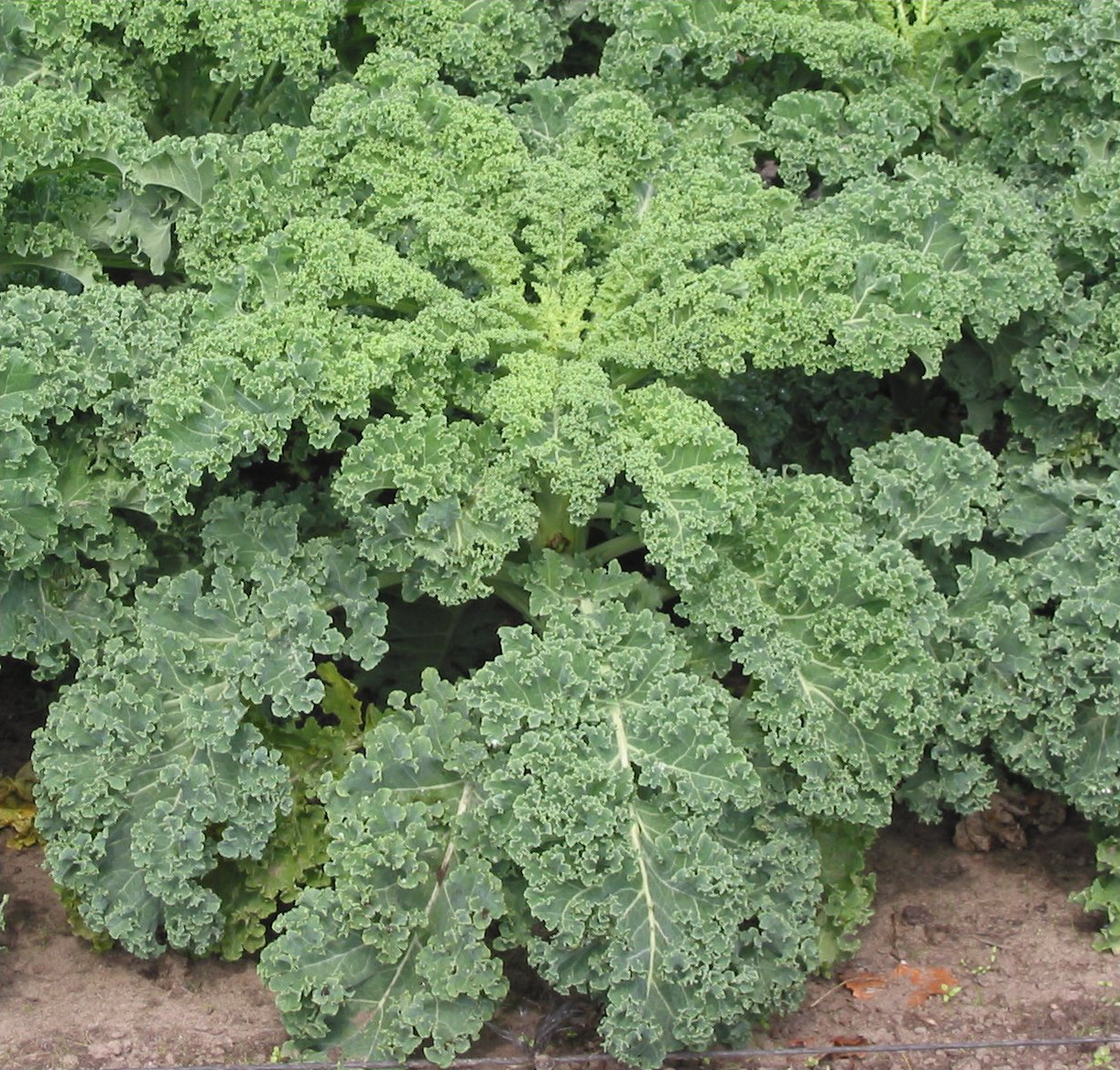
Kale or borecole is a form of cabbage, with green or purple leaves, in which the central leaves do not form a head. It is considered to be closer to wild cabbage than most domesticated forms. The species Brassica oleracea contains a wide array of vegetables, including broccoli, cauliflower, collard greens, and brussels sprouts. The cultivar group Acephala also includes spring greens and collard greens, which are extremely similar genetically.

The papaya, papaw, or pawpaw is the fruit of the plant Carica papaya, the sole species in the genus Carica of the plant family Caricaceae. It is native to the tropics of the Americas, perhaps from southern Mexico and neighbouring Central America. It was first cultivated in Mexicoseveral centuries before the emergence of the Mesoamerican classical civilizations. The papaya is a large, tree-like plant, with a single stem growing from 5 to 10 m (to ft) tall, with spirally arranged leaves confined to the top of the trunk. The lower trunk is conspicuously scarred where leaves and fruit were borne. The leaves are large, 50–70 cm in diameter, deeply palmately lobed, with seven lobes. Unusually for such large plants, the trees are dioecious. The tree is usually unbranched, unless lopped. The flowers are similar in shape to the flowers of the Plumeria, but are much smaller and wax-like. They appear on the axils of the leaves, maturing into large fruit - 15–45 cm long and 10–30 cm in diameter. The fruit is ripe when it feels soft (as soft as a ripe avocado or a bit softer) and its skin has attained an amber to orange hue. Carica papaya was the first transgenic fruit tree to have its genome deciphered.
The purple mangosteen (Garcinia mangostana), colloquially known simply as mangosteen, is a tropical evergreen tree believed to have originated in the Sunda Islands and the Moluccas of Indonesia. It grows mainly in Southeast Asia, and also in tropical South American countries such as Colombia, in the state of Kerala in India and in Puerto Rico, where the tree has been introduced. The tree grows from 6 to 25 m (19.7 to 82.0 ft) tall. The fruit of the mangosteen is sweet and tangy, juicy, somewhat fibrous, with fluid-filled vesicles (like the flesh of citrus fruits), with an inedible, deep reddish-purple colored rind (exocarp) when ripe. In each fruit, the fragrant edible flesh that surrounds each seed is botanically endocarp, i.e., the inner layer of the ovary. Seeds are almond-shaped and sized.
The Pitanga, Surinam Cherry, Brazilian Cherry, or Cayenne Cherry (Eugenia uniflora) is a plant in the family Myrtaceae, native to tropical South America's east coast ranging from Suriname to southern Brazil, as well as parts of Paraguay and Uruguay. Known as Pitanga throughout Brazil or Ñangapirí in surrounding countries, The plant is relatively pest resistant, easy to grow and high in antioxidants. The Surinam Cherry is often used in gardens as a hedge or screen. The tree was introduced to Bermuda for ornamental purposes but is now out of control and listed as an invasive species.
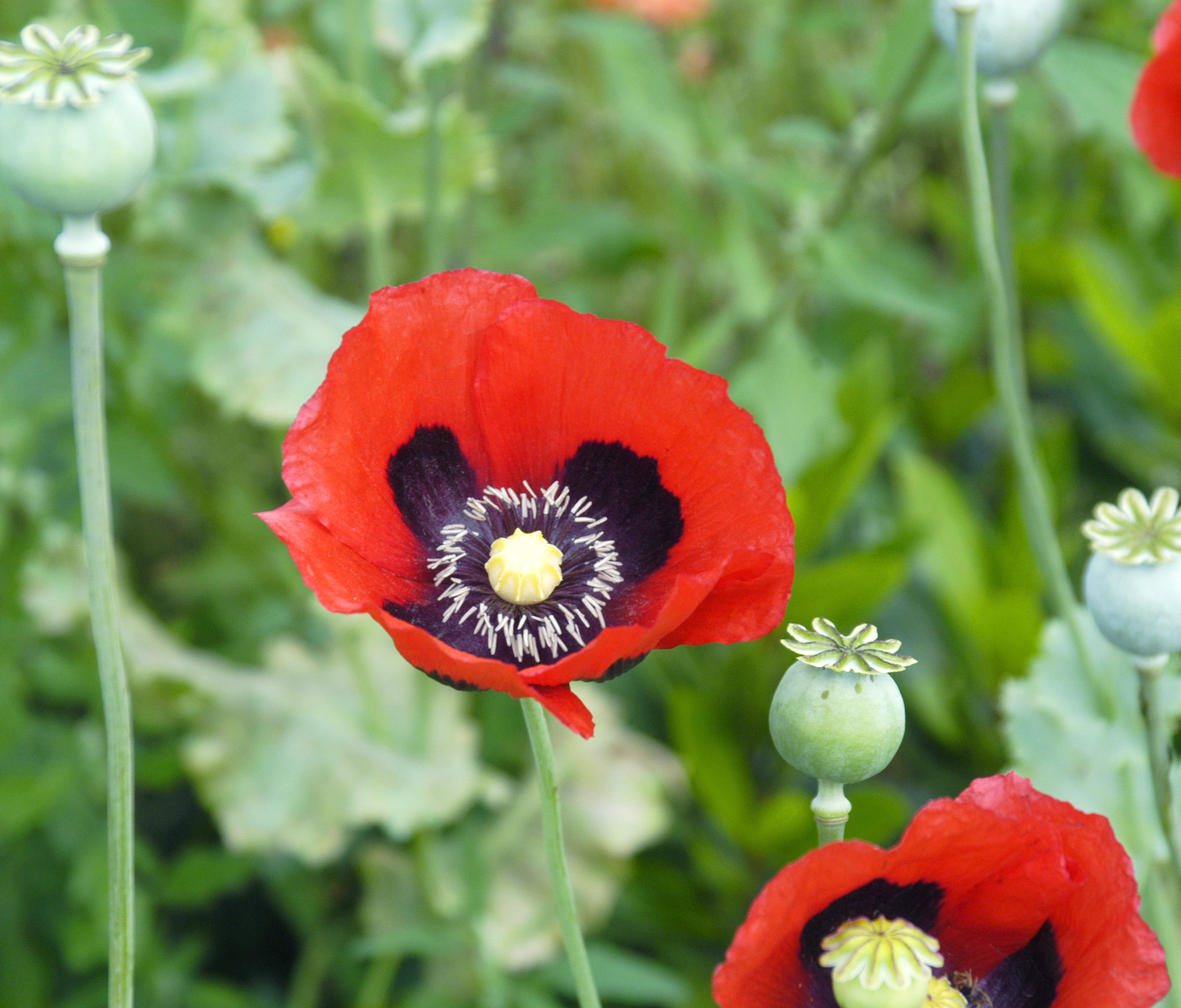
Papaver somniferum, the Opium poppy, is the species of plant from which opium and poppy seeds are derived. Opium is the source of many narcotics, including morphine (and its derivative heroin), thebaine, codeine, papaverine, and noscapine. The Latin botanical name means the "sleep-bringing poppy", referring to the sedative properties of some of these opiates.

A chestnut is the seed of a tree related to the oak tree, which grows in the northern hemisphere. It grows its seeds in a spikey shell.
The rose hip, also known as rose haw or rose hep, is the fruit of the rose plant, that typically is red-to-orange, but ranges from dark purple to black in some species. Rose hips begin to form after successful pollination of flowers in spring or early summer, and ripen in late summer through autumn.

Cinnamomum cassia, called Chinese cassia or Chinese cinnamon, is an evergreen tree originating in southern China, and widely cultivated there and elsewhere in southern and eastern Asia (India, Indonesia, Laos, Malaysia, Taiwan, Thailand, and Vietnam). It is one of several species of Cinnamomum that are used primarily for their aromatic bark, which is used as a spice. In the United States of America, Chinese cassia is often sold under the culinary name of "cinnamon". The buds are also used as a spice, especially in India, and were once used by the ancient Romans.
Yam is the common name for some plant species in the genus Dioscorea (family Dioscoreaceae) that form edible tubers. These are perennial herbaceous vines cultivated for the consumption of their starchy tubers in Africa, Asia, Latin America, the Caribbean and Oceania. There are many cultivars of yam. Although some varieties of sweet potato (Ipomoea batatas) are also called yam in parts of the United States and Canada, it is not part of the family Dioscoreaceae; rather it is in the morning glory family Convolvulaceae.
Watermelon (Citrullus lanatus, family Cucurbitaceae) is a vine-like (scrambler and trailer) flowering plant originally from southern Africa. Its fruit, which is also called watermelon, is a special kind referred to by botanists as a pepo, a berry which has a thick rind and fleshy center (mesocarp and endocarp). Pepos are derived from an inferior ovary, and are characteristic of the Cucurbitaceae. The watermelon fruit, loosely considered a type of melon – although not in the genus Cucumis – has a smooth exterior rind (green, yellow and sometimes white) and a juicy, sweet interior flesh (usually deep red to pink, but sometimes orange, yellow and even green if not ripe).

The pomelo (Citrus maxima or Citrus grandis), pummelo, pommelo, or shaddock is a crisp citrus fruit native to South and Southeast Asia. It is usually pale green to yellow when ripe, with sweet white (or, more rarely, pink or red) flesh and very thick albedo (rind pith). It is the largest citrus fruit, 15–25 centimetres ( ) in diameter, and usually weighing 1–2 kilograms ( ).

The orange (specifically, the sweet orange) is the fruit of the citrus species Citrus × sinensis in the family Rutaceae.The fruit of the Citrus sinensis is considered a sweet orange, whereas the fruit of the Citrus aurantium is considered a bitter orange. The orange is a hybrid, possibly between pomelo (Citrus maxima) and mandarin (Citrus reticulata), which has been cultivated since ancient times.

Wheat (Triticum spp. ) is a cereal grain, originally from the Levant region of the Near East and Ethiopian Highlands, but now cultivated worldwide. In 2010, world production of wheat was 651 million tons, making it the third most-produced cereal after maize (844 million tons) and rice (672 million tons). Wheat was the second most-produced cereal in 2009; world production in that year was 682 million tons, after maize (817 million tons), and with rice as a close third (679 million tons). This grain is grown on more land area than any other commercial food. World trade in wheat is greater than for all other crops combined. Globally, wheat is the leading source of vegetable protein in human food, having a higher protein content than soybeans or the other major cereals, maize (corn) or rice. In terms of total production tonnages used for food, it is currently second to rice as the main human food crop and ahead of maize, after allowing for maize's more extensive use in animal feeds. Wheat was a key factor enabling the emergence of city-based societies at the start of civilization because it was one of the first crops that could be easily cultivated on a large scale, and had the additional advantage of yielding a harvest that provides long-term storage of food. Wheat contributed to the emergence of city-states in the Fertile Crescent, including the Babylonian and Assyrian empires. Wheat grain is a staple food used to make flour for leavened, flat and steamed breads, biscuits, cookies, cakes, breakfast cereal, pasta, noodles, couscous and for fermentation to make beer, other alcoholic beverages, or biofuel. Wheat is planted to a limited extent as a forage crop for livestock, and its straw can be used as a construction material for roofing thatch. The whole grain can be milled to leave just the endosperm for white flour. The by-products of this are bran and germ. The whole grain is a concentrated source of vitamins, minerals, and protein, while the refined grain is mostly starch.
Muskmelon (Cucumis melo) is a species of melon that has been developed into many cultivated varieties. These include smooth skinned varieties such as honeydew, crenshaw and casaba, and different netted cultivars (cantaloupe, Persian melon and Santa Claus or Christmas melon). The Armenian cucumber is also a variety of muskmelon, but its shape, taste, and culinary uses more closely resemble those of a cucumber. The large number of cultivars in this species approaches that found in wild cabbage, though morphological variation is not as extensive. It is a fruit of a type called pepo. Muskmelon is native to Persia, Anatolia, Armenia, and adjacent areas on the west and the east which is believed to be their center of origin and development, with a secondary center including the northwest provinces of India and Afghanistan. Although truly wild forms of C. melo have not been found, several related wild species have been noted in those regions.

The quince (Cydonia oblonga) is the sole member of the genus Cydonia in the family Rosaceae (which also contains apples and pears, among other fruits). It is a small deciduous tree that bears a pome fruit, similar in appearance to a pear, and bright golden-yellow when mature. Throughout history the cooked fruit has been used as food, but the tree is also grown for its attractive pale pink blossom and other ornamental qualities.
The loquat (Eriobotrya japonica) is a species of flowering plant in the family Rosaceae, native to south-central China. It is a large evergreen shrub or small tree, grown commercially for its yellow fruit, and also cultivated as an ornamental plant.
Canola refers to a cultivar of either Rapeseed (Brassica napus L.) or field mustard (Brassica campestris L. or Brassica Rapa var.). Its seeds are used to produce edible oil suitable for consumption by humans and livestock. Originally, Canola was bred naturally from rapeseed in Canada by Keith Downey and Baldur R. Stefansson in the early 1970s, but it has a very different nutritional profile in addition to much less erucic acid. The name "canola" was derived from "Canadian oil, low acid" in 1978. [Wikipedia]

Shea tree is a tree indigenous to Africa, occurring in Mali, Cameroon, Congo, Côte d'Ivoire, Ghana, Guinea, Togo, Nigeria, Senegal, Sudan, Burkina Faso and Uganda. The shea fruit consists of a thin, tart, nutritious pulp that surrounds a relatively large, oil-rich seed from which shea butter is extracted. Throughout Africa, shea butter is used extensively for food and medicinal purposes, and is a major source of dietary fat. The fruit is edible and delicious. It tastes roughly like a fig. [Wikipedia]
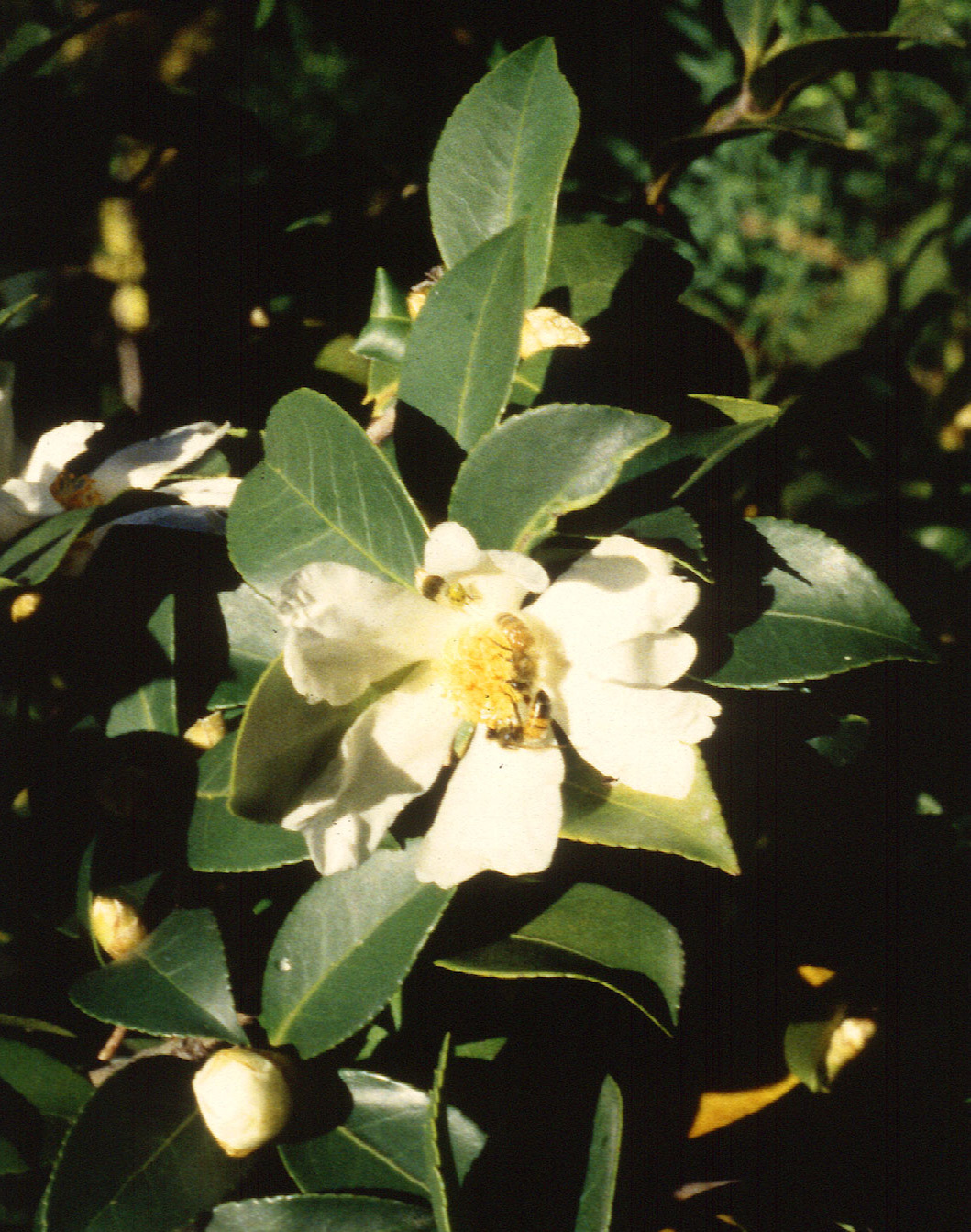
Oil-seed camellia (or tea oil camellia) is an important source of edible oil (known as tea oil or camellia oil) obtained from its seeds. Tea oil is a sweetish seasoning and cooking oil that should not be confused with tea tree oil, an essential oil that is used for medical and cosmetical purposes and originates from the leaves of a different plant. [Wikipedia]
The soybean (US) or soya bean (UK) (Glycine max) is a species of legume native to East Asia, widely grown for its edible bean which has numerous uses. The plant is classed as an oilseed rather than a pulse by the UN Food and Agricultural Organization (FAO). Fat-free (defatted) soybean meal is a significant and cheap source of protein for animal feeds and many prepackaged meals; soy vegetable oil is another product of processing the soybean crop. For example, soybean products such as textured vegetable protein (TVP) are ingredients in many meat and dairy analogues. Soybeans produce significantly more protein per acre than most other uses of land. Traditional nonfermented food uses of soybeans include soy milk, and from the latter tofu and tofu skin. Fermented foods include soy sauce, fermented bean paste, natto, and tempeh, among others. The oil is used in many industrial applications. The main producers of soy are the United States (35%), Brazil (27%), Argentina (19%), China (6%) and India (4%). The beans contain significant amounts of phytic acid, alpha-linolenic acid, and isoflavones.
Sunflower (Helianthus annuus) is an annual plant native to the Americas. It possesses a large inflorescence (flowering head), and its name is derived from the flower's shape and image, which is often used to depict the sun. The plant has a rough, hairy stem, broad, coarsely toothed, rough leaves and circular heads of flowers. The heads consist of many individual flowers which mature into seeds, often in the hundreds, on a receptacle base. From the Americas, sunflower seeds were brought to Europe in the 16th century, where, along with sunflower oil, they became a widespread cooking ingredient. Leaves of the sunflower can be used as cattle feed, while the stems contain a fibre which may be used in paper production.

Chives is the common name of Allium schoenoprasum, the smallest species of the edible onions. A perennial plant, it is native to Europe, Asia and North America. A. schoenoprasum is the only species of Allium native to both the New and the Old Worlds. The name of the species derives from the Greek skhoínos and práson. Its English name, chives, derives from the French word cive, from cepa, the Latin word for onion. Chives are a commonly used herb and can be found in grocery stores or grown in home gardens. In culinary use, the scapes are diced and used as an ingredient for fish, potatoes, soups, and other dishes. Chives have insect-repelling properties that can be used in gardens to control pests.

Cress (Lepidium sativum), sometimes referred to as garden cress to distinguish it from similar plants also referred to as cress. Garden Cress is a rather fast-growing, edible herb. Garden cress is genetically related to watercress and mustard, sharing their peppery, tangy flavor and aroma. In some regions, garden cress is known as mustard and cress, garden pepper cress, pepper grass, pepperwort or poor person's pepper. This annual plant can reach a height of 60 cm (~24 inches), with many branches on the upper part. The white to pinkish flowers are only 2 mm (1/12 of an inch) across, clustered in branched racemes.


seed of Vigna unguiculata subsp. unguiculata

cactus pad
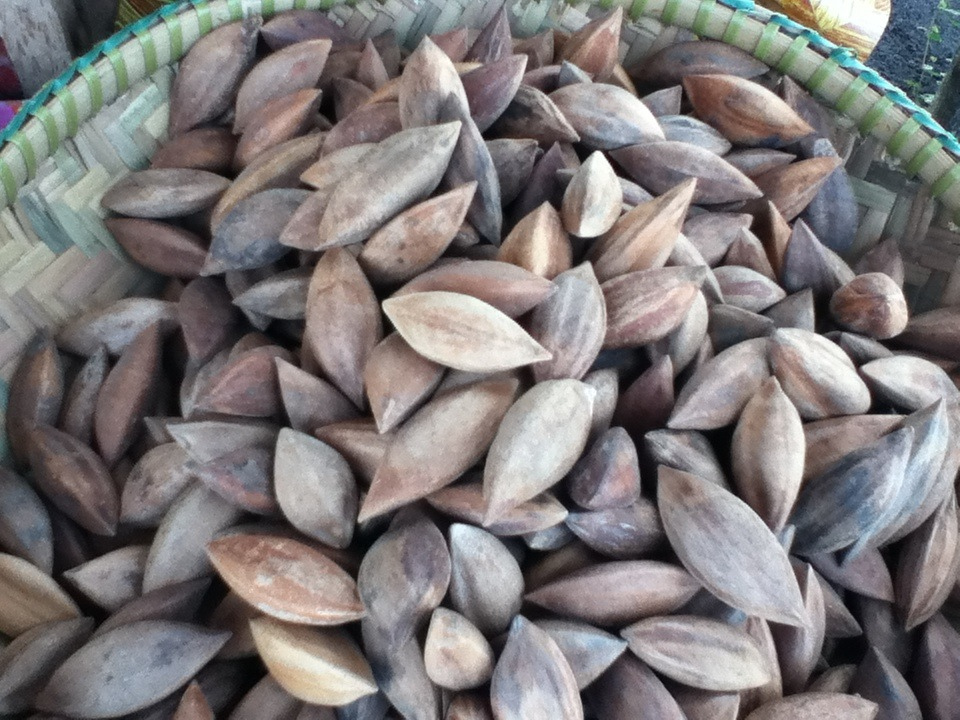
seed from Canarium ovatum

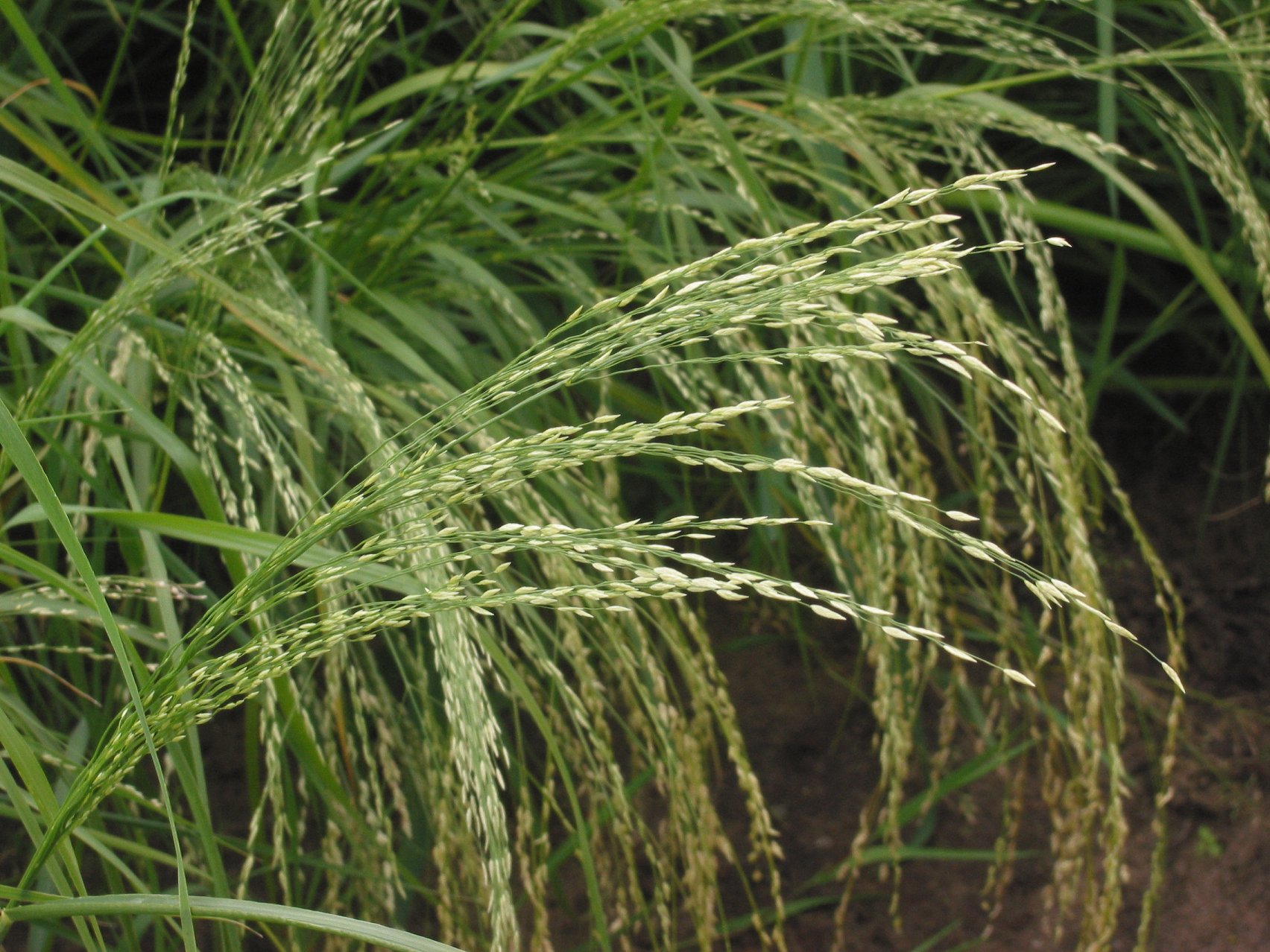
type of rice
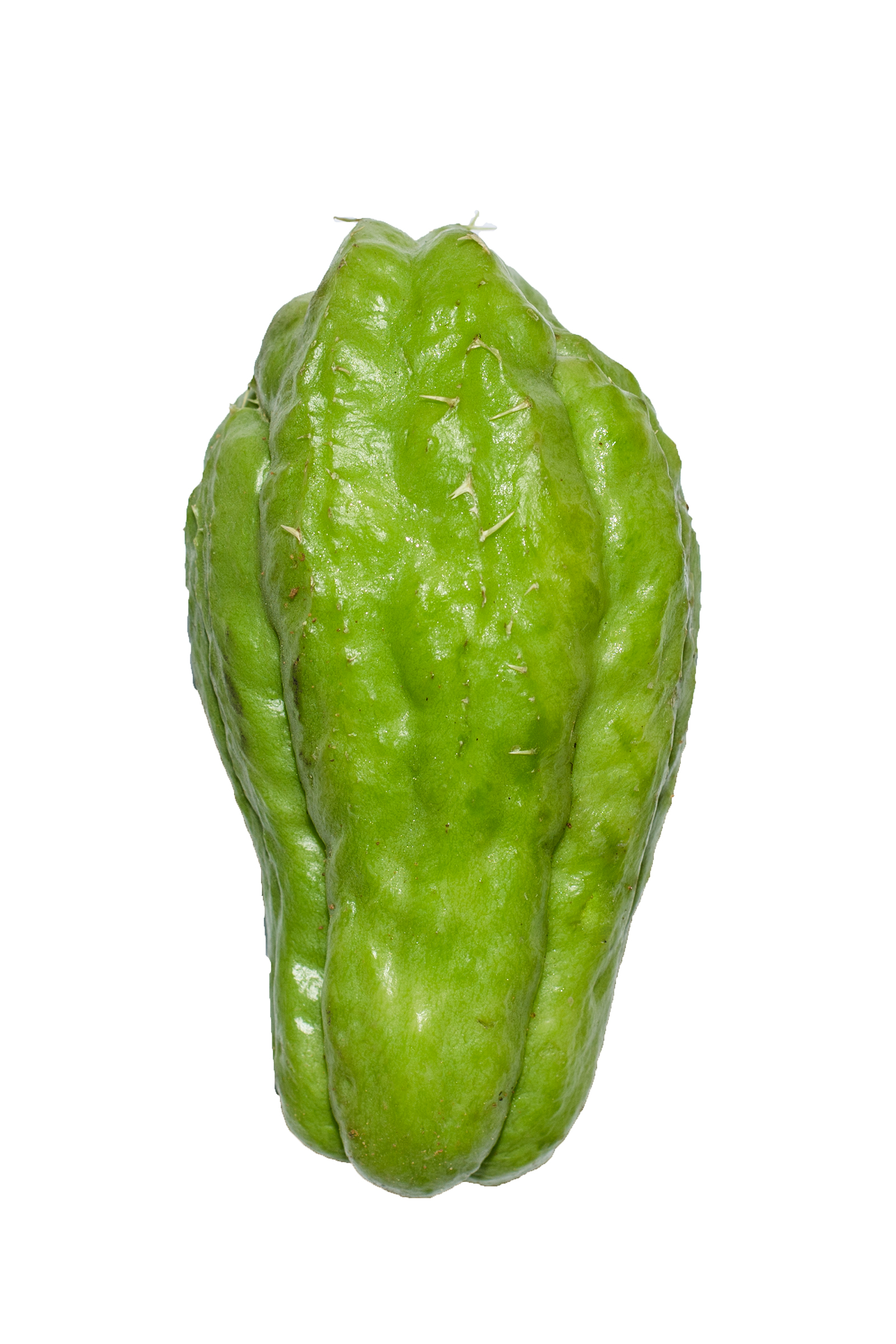
fruit from Sechium edule

seed from Phaseolus lunatus

Species of plant in the carrot family
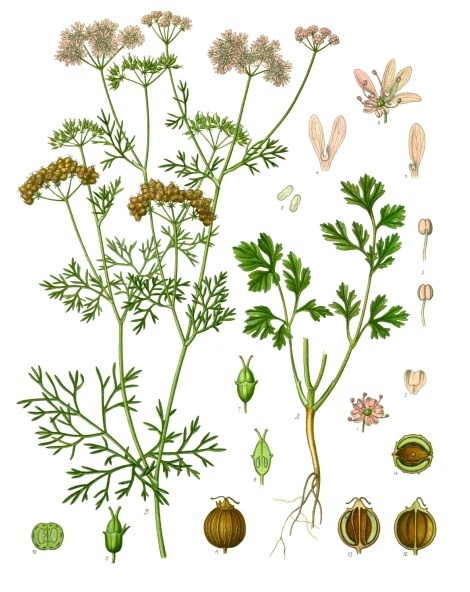
Annual herb
Species of flowering plant in the celery family Apiaceae
Verified Data
Compound identity and culinary context are continuously cross-referenced across open scientific databases and maintained by Foodgeist's enrichment pipeline.
The Geist can be wrong. Some flavor, taste, and pairing values are model-predicted, not lab-measured.