Foodgeist is a participant in the Amazon Services LLC Associates Program, an affiliate advertising program designed to provide a means for sites to earn advertising fees by advertising and linking to Amazon.com. As an Amazon Associate we earn from qualifying purchases.
Peanut (Edible nuts and seeds) — Ingredient · Foodgeist
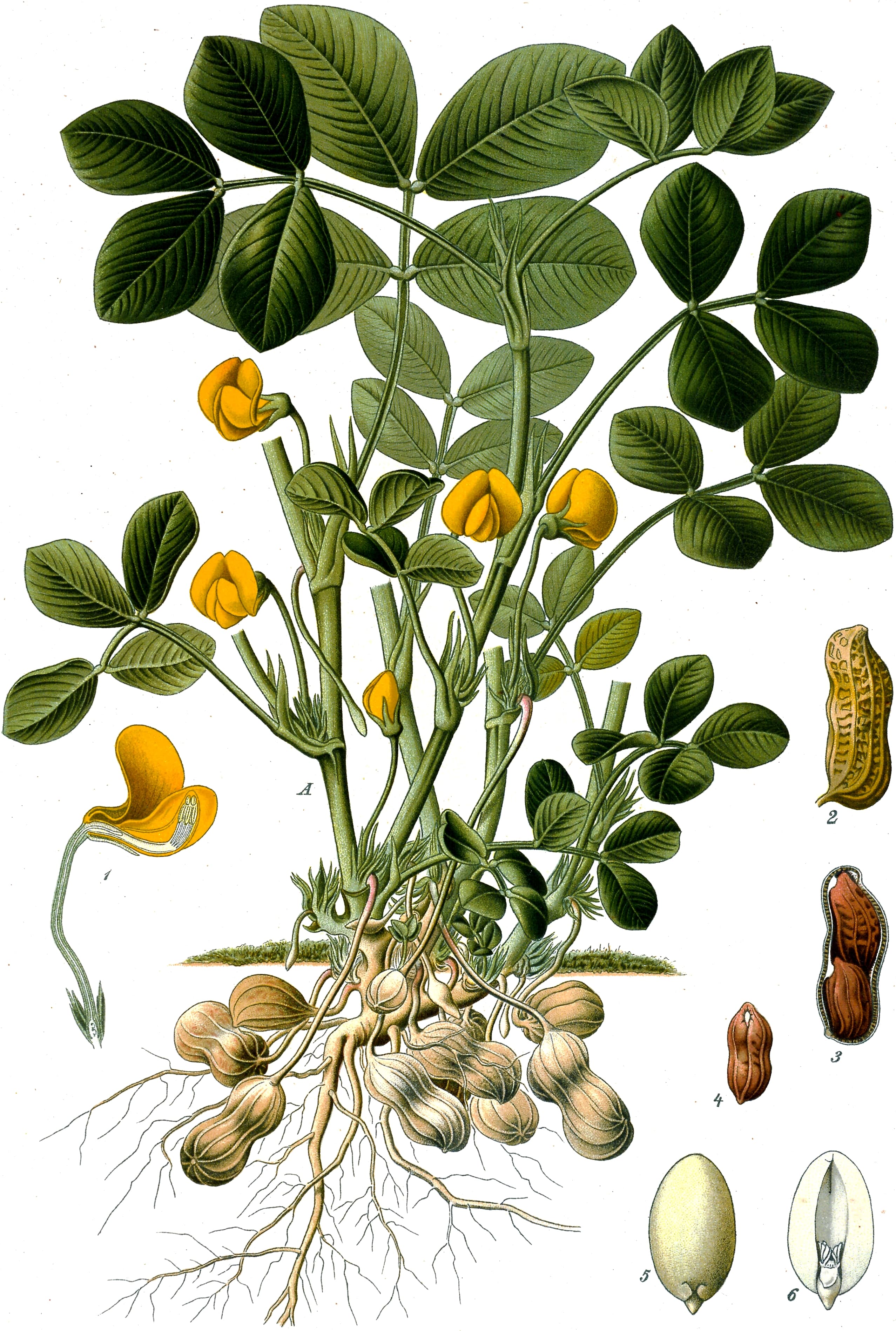
The peanut, also known as the groundnut, goober, goober pea, pindar or monkey nut (UK), is a legume crop grown mainly for its edible seeds, contained in underground pods. It is widely grown in the tropics and subtropics by small and large commercial producers, both as a grain legume and as an oil crop. Underground fruiting (geocarpy) is atypical among legumes, which led botanist Carl Linnaeus to name the species hypogaea, from Greek 'under the earth'.
Based on shared molecular compounds · click to explore
Peer-Reviewed Optimal Ranges
Duration
3min
33
Based on 2 papers
Temperature
110°C
37110
Based on 2 papers
Safety thresholds
rice, wheat, peanuts→ produced →low counts of TVCs, coliforms, yeast, and mould
“Generally, rice, wheat and peanuts produced low counts whereas other nuts, gram flour and spices produced much higher counts.”
peanut butter→ linked to →Salmonella Serotype Tennessee Infections
“This large, widespread outbreak of salmonellosis is the first linked to peanut butter in the United States; a nationwide recall resulted in outbreak control.”
Salmonella serotype Tennessee→ was isolated from →Peter Pan and Great Value peanut butter
“The outbreak strain of Salmonella Tennessee subsequently was isolated from several opened and unopened jars of Peter Pan and Great Value peanut butter and from two environmental samples obtained from the plant.”
What science says
flavor pairing evidence
“An ester‐like aroma was detected in fresh fermented peanut and soy sauce or meat‐like flavors were detected in dried fermented peanut.”
dried fermented peanut→detected→soy sauce or meat-like flavors
“When prepared with 30% peanut flour and dried at 60 °C, the pasta was lighter in color, higher in moisture, and softer in texture than the varieties dried at higher temperatures and made with higher levels of peanut flour.”
pasta→was lighter in color, higher in moisture, and softer in texture→when prepared with 30% peanut flour and dried at 60 °C