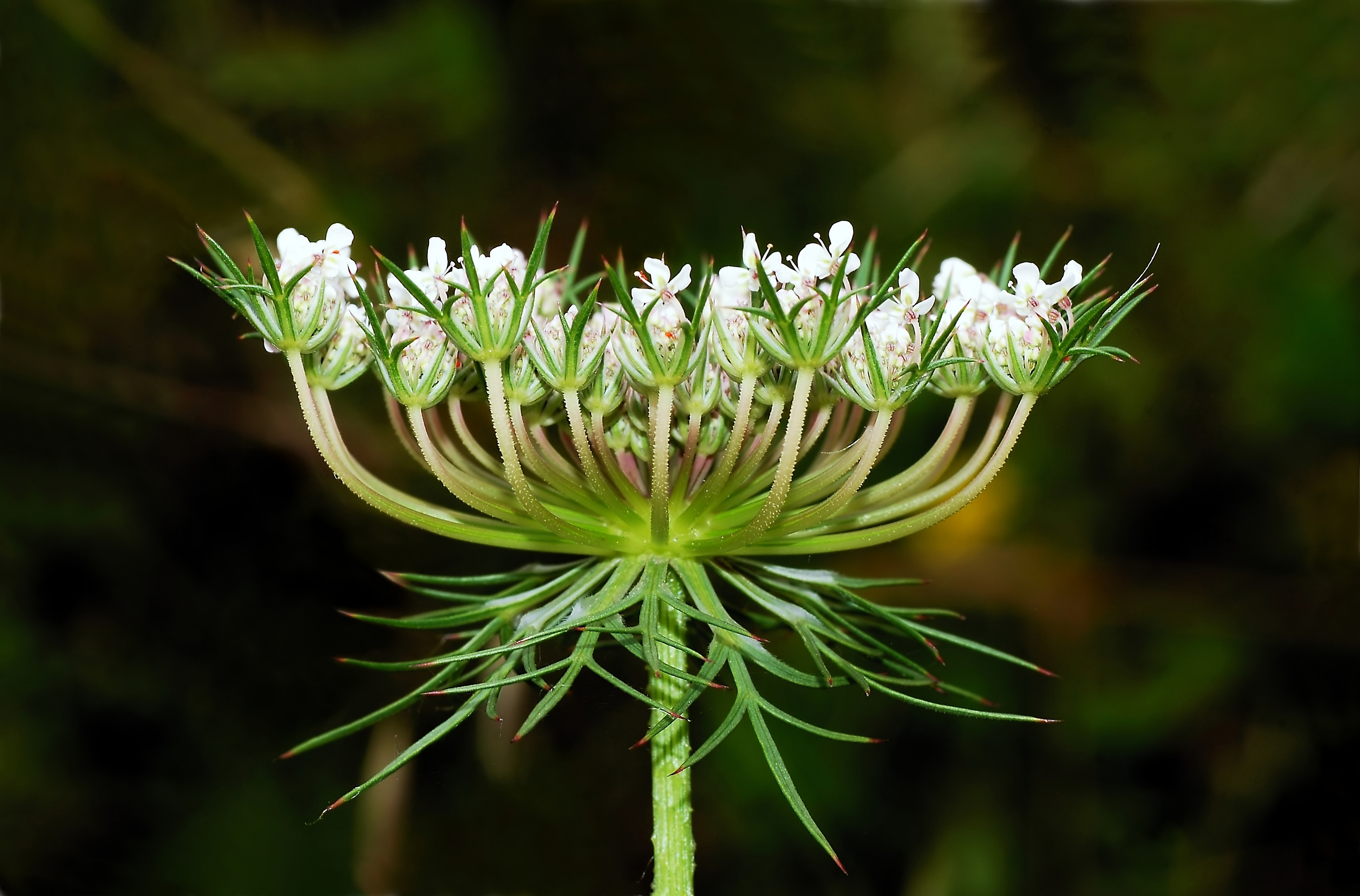
About
<i>Daucus carota</i>, whose common names include wild carrot, bird's nest, bishop's lace, and Queen Anne's lace (North America), is a flowering plant in the family <i>Apiaceae</i>, native to temperate regions of Europe, southwest Asia and naturalized to North America and Australia. Domesticated carrots are cultivars of a subspecies, <i>Daucus carota</i> subsp. <i>sativus</i>.
Aroma profile
Derived from this ingredient’s flavor compounds
Taste profile
Derived from this ingredient's compounds · measured taste classes
Composition
60 compounds identified — cross-referenced scientific databases
Best pairings
Ranked across every axis at once: shared flavor chemistry, real-recipe co-use, novel-discovery, and nutrient synergy. Pairs agreeing on two or more axes lead.
- Carrot4%shared aroma
Molecular affinity
Pairs well with — ingredients that share aroma compounds
Research Evidence
The Geist can be wrong. Some flavor, taste, and pairing values are model-predicted, not lab-measured.