PubChem CID · CC0
citrulline
Odor profile
Multi-model odor estimate · confidence shown
Foods containing this compound


Soursop is the fruit of Annona muricata, a broadleaf, flowering, evergreen tree native to Mexico, Cuba, Central America, the Caribbean and northern South America: Colombia, Brazil, Peru, Ecuador and Venezuela. Soursop is also produced in Somalia. Today, it is also grown in some areas of Southeast Asia, as well as in some Pacific islands. It was most likely brought from Mexico to the Philippines by way of the Manila-Acapulco Galleon trade. It is in the same genus as the chirimoya and the same family as the pawpaw. Soursop, raw, edible parts Nutritional value per 100 g Energy 276 kJ Carbohydrates 16.84 g - Sugars 13.54 g - Dietary fiber 3.3 g Fat 0.30 g Protein 1.00 g Vitamin A equiv. 0 μg (0%) Thiamine (vit. B1) 0.070 mg (6%) Riboflavin (vit. B2) 0.050 mg (4%) Niacin (vit. B3) 0.900 mg (6%) Vitamin B6 0.059 mg (5%) Folate (vit. B9) 14 μg (4%) Vitamin C 20.6 mg (25%) Calcium 14 mg (1%) Iron 0.6 mg (5%) Magnesium 21 mg (6%) Phosphorus 27 mg (4%) Potassium 278 mg (6%) Zinc 0.1 mg (1%) Percentages are relative toUS recommendations for adults. The soursop is adapted to areas of high humidity and relatively warm winters; temperatures below 5 °C will cause damage to leaves and small branches, and temperatures below 3 °C can be fatal. The fruit becomes dry and is no longer good for concentrate. Other common names include: Evo, Aluguntugui guanábana, graviola, anona, corossol, sorsaka, adunu, Brazilian pawpaw, guyabano, guanavana, toge-banreisi, durian benggala, nangka blanda, sirsak, zuurzak and nangka londa. In Malayalam, it is called mullaatha, literally thorny custard apple. The other lesser-known Indian names are shul-ram-fal and Lakshmana Phala. and in Harar (Ethiopia) in Harari language known for centuries as Amba Shoukh (Thorny Mango or Thorny Fruit). The flavour has been described as a combination of strawberry and pineapple, with sour citrus flavour notes contrasting with an underlying creamy flavour reminiscent of coconut or banana.
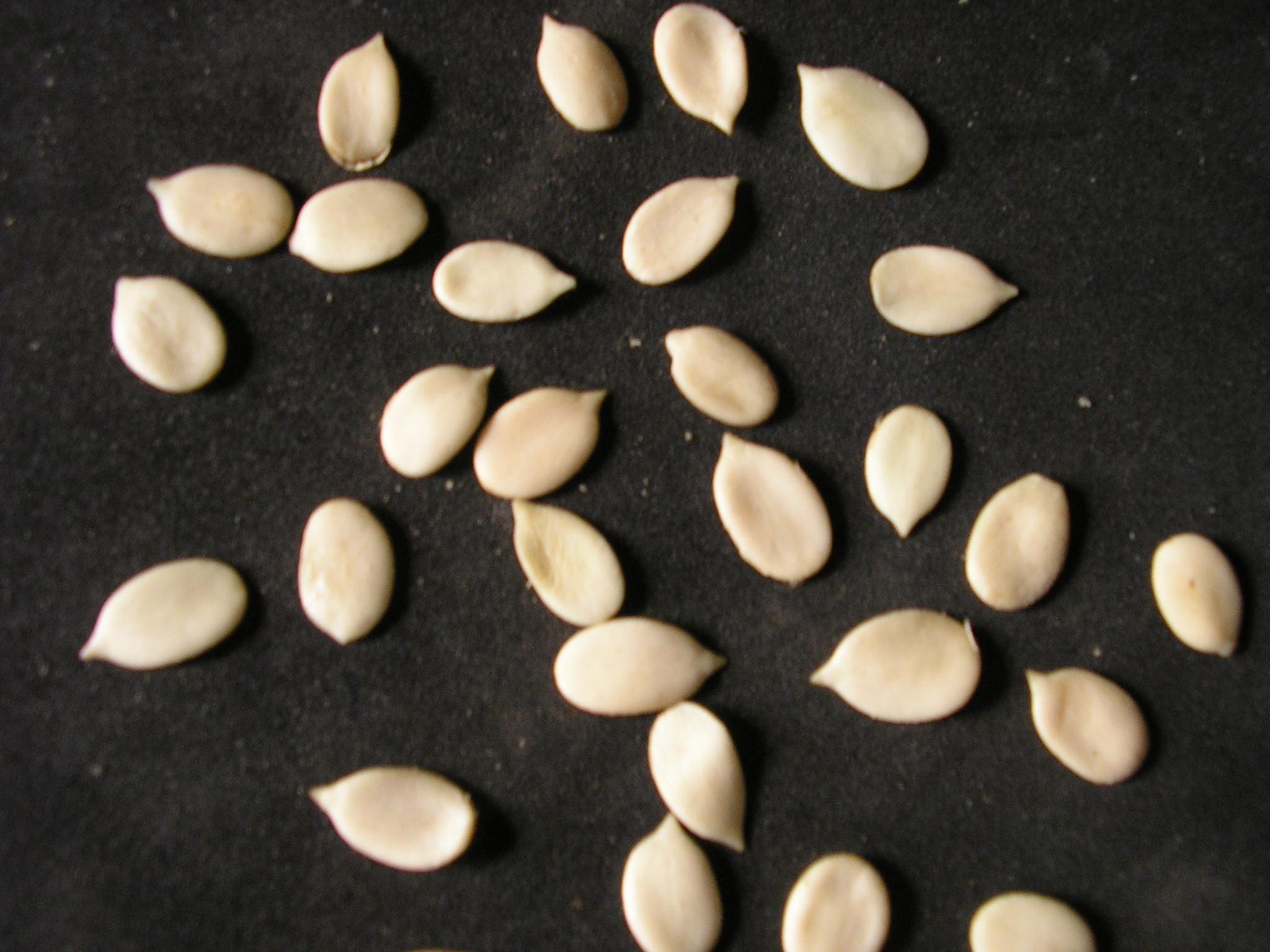
Watermelon (Citrullus lanatus, family Cucurbitaceae) is a vine-like (scrambler and trailer) flowering plant originally from southern Africa. Its fruit, which is also called watermelon, is a special kind referred to by botanists as a pepo, a berry which has a thick rind and fleshy center (mesocarp and endocarp). Pepos are derived from an inferior ovary, and are characteristic of the Cucurbitaceae. The watermelon fruit, loosely considered a type of melon – although not in the genus Cucumis – has a smooth exterior rind (green, yellow and sometimes white) and a juicy, sweet interior flesh (usually deep red to pink, but sometimes orange, yellow and even green if not ripe).
As an agricultural product, milk is extracted from mammals during or soon after pregnancy and used as food for humans. Worldwide, dairy farms produced about 730 million tonnes of milk in 2011, from 260 million dairy cows. India is the world's largest producer and consumer of milk, yet neither exports nor imports milk. New Zealand, the European Union's 28 member states, Australia, and the United States are the world's largest exporters of milk and milk products. China and Russia are the world's largest importers of milk and milk products. Throughout the world, there are more than 6 billion consumers of milk and milk products. Over 750 million people live within dairy farming households. Milk is a key contributor to improving nutrition and food security particularly in developing countries. Improvements in livestock and dairy technology offer significant promise in reducing poverty and malnutrition in the world.

White wine is a wine that is fermented without skin contact. The colour can be straw-yellow, yellow-green, or yellow-gold.It is produced by the alcoholic fermentation of the non-coloured pulp of grapes, which may have a skin of any colour.White wine is mainly from "white" grapes, which are green or yellow in colour, such as the Chardonnay, Sauvignon, and Riesling.

Red clover is a herbaceous, short-lived perennial plant, variable in size, growing to 20–80 cm (8–31 in) tall. The red clover is native to Europe, Western Asia, and northwest Africa.Red clover’s flowers and leaves are edible, and can be added as garnishes to any dish.The flowers often are used to make jelly and tisanes, and are used in essiac recipes.

Nutrient-rich liquid produced by mammals

Plant species in pea family
Source
Compound data linked to PubChem CID 833, public domain via NCBI. Culinary context + ingredient mappings are maintained by Foodgeist's enrichment fleet and continuously re-matched by the pairings engine. PubChem CID 833