Foodgeist is a participant in the Amazon Services LLC Associates Program, an affiliate advertising program designed to provide a means for sites to earn advertising fees by advertising and linking to Amazon.com. As an Amazon Associate we earn from qualifying purchases.
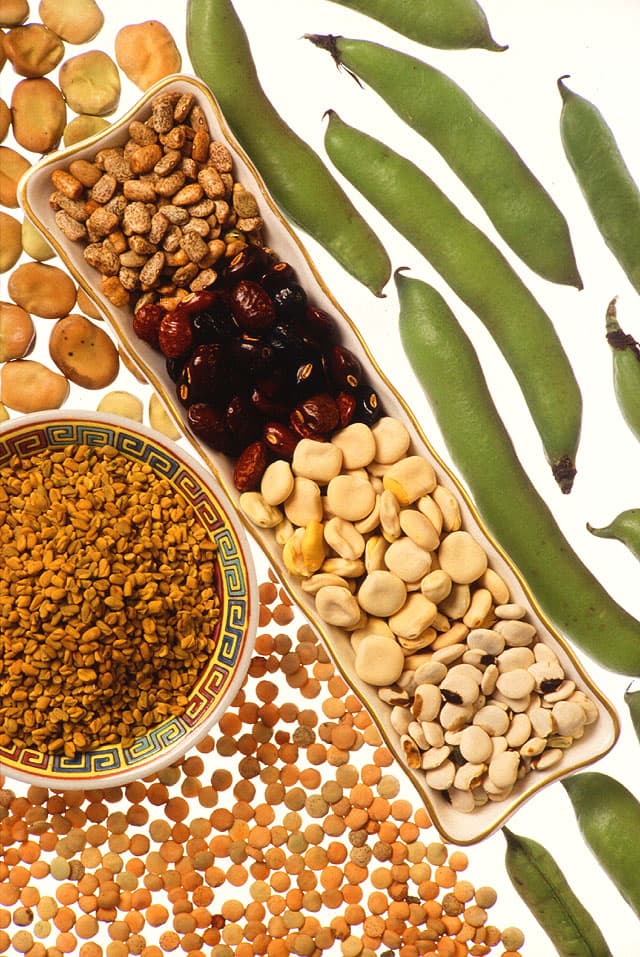
Legumes are plants in the pea family Fabaceae, or the fruit or seeds of such plants. When used as a dry grain for human consumption, the seeds are also called pulses. Legumes are grown agriculturally, primarily for human consumption, but also as livestock forage and silage, and as soil-enhancing green manure. Legumes produce a botanically unique type of fruit – a simple dry fruit that develops from a simple carpel and usually dehisces on two sides.
Based on shared molecular compounds · click to explore
Safety thresholds
aflatoxin→ contaminates →cereals and legumes
“Cereals and legumes, being the major staples of many African communities, frequently used for complementary foods for infants and young children. However, aflatoxin contamination is a threatening issue in these staples and its negative effects on human health, most especially infants and young children, are very alarming.”
legume-based fermented foods→ improves →safety
“improving the nutritional quality, organoleptic quality, and safety of these foods”
What science says
technique parameter
“Legume proteins have appreciable techno-functional properties (e.g., emulsification, foaming, water absorption), which could be affected along with its digestibility during processing.”
“The versatility of legumes and nuts covers a wide range of possibilities through their use in plant-based dairy analogues, providing alternative-protein and maximal amounts of nutrients and bioactive compounds, potential plant-based flours for bakery and pasta”
legumes and nuts→can be used as→plant-based flours for bakery and pasta
“Many traditional vegetables and underutilized legume crops are an essential source of vitamins, micronutrients and protein and, thus, a valuable component to attain nutritional security.”
traditional vegetables and underutilized legume crops→are→an essential source of vitamins, micronutrients and protein