About
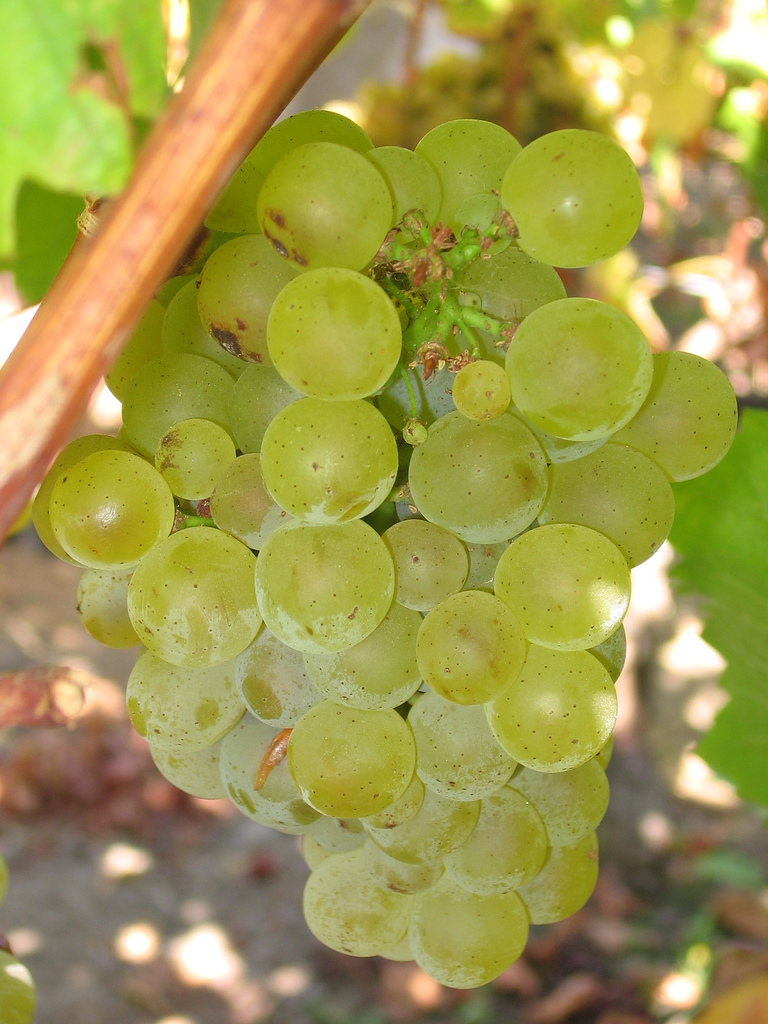
Sauvignon blanc is a green-skinned grape variety that most likely originated in the Loire Valley wine region in France, though it has also been historically cultivated in Bordeaux. The grape most likely gets its name from the French words sauvage ("wild") and blanc ("white") due to its early origins as an indigenous grape in South West France. It is possibly a descendant of Savagnin. Sauvignon blanc is planted in many of the world's wine regions, producing a crisp, dry, and refreshing white varietal wine. The grape is also a component of the famous dessert wines from Sauternes and Barsac. Sauvignon blanc is widely cultivated in France, Argentina Chile, Romania, Canada, Australia, New Zealand, South Africa, Bulgaria, the states of Oregon, Washington, and California in the US. Some New World Sauvignon blancs, particularly from California, may also be called "Fumé Blanc", a marketing term coined by Robert Mondavi in reference to Pouilly-Fumé.
Aroma profile
Derived from flavor compounds · verified measured labels + AI-predicted descriptors
Taste profile
Derived from this ingredient's compounds · measured taste classes (FART / ChemTastes)
Flavor compounds
Molecular affinity
Pairs well with — ingredients that share aroma compounds
Commonly combined
Frequently used together in real recipes — ranked by how specifically these ingredients appear together