Foodgeist is a participant in the Amazon Services LLC Associates Program, an affiliate advertising program designed to provide a means for sites to earn advertising fees by advertising and linking to Amazon.com. As an Amazon Associate we earn from qualifying purchases.
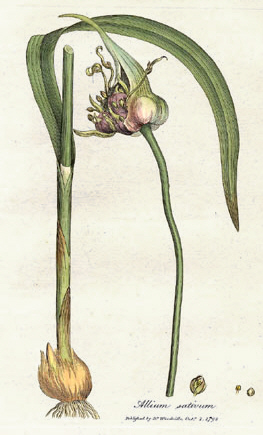
Garlic is a species of bulbous flowering plants in the genus Allium. Its close relatives include the onion, shallot, leek, chives, Welsh onion, and Chinese onion. Garlic is native to Central Asia, northeastern Iran and the foothills of Himalayas. It has naturalized in many other parts of the world, including Mediterranean Europe and China. There are two subspecies and hundreds of varieties of garlic.
Highlighted compounds are flavor-active · click to view molecular profile
Garlic, roasted/baked
20 shared
Based on shared molecular compounds · click to explore
Safety thresholds
garlic→ affects →Salmonella survival
“Other confounding factors include the fat content, and the addition of NaCl, garlic and plant essential oils (PEOs).”
What science says
compound effect
“Se-methylselenocysteine is the major selenocompound in selenium enriched plants such as garlic, onions, broccoli florets and sprouts, and wild leeks.”
Se-methylselenocysteine→is the major selenocompound→in selenium enriched plants such as garlic, onions, broccoli florets and sprouts, and wild leeks
“The log CFUs of both Bacteroides (GF A 6.96, GF B 7.15) and Bifidobacteria (GF A 7.74, GF B 7.74) grown in the GF cultures at 24 h were significantly higher than those at 0 h (Bacteroides 4.93, Bifidobacteria 4.78) (P < 0.05).”
garlic fructan B (DP 21)→stimulates growth of→Bacteroides