About
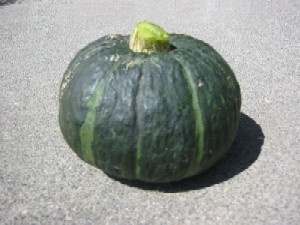
Kabocha, Danhobak, or Fak Thong is an Asian variety of winter squash of the species <i>Cucurbita maxima</i>. The word kabocha has come to mean a general type of winter squash to many English-speaking growers and buyers. In some cultures it is revered as an aphrodisiac. Kabocha is commonly called Japanese pumpkin, especially in Australia and New Zealand. It is also called kabocha squash in North America. In Japan, the word kabocha may refer to either this squash or to the Western-style pumpkin. Varieties include: Ajihei, Ajihei No. 107, Ajihei No. 331, Ajihei No. 335, Cutie, Ebisu, Emiguri, and Miyako. Today, many of the kabocha in the market are of the type called Kuri kabocha, which was created based on Seiyo kabocha (buttercup squash). It is popular for its strong yet sweet flavor and moist, fluffy texture, which is like chestnuts. It is found in the market under such brand names as Miyako, Ebisu, Kurokawa, and Akazukin. (Wikipedia)
Aroma profile
Derived from this ingredient’s flavor compounds
Taste profile
Derived from this ingredient's compounds · measured taste classes
Composition
60 compounds identified — cross-referenced scientific databases
Molecular affinity
Pairs well with — ingredients that share aroma compounds
Research Evidence
The Geist can be wrong. Some flavor, taste, and pairing values are model-predicted, not lab-measured.