About
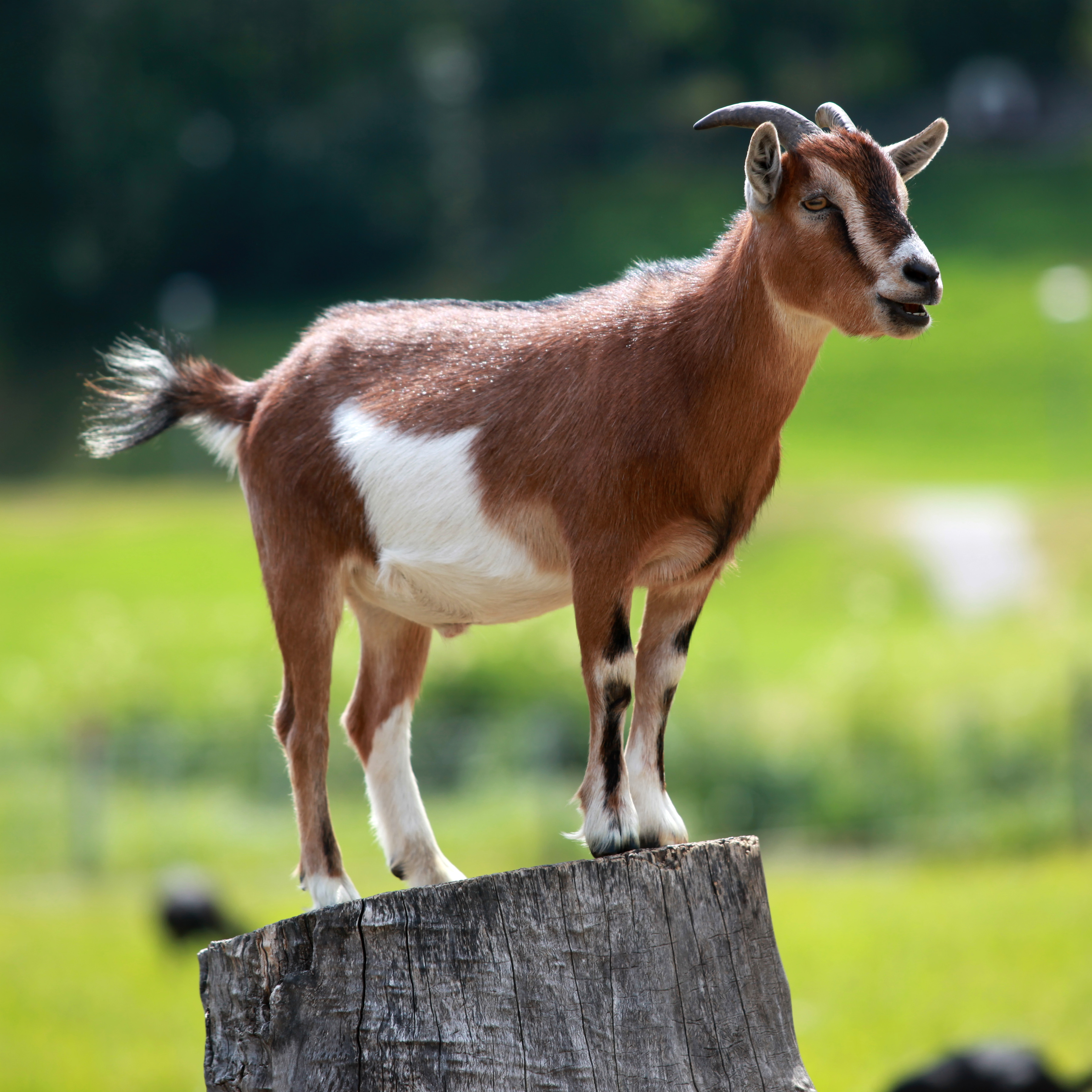
"The domestic goat (Capra aegagrus hircus) is a subspecies of goat domesticated from the wild goat of southwest Asia and Eastern Europe. The goat is a member of the family Bovidae and is closely related to the sheep as both are in the goat-antelope subfamily Caprinae. There are over 300 distinct breeds of goat. Goats are one of the oldest domesticated species, and have been used for their milk, meat, hair, and skins over much of the world. In 2011, there were more than 924 million live goats around the globe, according to the UN Food and Agriculture Organization. Female goats are referred to as ""does"" or ""nannies"", intact males as ""bucks"" or ""billies"", and their offspring are ""kids"". Castrated males are ""wethers"". Goat meat from younger animals is called ""kid"" or cabrito (Spanish), and from older animals is simply known as ""goat"" or sometimes called chevon (French), or in some areas ""mutton"" (which more often refers to adult sheep meat)."
Aroma profile
Derived from this ingredient’s flavor compounds
Taste profile
Derived from this ingredient's compounds · measured taste classes
Composition
60 compounds identified — cross-referenced scientific databases
Research Evidence
The Geist can be wrong. Some flavor, taste, and pairing values are model-predicted, not lab-measured.