Carob + Canola
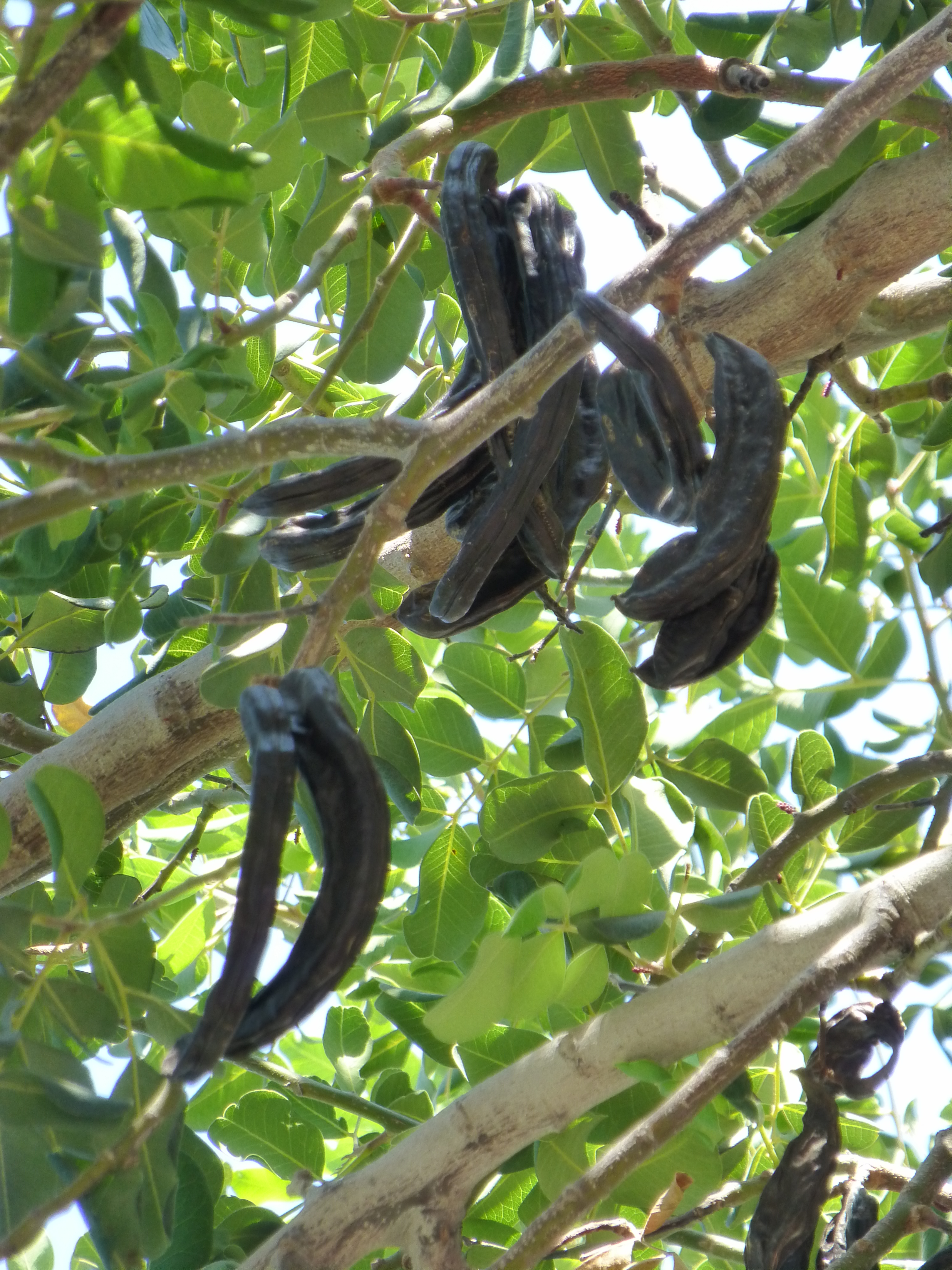
Ceratonia siliqua, commonly known as the carob tree and St John's-bread, is a species of flowering evergreen shrub or tree in the pea family, Fabaceae. It is widely cultivated for its edible pods, and as an ornamental tree in gardens. The ripe, dried pod is often ground to carob powder which is used as a substitute for cocoa powder.
Canola refers to a cultivar of either Rapeseed (Brassica napus L.) or field mustard (Brassica campestris L. or Brassica Rapa var.). Its seeds are used to produce edible oil suitable for consumption by humans and livestock. Originally, Canola was bred naturally from rapeseed in Canada by Keith Downey and Baldur R. Stefansson in the early 1970s, but it has a very different nutritional profile in addition to much less erucic acid. The name "canola" was derived from "Canadian oil, low acid" in 1978. [Wikipedia]
Shared flavor compounds
These compounds appear in both Carob and Canola, giving them a molecular basis for flavor affinity, the pairing principle articulated by Francois Benzi and implemented in flavor-pairing research.
Why it works
The flavor-pairing hypothesis proposes that ingredients sharing significant aromatic compounds harmonize on the palate. Carob and Canola overlap on 20 key compound(s), which is why classic culinary traditions, and our deterministic matching algorithm, place them together.
- Pairing computed by: pairing-compute
- Methodology: deterministic compound-overlap matching (no LLM)
- Compound data: Wikidata + Wikidata
- Part of: Living Gastronomic Intelligence graph