Borage + Purple laver

Borage (Borago officinalis), also known as a starflower, is an annual herb. It is native to the Mediterranean region and has naturalized in many other locales. It grows satisfactorily in gardens in the UK climate, remaining in the garden from year to year by self-seeding. The leaves are edible and the plant is grown in gardens for that purpose in some parts of Europe. The plant is also commercially cultivated for borage seed oil extracted from its seeds.
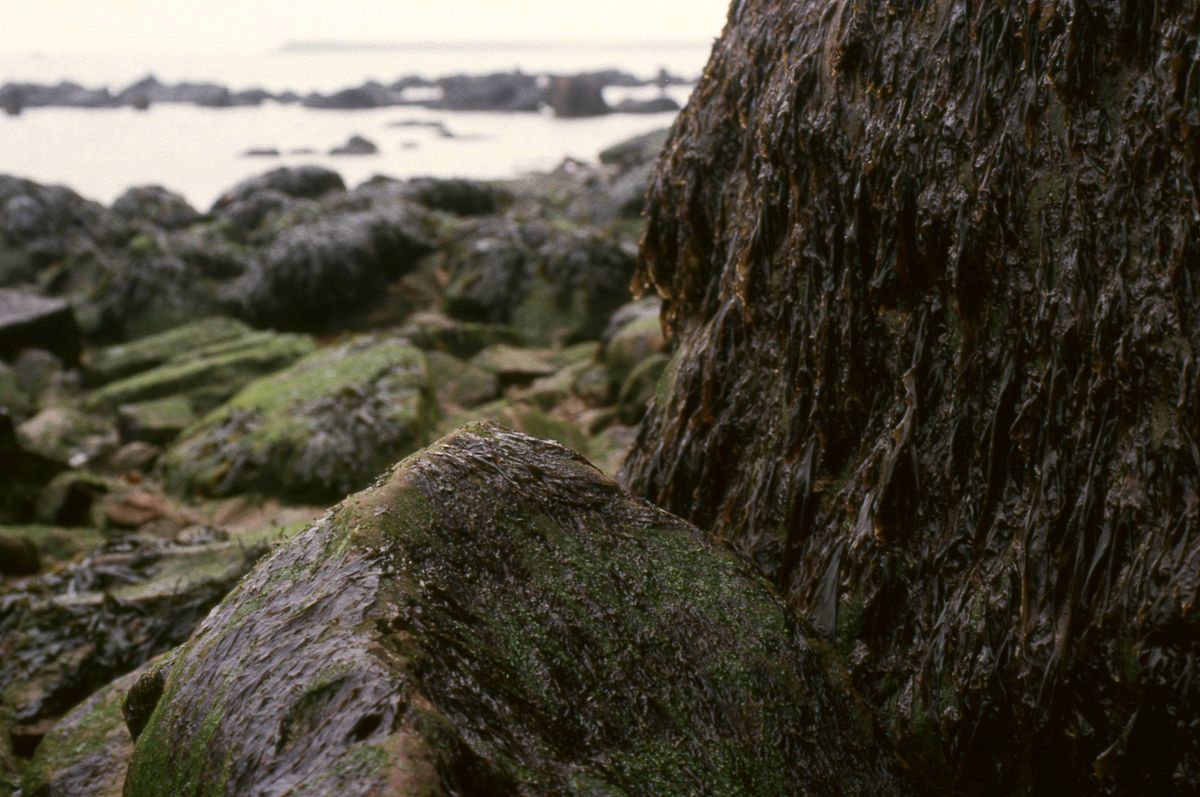
Porphyra is a cold water seaweed that grows in cold shallow sea water. More specifically, it is a foliose red algal genus of laver, comprising approximately 70 species. It grows in the intertidal zone, typically between the upper intertidal zone and the splash zone in cold waters of temperate oceans. In East Asia, it is used to produce the sea vegetable products nori (in Japan) and gim (in Korea). There are considered to be 60 to 70 species of Porphyra worldwide and seven in the British Isles.
Shared flavor compounds
These compounds appear in both Borage and Purple laver, giving them a molecular basis for flavor affinity, the pairing principle articulated by Francois Benzi and implemented in flavor-pairing research.
Why it works
The flavor-pairing hypothesis proposes that ingredients sharing significant aromatic compounds harmonize on the palate. Borage and Purple laver overlap on 20 key compound(s), which is why classic culinary traditions, and our deterministic matching algorithm, place them together.
- Pairing computed by: pairing-compute
- Methodology: deterministic compound-overlap matching (no LLM)
- Compound data: Wikidata + Wikidata
- Part of: Living Gastronomic Intelligence graph