Foodgeist is a participant in the Amazon Services LLC Associates Program, an affiliate advertising program designed to provide a means for sites to earn advertising fees by advertising and linking to Amazon.com. As an Amazon Associate we earn from qualifying purchases.
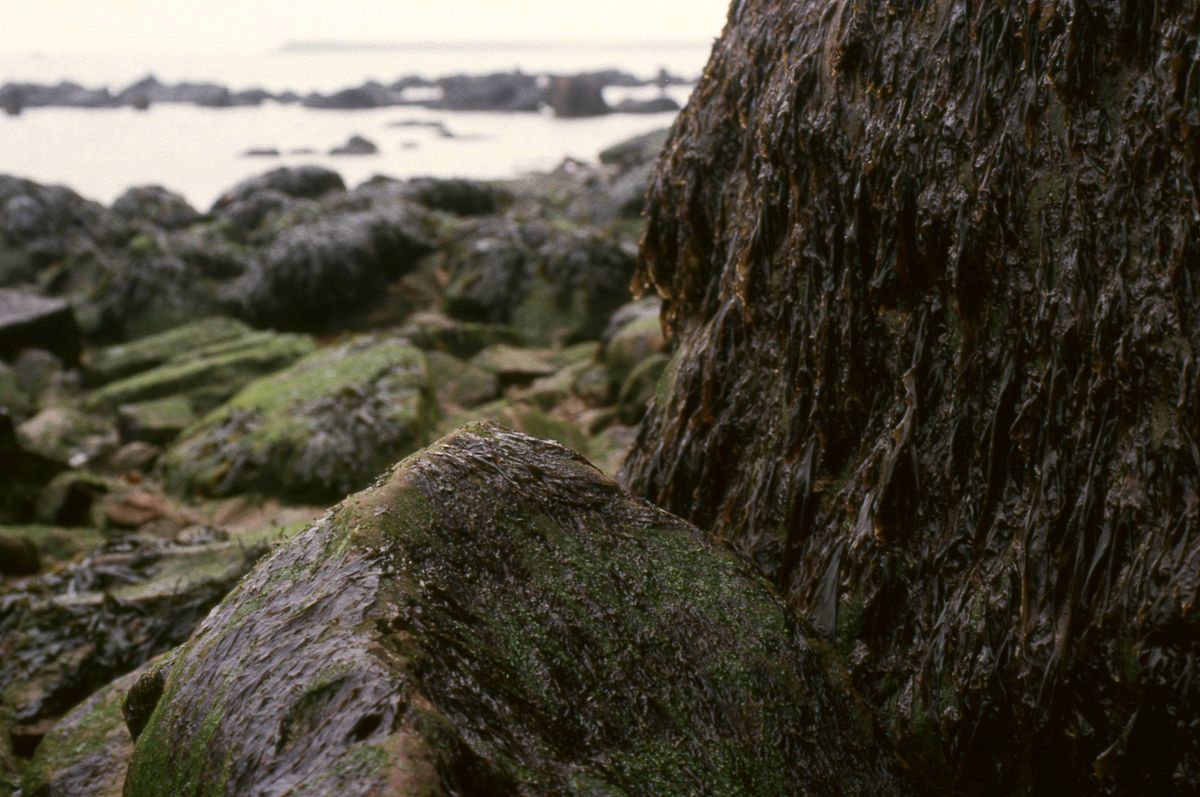
Porphyra is a cold water seaweed that grows in cold shallow sea water. More specifically, it is a foliose red algal genus of laver, comprising approximately 70 species. It grows in the intertidal zone, typically between the upper intertidal zone and the splash zone in cold waters
Cook with Purple laver
As an Amazon Associate, Foodgeist earns from qualifying purchases.
Porphyra is a cold water seaweed that grows in cold shallow sea water. More specifically, it is a foliose red algal genus of laver, comprising approximately 70 species. It grows in the intertidal zone, typically between the upper intertidal zone and the splash zone in cold waters of temperate oceans. In East Asia, it is used to produce the sea vegetable products nori (in Japan) and gim (in Korea). There are considered to be 60 to 70 species of Porphyra worldwide and seven in the British Isles.
Highlighted compounds are flavor-active · click to view molecular profile
Chinese water chestnut
20 shared
Based on shared molecular compounds · click to explore
What science says
nutrition finding
“Vitamin B(12) concentrations of dried green (Enteromorpha sp.) and purple (Porphyra sp.) lavers (nori) were determined by both Lactobacillus leichmannii ATCC 7830 microbiological and intrinsic factor chemiluminescence methods. The values determined by using the microbiological method (63.58 +/- 2.90 and 32.26 +/- 1.61 microg/100 g of dry weight) were identical to those found by using the chemiluminescence method (69.20 +/- 2.21 and 25.07 +/- 0.54 microg/100 g of dry weight) in both dried green and purple lavers, respectively.”
dried purple laver (Porphyra sp.)→contains vitamin B12→32.26 +/- 1.61 microg/100 g of dry weight
“The values determined by using the microbiological method (63.58 +/- 2.90 and 32.26 +/- 1.61 microg/100 g of dry weight) were identical to those found by using the chemiluminescence method (69.20 +/- 2.21 and 25.07 +/- 0.54 microg/100 g of dry weight) in both dried green and purple lavers, respectively.”
dried purple laver (Porphyra sp.)→contains vitamin B12→25.07 +/- 0.54 microg/100 g of dry weight