Asparagus + Citrus
Asparagus officinalis is a spring vegetable, a flowering perennial plant species in the genus Asparagus. It was once classified in the lily family, like its Allium cousins, onions and garlic, but the Liliaceae have been split and the onion-like plants are now in the family Amaryllidaceae and asparagus in the Asparagaceae. Asparagus officinalis is native to most of Europe, northern Africa and western Asia, and is widely cultivated as a vegetable crop.
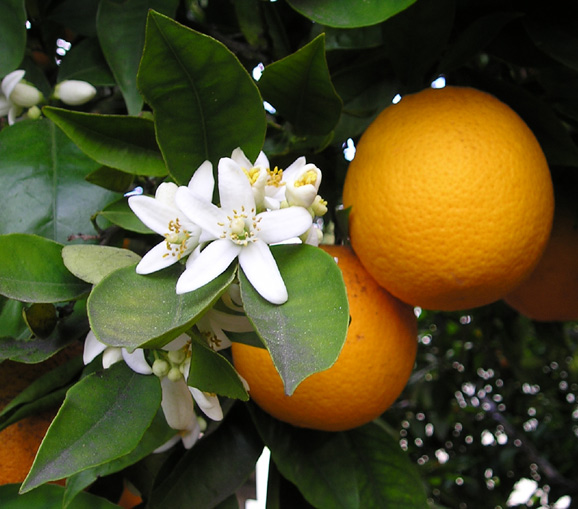
Citrus is a common term and genus (Citrus) of flowering plants in the rue family, Rutaceae. The most recent research indicates an origin in Australia, New Caledonia and New Guinea. Some researchers believe that the origin is in the part of Southeast Asia bordered by Northeast India, Burma (Myanmar) and the Yunnan province of China, and it is in this region that some commercial species such as oranges, mandarins, and lemons originally came. Citrus fruit has been cultivated in an ever-widening area since ancient times; the best-known examples are the oranges, lemons, grapefruit, and limes.
Shared flavor compounds
These compounds appear in both Asparagus and Citrus, giving them a molecular basis for flavor affinity, the pairing principle articulated by Francois Benzi and implemented in flavor-pairing research.
Why it works
The flavor-pairing hypothesis proposes that ingredients sharing significant aromatic compounds harmonize on the palate. Asparagus and Citrus overlap on 20 key compound(s), which is why classic culinary traditions, and our deterministic matching algorithm, place them together.
- Pairing computed by: pairing-compute
- Methodology: deterministic compound-overlap matching (no LLM)
- Compound data: Wikidata + Wikidata
- Part of: Living Gastronomic Intelligence graph
Asparagus and Citrus were also scored by a graph neural network trained on measured flavor compounds — 2 independent model run(s) converged on this affinity estimate.