Pistachio + Pistachios
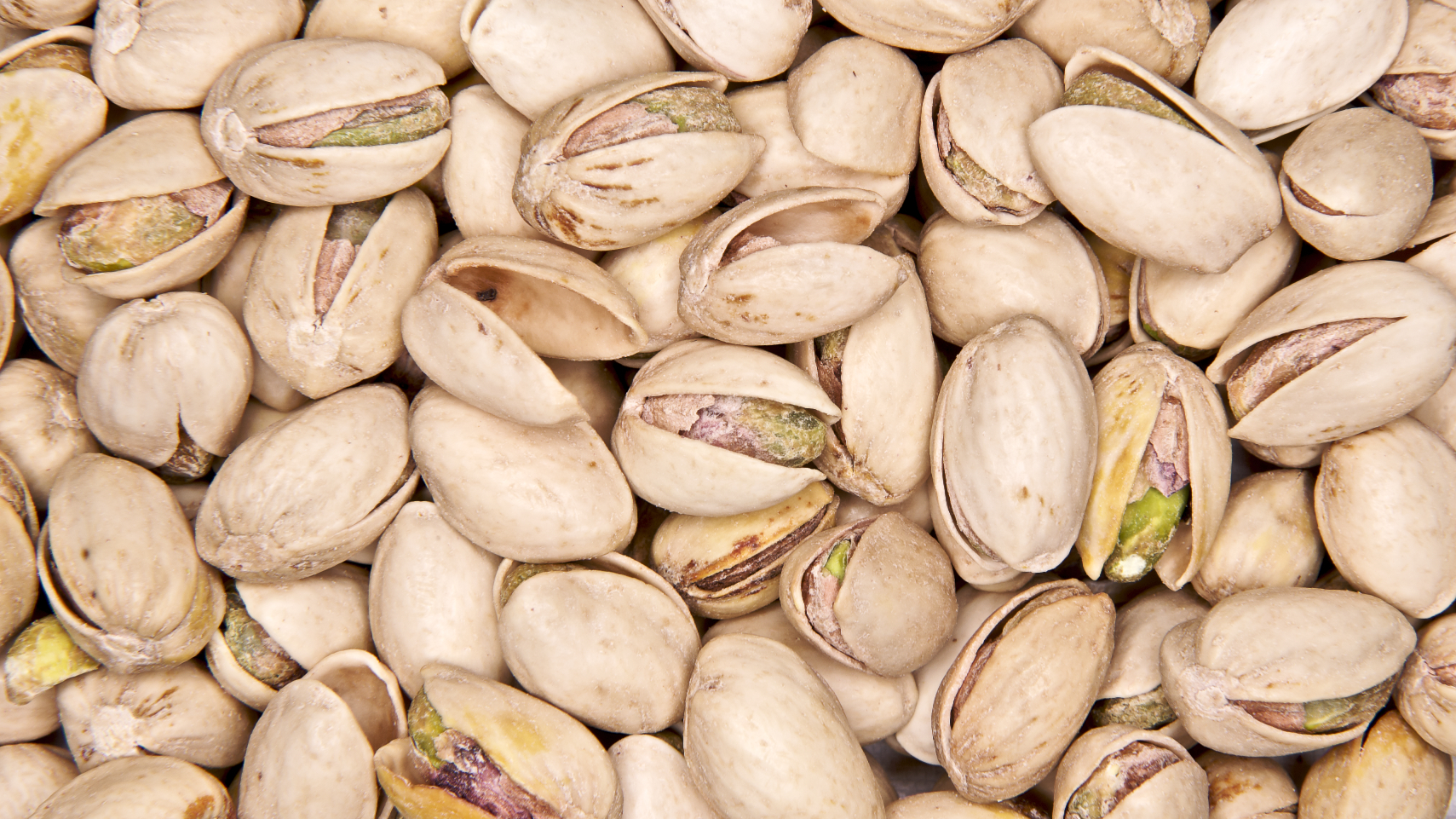
The pistachio, Pistacia vera in the Anacardiaceae family, is a small tree originally from Greater Iran which now can also be found in regions of Syria, Lebanon, Turkey, Greece, Tunisia, Kyrgyzstan, Tajikistan, Turkmenistan, India, Pakistan, Egypt, Italy, Uzbekistan, Afghanistan (especially in the provinces of Samangan and Badghis), and the United States, specifically in California. The tree produces an important culinary nut. Pistacia vera often is confused with other species in the genus Pistacia that are also known as pistachio. These species can be distinguished from P. vera by their geographic distributions (in the wild) and their nuts which are much smaller, have a strong flavor of turpentine, and have a shell that is not hard.
Shared flavor compounds
These compounds appear in both Pistachio and Pistachios, giving them a molecular basis for flavor affinity, the pairing principle articulated by Francois Benzi and implemented in flavor-pairing research.
Why it works
The flavor-pairing hypothesis proposes that ingredients sharing significant aromatic compounds harmonize on the palate. Pistachio and Pistachios overlap on 20 key compound(s), which is why classic culinary traditions, and our deterministic matching algorithm, place them together.
- Pairing computed by: pairing-compute
- Methodology: deterministic compound-overlap matching (no LLM)
- Compound data: Wikidata + Wikidata
- Part of: Living Gastronomic Intelligence graph