About
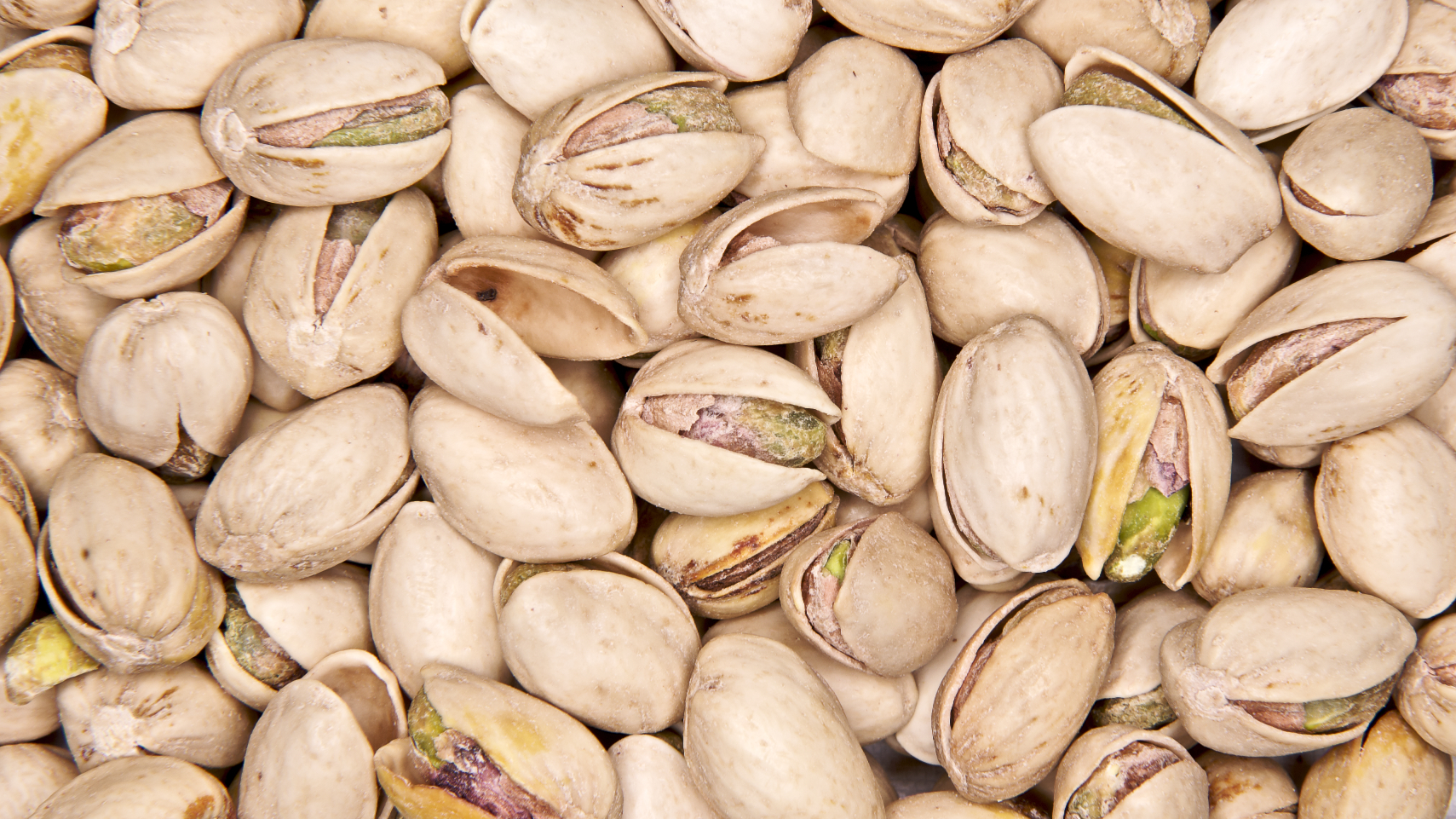
The pistachio, Pistacia vera in the Anacardiaceae family, is a small tree originally from Greater Iran which now can also be found in regions of Syria, Lebanon, Turkey, Greece, Tunisia, Kyrgyzstan, Tajikistan, Turkmenistan, India, Pakistan, Egypt, Italy, Uzbekistan, Afghanistan (especially in the provinces of Samangan and Badghis), and the United States, specifically in California. The tree produces an important culinary nut. Pistacia vera often is confused with other species in the genus Pistacia that are also known as pistachio. These species can be distinguished from P. vera by their geographic distributions (in the wild) and their nuts which are much smaller, have a strong flavor of turpentine, and have a shell that is not hard.
Aroma profile
Derived from this ingredient’s flavor compounds
Taste profile
Derived from this ingredient's compounds · measured taste classes
Composition
60 compounds identified — cross-referenced scientific databases
Best pairings
Ranked across every axis at once: shared flavor chemistry, real-recipe co-use, novel-discovery, and nutrient synergy. Pairs agreeing on two or more axes lead.
Molecular affinity
Pairs well with — ingredients that share aroma compounds
Based on shared flavor compounds · click to explore
Commonly combined
Frequently used together in real recipes — ranked by how specifically these ingredients appear together
Research Evidence
The Geist can be wrong. Some flavor, taste, and pairing values are model-predicted, not lab-measured.