Black mulberry + Jute

Morus nigra, the black mulberry, is a species of flowering plant in the family Moraceae, native to southwestern Asia, where it has been cultivated for so long that its precise natural range is unknown. The edible fruit is dark purple, almost black, when ripe, 2-3 centimetres (0.8-1.2 in) long, a compound cluster of several small drupes; it is richly flavoured, similar to the red mulberry (Morus rubra) but unlike the more insipid fruit of the white mulberry (Morus alba). Black (Morus nigra) mulberries are thought to have originated in the mountainous areas of Mesopotamia and Persia and are now widespread throughout Afghanistan, Iraq, Iran, India, Pakistan, Syria, and Turkey, where the tree and the fruit are known by the Persian-derived names toot (mulberry) of shahtoot (شاه توت) (king's or "superior" mulberry), or, in Arabic, shajarat tukki. Jams and sherbets are often made from the fruit in this region.
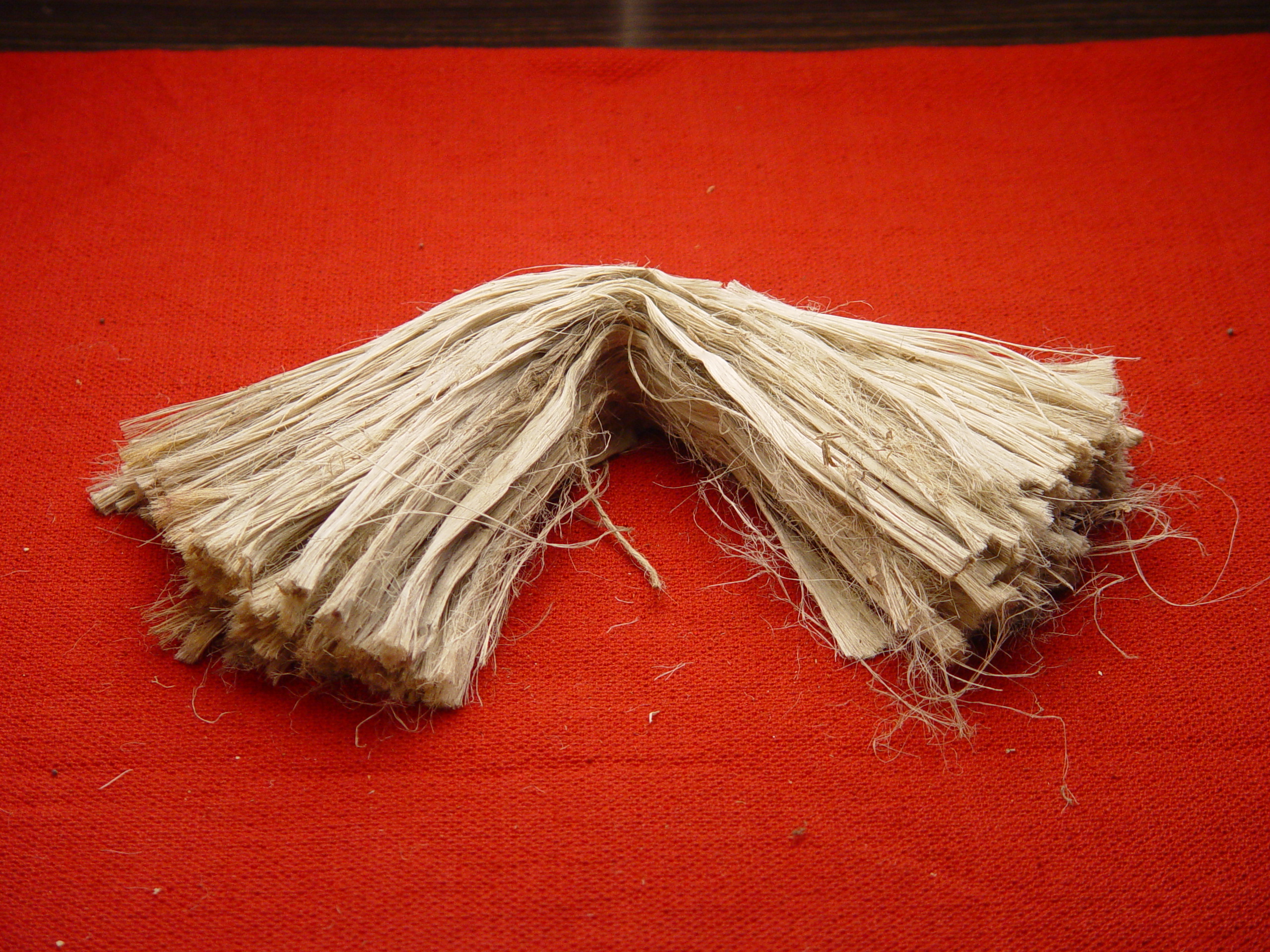
Jute is a long, soft, shiny vegetable fiber that can be spun into coarse, strong threads. It is produced from plants in the genus Corchorus, which was once classified with the family Tiliaceae, more recently with Malvaceae, and has now been reclassified as belonging to the family Sparrmanniaceae. "Jute" is the name of the plant or fiber that is used to make burlap, Hessian or gunny cloth.
Shared flavor compounds
These compounds appear in both Black mulberry and Jute, giving them a molecular basis for flavor affinity, the pairing principle articulated by Francois Benzi and implemented in flavor-pairing research.
Why it works
The flavor-pairing hypothesis proposes that ingredients sharing significant aromatic compounds harmonize on the palate. Black mulberry and Jute overlap on 20 key compound(s), which is why classic culinary traditions, and our deterministic matching algorithm, place them together.
- Pairing computed by: pairing-compute
- Methodology: deterministic compound-overlap matching (no LLM)
- Compound data: Wikidata + Wikidata
- Part of: Living Gastronomic Intelligence graph