Foodgeist is a participant in the Amazon Services LLC Associates Program, an affiliate advertising program designed to provide a means for sites to earn advertising fees by advertising and linking to Amazon.com. As an Amazon Associate we earn from qualifying purchases.
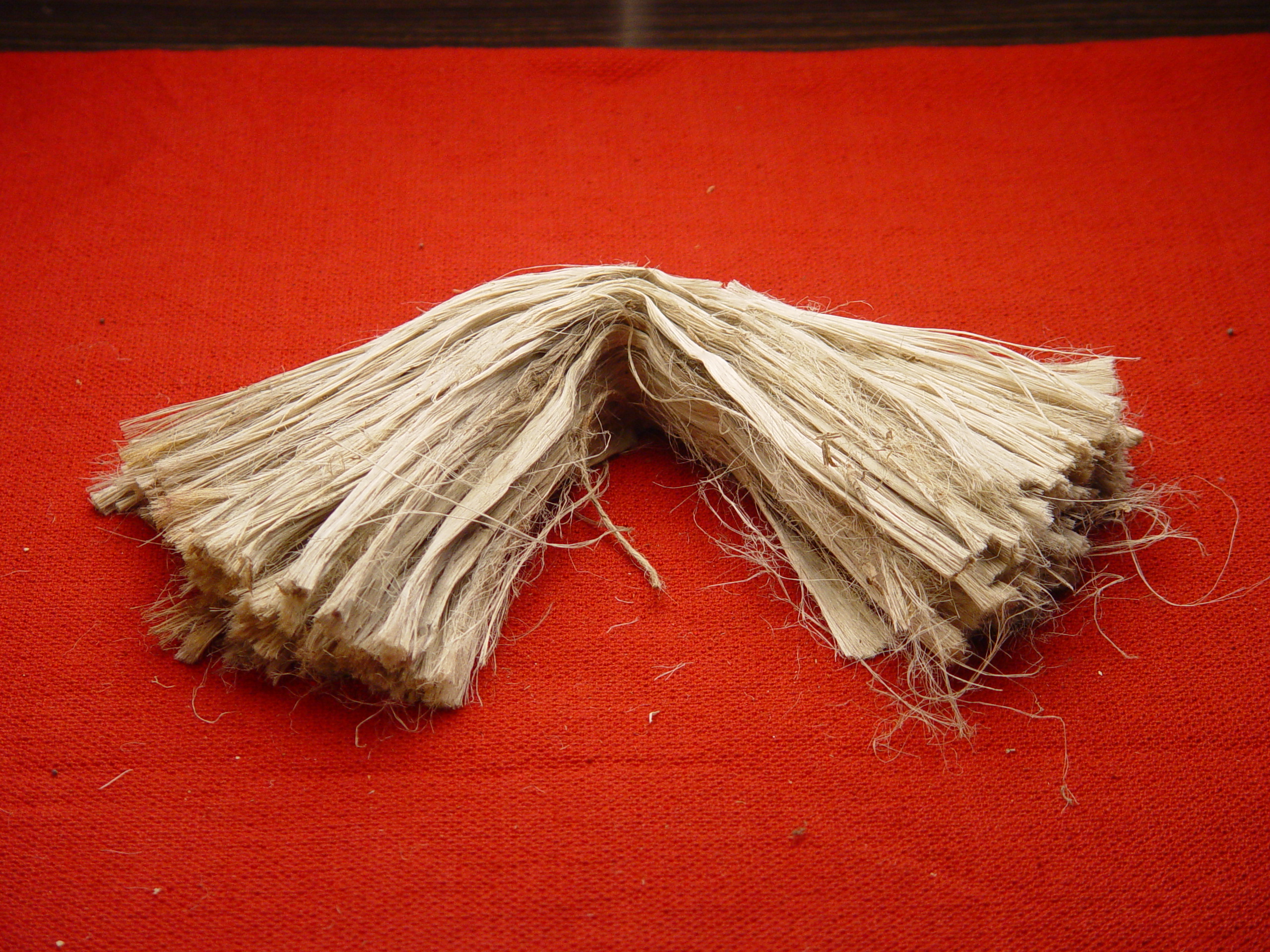
Jute is a long, soft, shiny vegetable fiber that can be spun into coarse, strong threads. It is produced from plants in the genus Corchorus, which was once classified with the family Tiliaceae, more recently with Malvaceae, and has now been reclassified as belonging to the family
Cook with Jute
As an Amazon Associate, Foodgeist earns from qualifying purchases.
Jute is a long, soft, shiny vegetable fiber that can be spun into coarse, strong threads. It is produced from plants in the genus Corchorus, which was once classified with the family Tiliaceae, more recently with Malvaceae, and has now been reclassified as belonging to the family Sparrmanniaceae. "Jute" is the name of the plant or fiber that is used to make burlap, Hessian or gunny cloth.
Highlighted compounds are flavor-active · click to view molecular profile
Mountain yam
20 shared
Based on shared molecular compounds · click to explore
What science says
compound effect
“The active components were identified as phytol (3,7,11,15-tetramethyl-2-hexadecen-1-ol) and monogalactosyldiacylglycerol (1,2-di-O-α-linolenoyl-3-O-β-D-galactopyranosyl-sn-glycerol) by spectroscopic data and chemical and enzymatic reactions.”
phytol→isolate→jute leaves (Corchorus capsularis L.)
“The active components were identified as phytol (3,7,11,15-tetramethyl-2-hexadecen-1-ol) and monogalactosyldiacylglycerol (1,2-di-O-α-linolenoyl-3-O-β-D-galactopyranosyl-sn-glycerol) by spectroscopic data and chemical and enzymatic reactions.”
monogalactosyldiacylglycerol→isolate→jute leaves (Corchorus capsularis L.)
“The higher 1,1-diphenyl-2-picrylhydrazyl radical-scavenging ability, reducing power and trolox equivalent antioxidant capacity of the hydrophilic extract may be due to its significantly higher (P<0.05) total phenol (630.8 mg/100 g), total flavonoid (227.8 mg/100 g) and non-flavonoid polyphenols (403.0 mg/100 g), and its high ascorbic acid content (32.6 mg/)”
hydrophilic extract (HE) of Jute leaf→has→higher ascorbic acid content