Common hazelnut + Cupuaçu
Corylus avellana, the Common Hazel, is a species of hazel native to Europe and western Asia, from the British Isles south to Iberia, Greece, Turkey and Cyprus, north to central Scandinavia, and east to the central Ural Mountains, the Caucasus, and northwestern Iran. It is an important component of the hedgerows that were the traditional field boundaries in lowland England. The wood was traditionally grown as coppice, the poles cut being used for wattle-and-daub building and agricultural fencing. Common Hazel is cultivated for its nuts. The name hazelnut applies to the nuts of any of the species of the genus Corylus. This hazelnut or cob nut, the kernel of the seed, is edible and used raw or roasted, or ground into a paste. The cob is round, compared with the longer filbert nut.
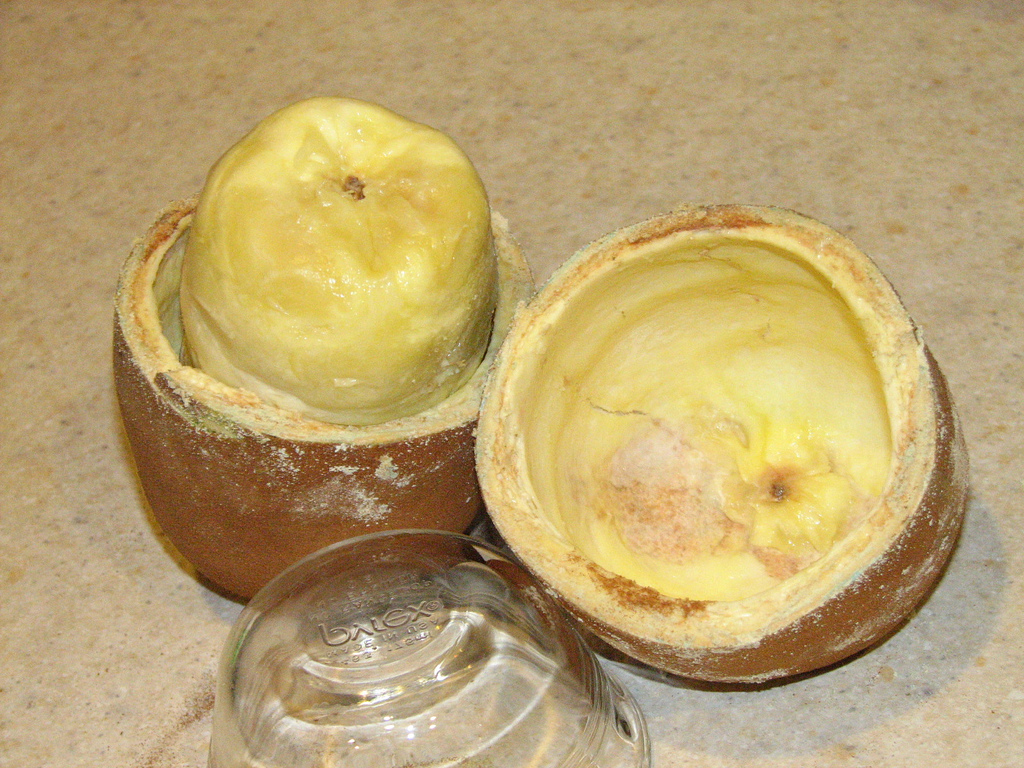
Cupuaçu (also spelled Cupuassu, Cupuazú, and Copoasu), is a tropical rainforest tree related to cacao. Common throughout the Amazon basin, it is widely cultivated in the jungles of Colombia, Bolivia and Peru and in the north of Brazil, with the largest production in Pará, followed by Amazonas, Rondônia and Acre. The white pulp of the cupuaçu is uniquely fragrant (described as a mix of chocolate and pineapple), and it contains theacrine (1,3,7,9-tetramethyluric acid) instead of the xanthines (caffeine, theobromine, and theophylline) found in cacao. It is frequently used in desserts, juices and sweets. The juice tastes primarily like a pear, with a hint of banana. [Wikipedia]
Shared flavor compounds
These compounds appear in both Common hazelnut and Cupuaçu, giving them a molecular basis for flavor affinity, the pairing principle articulated by Francois Benzi and implemented in flavor-pairing research.
Why it works
The flavor-pairing hypothesis proposes that ingredients sharing significant aromatic compounds harmonize on the palate. Common hazelnut and Cupuaçu overlap on 20 key compound(s), which is why classic culinary traditions, and our deterministic matching algorithm, place them together.
- Pairing computed by: pairing-compute
- Methodology: deterministic compound-overlap matching (no LLM)
- Compound data: Wikidata + Wikidata
- Part of: Living Gastronomic Intelligence graph