Plains prickly pear + Oil-seed Camellia
Opuntia macrorhiza Engelm. is a common and widespread species of cactus with the common names "Plains Prickly Pear" or "Twist-spine Prickly Pear." It is found throughout the Great Plains of the United States, from Texas to Minnesota, as well as in the desert and Rocky Mountain states from Arizona to Idaho, with sporadic populations in the Mississippi and Ohio Valleys. It is also reported from northern Mexico, in the states of Chihuahua, Sonora, Coahuila, Nuevo León and San Luís Potosí. The species is cultivated as an ornamental in other locations.
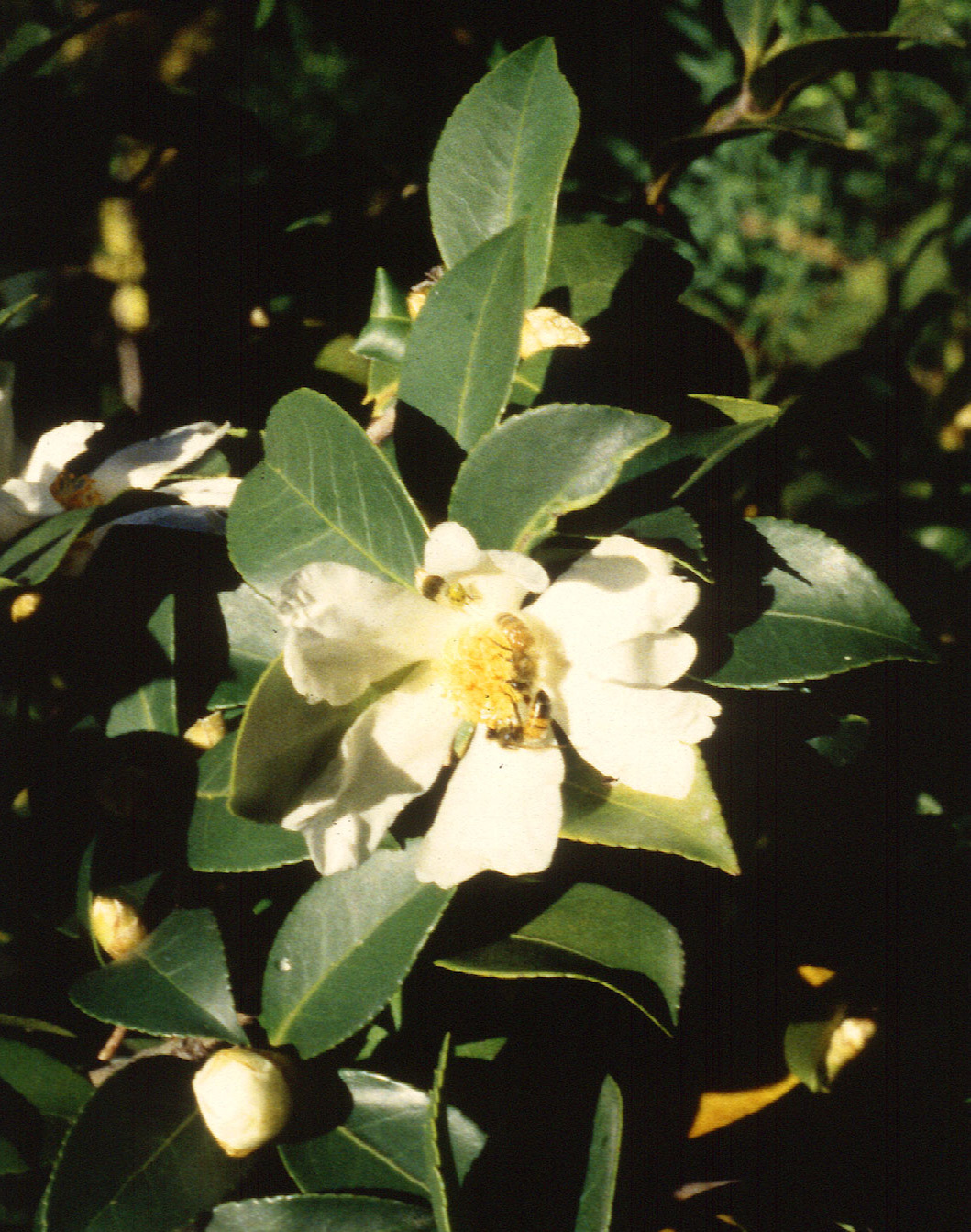
Oil-seed camellia (or tea oil camellia) is an important source of edible oil (known as tea oil or camellia oil) obtained from its seeds. Tea oil is a sweetish seasoning and cooking oil that should not be confused with tea tree oil, an essential oil that is used for medical and cosmetical purposes and originates from the leaves of a different plant. [Wikipedia]
Shared flavor compounds
These compounds appear in both Plains prickly pear and Oil-seed Camellia, giving them a molecular basis for flavor affinity, the pairing principle articulated by Francois Benzi and implemented in flavor-pairing research.
Why it works
The flavor-pairing hypothesis proposes that ingredients sharing significant aromatic compounds harmonize on the palate. Plains prickly pear and Oil-seed Camellia overlap on 20 key compound(s), which is why classic culinary traditions, and our deterministic matching algorithm, place them together.
- Pairing computed by: pairing-compute
- Methodology: deterministic compound-overlap matching (no LLM)
- Compound data: Wikidata + Wikidata
- Part of: Living Gastronomic Intelligence graph