Medlar + Breadfruit

Mespilus germanica, known as the medlar or common medlar, is a large shrub or small tree, and the name of the fruit of this tree. The fruit has been cultivated since Roman times, and is unusual in being available in winter, and in being eaten when 'bletted' (browned by rot). It is eaten raw and in a range of dishes.
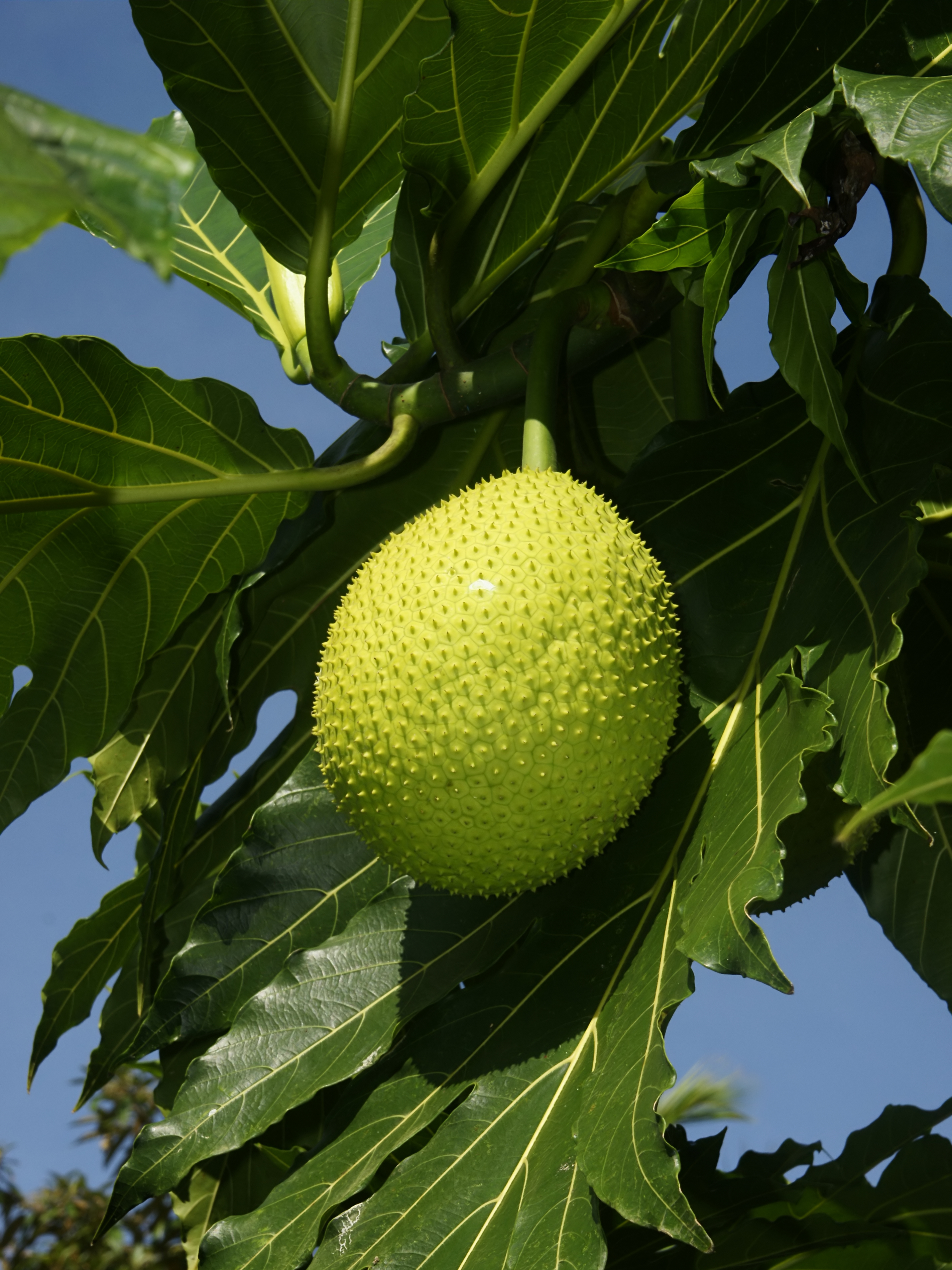
Breadfruit (Artocarpus altilis) is a species of flowering tree in the mulberry family, Moraceae, growing throughout Southeast Asia and most Pacific Ocean islands. Its name is derived from the texture of the cooked fruit, which has a potato-like flavor, similar to fresh-baked bread. Ancestors of the Polynesians found the trees growing in the northwest New Guinea area around 3,500 years ago. They gave up the rice cultivation they had brought with them from Taiwan, and raised breadfruit wherever they went in the Pacific (except Easter Island and New Zealand, which are too cold). Their ancient eastern Indonesian cousins spread the plant west and north through insular and coastal Southeast Asia. It has, in historical times, also been widely planted in tropical regions elsewhere.
Shared flavor compounds
These compounds appear in both Medlar and Breadfruit, giving them a molecular basis for flavor affinity, the pairing principle articulated by Francois Benzi and implemented in flavor-pairing research.
Why it works
The flavor-pairing hypothesis proposes that ingredients sharing significant aromatic compounds harmonize on the palate. Medlar and Breadfruit overlap on 20 key compound(s), which is why classic culinary traditions, and our deterministic matching algorithm, place them together.
- Pairing computed by: pairing-compute
- Methodology: deterministic compound-overlap matching (no LLM)
- Compound data: Wikidata + Wikidata
- Part of: Living Gastronomic Intelligence graph