pineapple (raw) + Pineapple
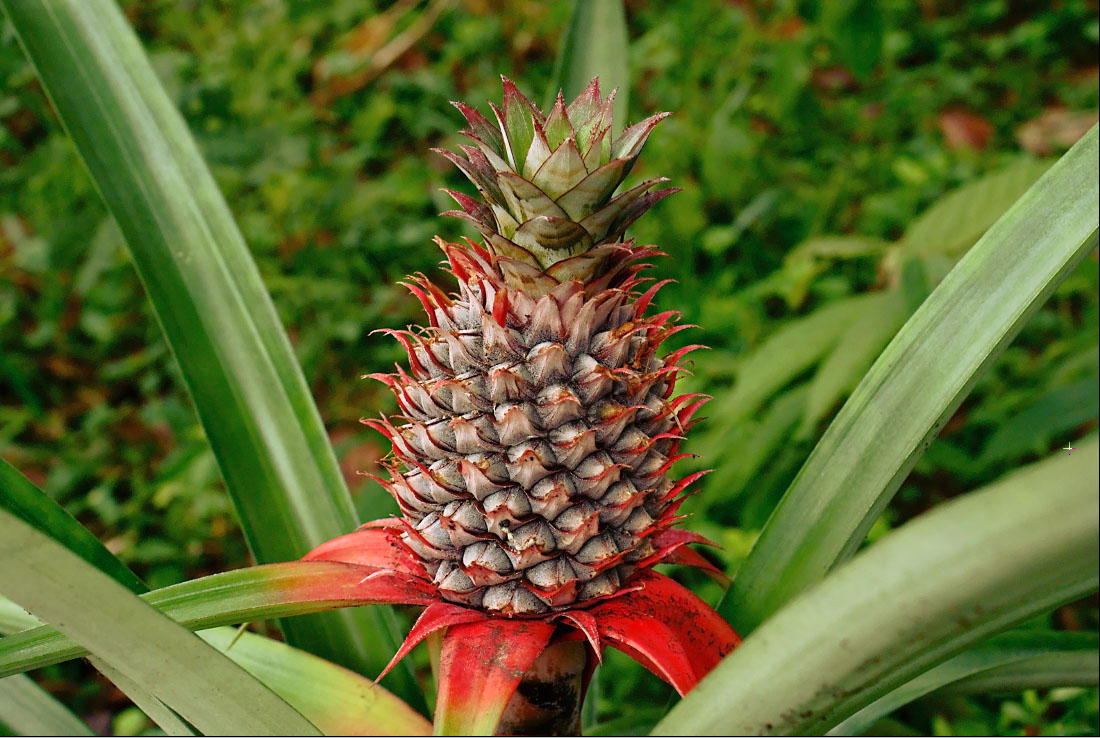
The Pineapple (Ananas comosus), named for its resemblance to the pine cone, is a tropical plant with edible multiple fruit consisting of coalesced berries, and the most economically significant plant in the Bromeliaceae family. Pineapples may be cultivated from a crown cutting of the fruit, possibly flowering in 20–24 months and fruiting in the following six months. Pineapple does not ripen significantly post-harvest. Pineapples are consumed fresh, cooked, juiced, and preserved, and are found in a wide array of cuisines. In addition to consumption, in the Philippines the pineapple's leaves are used to produce the textile fiber piña- employed as a component of wall paper and furnishings, amongst other uses.
Shared flavor compounds
These compounds appear in both pineapple (raw) and Pineapple, giving them a molecular basis for flavor affinity, the pairing principle articulated by Francois Benzi and implemented in flavor-pairing research.
Why it works
The flavor-pairing hypothesis proposes that ingredients sharing significant aromatic compounds harmonize on the palate. pineapple (raw) and Pineapple overlap on 14 key compound(s), which is why classic culinary traditions, and our deterministic matching algorithm, place them together.
- Pairing computed by: pairing-compute
- Methodology: deterministic compound-overlap matching (no LLM)
- Compound data: Wikidata + Wikidata
- Part of: Living Gastronomic Intelligence graph
pineapple (raw) and Pineapple were also scored by an AI model trained on measured flavor compounds. 2 independent model run(s) converged on this affinity estimate.