About
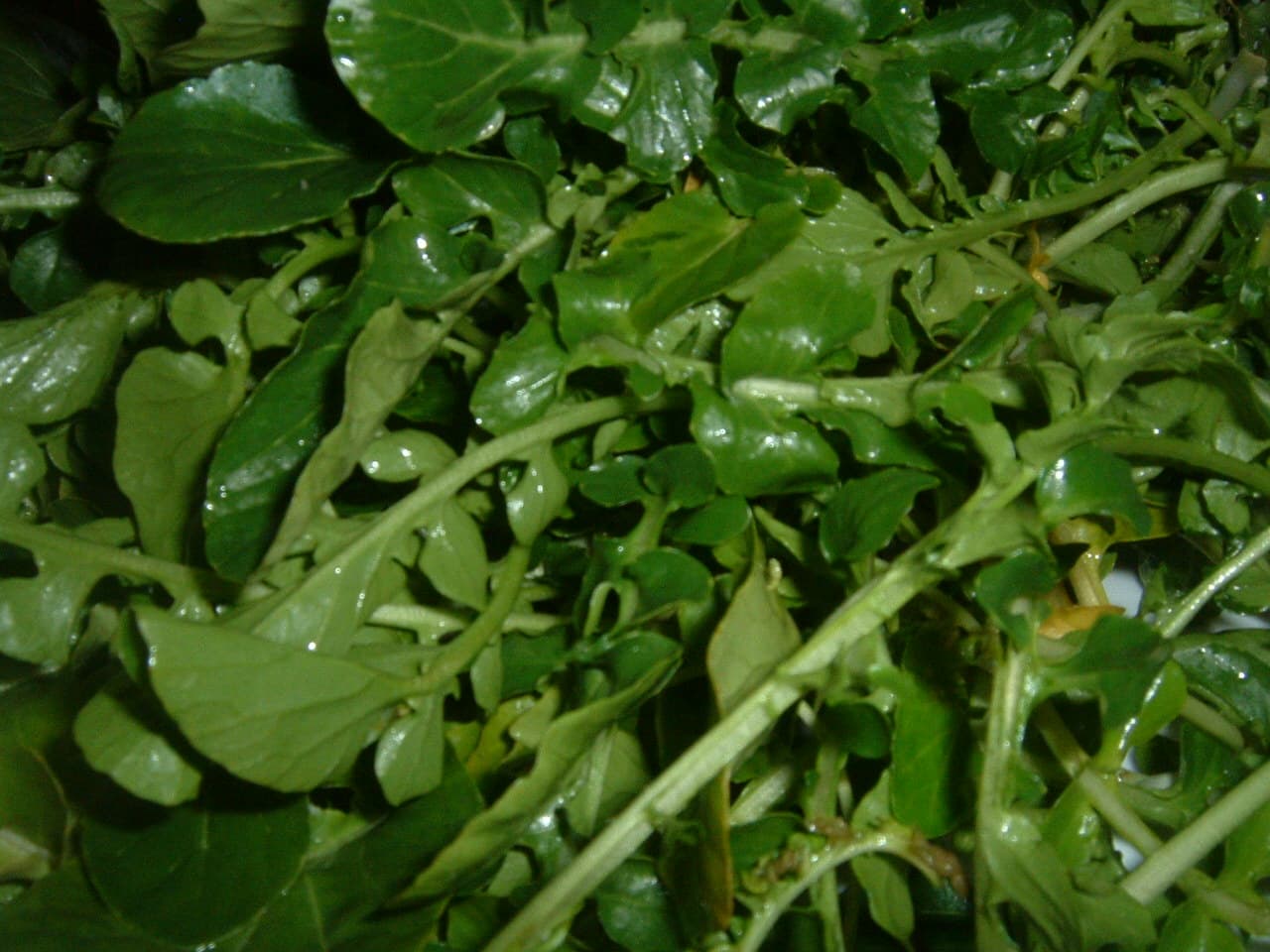
Watercress or yellowcress is a species of aquatic flowering plant in the cabbage family, Brassicaceae.
Aroma profile
Derived from this ingredient’s flavor compounds
fresh×6
aromatic×6
mint×4
camphoraceous×4
grassy×4
pungent×4
cooling×3
menthol×3
Taste profile
Derived from this ingredient's compounds · measured taste classes
bittersweet
Composition
60 compounds identified — cross-referenced scientific databases
(-)-jasmonoyl-l-isoleucine(-)-menthone(-)-phaseollidin(-)-sativan(-)-vestitol(+)-1(10),4-cadinadiene(+)-7-iso-jasmonate(+)-cis-abscisic aldehyde(+)-marmesin(+)-neomenthol(+)-pulegone(+)-taxifolin(±)-erythro-isoleucine(±)-menthone(±)-tryptophan(2-trans-6-trans)-farnesoate(2e,6e)-farnesol(2e)-2-butylidene-4-hydroxy-5-methyl-3(2h)-furanone
Molecular affinity
Pairs well with — ingredients that share aroma compounds
garden cress leaf
4 shared
turnip (raw)
3 shared
arugula leaf
2 shared
Mustard Seed
2 shared
Mustard Seeds
2 shared
edible pea pod
2 shared
Wasabi
2 shared
Based on shared flavor compounds · click to explore
Research Evidence
Multi-source verifiedVerification: Independently verified
The Geist can be wrong. Some flavor, taste, and pairing values are model-predicted, not lab-measured.